

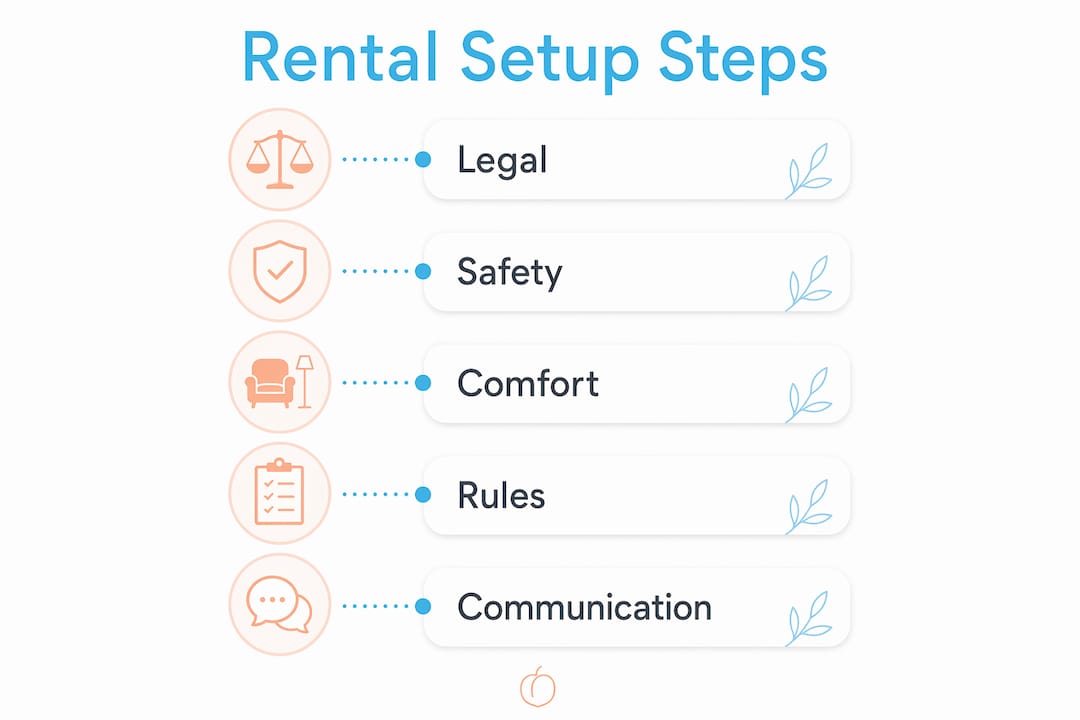
Setting up a rental for guests means creating a legally compliant, fully stocked, and clearly managed property that guests can enjoy without friction. The most successful hosts treat this as a system, not a checklist. Before your first booking, you need verified permits, proper insurance, a guest-ready space, and clear house rules. Peach-residence, a four-bedroom desert retreat in Palm Springs, is a strong example of what intentional setup looks like: every bedroom has a distinct character, the indoor/outdoor flow is built in, and the experience is designed from the ground up for guest comfort.
What legal and regulatory steps must you take before listing?
A legal and financial reality check before listing prevents costly mistakes that can shut down your rental before it earns a dollar. This is the step most new hosts skip, and it is the one that creates the most serious problems later.
Start with these prerequisites:
- Short-term rental permit. Most cities require a permit or registration number before you can legally host. Palm Springs, for example, has a strict permit system with annual renewal requirements.
- Lease or mortgage review. Many mortgage agreements and HOA covenants prohibit short-term rentals. Check your documents before listing.
- Short-term rental insurance. Standard homeowner policies exclude rental activities. You need a separate policy or a rider that covers guest injuries and property damage.
- Occupancy limits. Local codes set maximum guest counts. Exceeding them creates liability.
- Tax obligations. Most jurisdictions require hosts to collect and remit transient occupancy tax (TOT). Register with your local tax authority before your first booking.
Pro Tip: Contact your city's planning or zoning department directly. Their website is often outdated, and a five-minute phone call can save you from a fine or a forced delisting.
If you are considering Palm Springs specifically, the local hosting rules cover permit requirements, profit potential, and compliance specifics worth reading before you list.
How to prepare your rental property for guest comfort and safety
Guest satisfaction is built on anticipating needs, not on luxury. Basics like sufficient towels and clear Wi-Fi information drive guest satisfaction more reliably than expensive decor. Get the fundamentals right first.
Safety setup
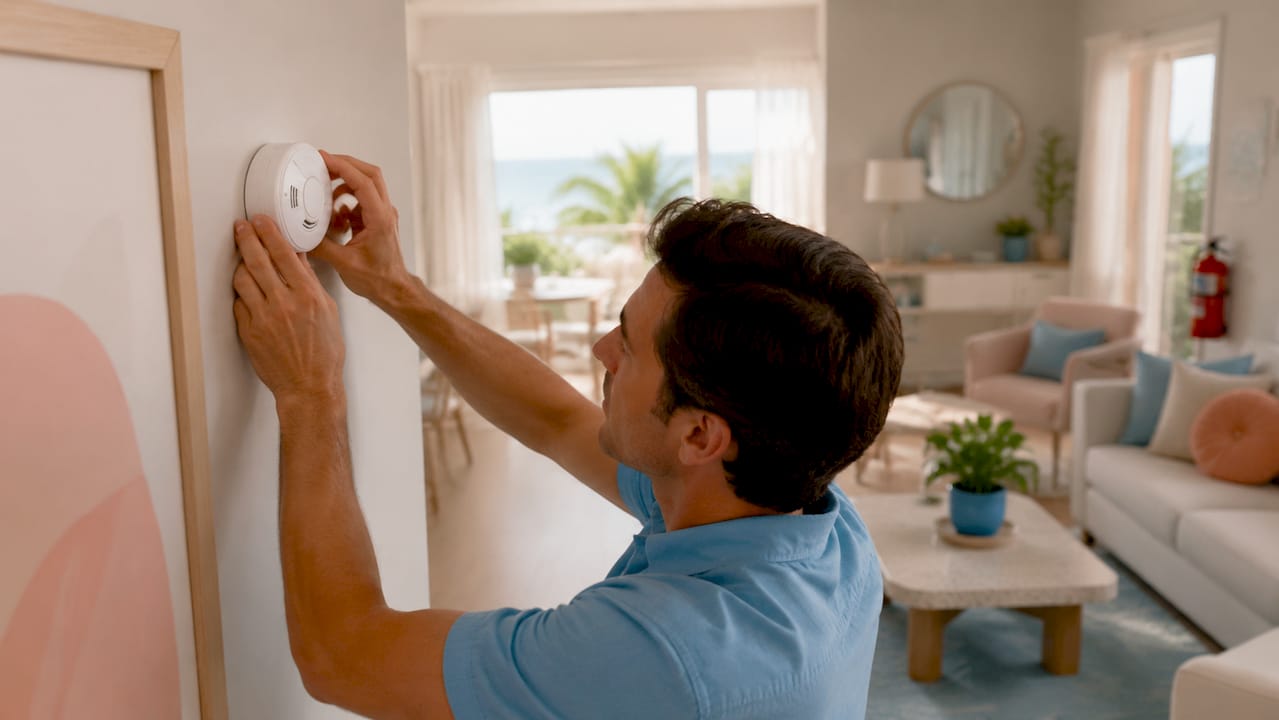
Every rental needs working smoke detectors, carbon monoxide detectors, and at least one fire extinguisher. Place detectors in every bedroom and hallway. Test them before each guest arrival. Post emergency numbers and the property address visibly near the front door.
Comfort essentials
| Category | Minimum standard | Notes |
|---|---|---|
| Linens | 2 sets per bed | Allows for same-day turnover |
| Towels | 2 per guest | Bath and hand towels |
| Toiletries | Travel-size soap, shampoo, conditioner | Refillable dispensers reduce waste |
| Kitchen | Coffee maker, basic cookware, utensils | Stock for the listed guest count |
| Climate control | Working AC/heat, tested thermostat | Critical in desert climates |
Vacation rentals face faster wear and tear than primary residences. Linens, pillows, and kitchen appliances need replacement sooner than you expect. Build a replacement schedule into your operating budget from day one.
The guest guidebook
A printed or digital guidebook removes the most common guest questions before they become messages. Include Wi-Fi credentials, appliance instructions, trash pickup days, parking rules, and local restaurant recommendations. Guests who feel informed leave better reviews.
Pro Tip: Create a laminated one-page quick-start card for the kitchen counter. Cover Wi-Fi, check-out time, and the top three things guests always ask. It takes 20 minutes to make and saves hours of back-and-forth.
The role of home amenities in guest satisfaction goes deeper than most hosts realize. Stocking the right items, not the most expensive ones, is what drives five-star reviews.
How do you write house rules that guests actually follow?
Clear house rules protect your property and set guest expectations before arrival. Rules buried in a listing description get ignored. Rules communicated in multiple places get followed.
"The best house rules are specific, reasonable, and explained with a brief reason. 'No parties' is easy to ignore. 'No events or gatherings beyond registered guests, as we are in a residential neighborhood with one neighbor nearby' is much harder to dismiss."
Draft your rules around these core categories:
- Occupancy. State the maximum guest count and whether day visitors are allowed.
- Pets. Decide yes or no, and if yes, specify size limits and a pet fee.
- Quiet hours. Set a specific window, such as 10:00 PM to 8:00 AM, and explain why.
- Events and parties. Most hosts in residential areas prohibit these outright.
- Smoking. Specify indoor and outdoor rules separately.
- Cleaning expectations. List what guests are responsible for before checkout.
Place your rules in three locations: your listing description, your booking confirmation message, and your guest guidebook. Repetition is not redundant. It is how rules become expectations. When a rule is broken, address it calmly and directly. Reference the rule the guest agreed to at booking. Charging a documented cleaning or damage fee is reasonable and legally defensible when it is disclosed upfront.
What technology setup do hosts need for smooth guest management?
Automation is the difference between a rental that runs on your time and one that runs on its own. The right technology setup handles check-ins, communication, and reviews without requiring you to be available around the clock.
Follow these steps to build a functional tech stack:
- Verify your host account. Setting up a professional host account with government ID verification takes about one hour before you can accept bookings. Do this before you list.
- Enable Instant Book with guest filters. Instant Book listings are prioritized in search results and allow you to limit bookings to verified guests with prior stays and positive reviews.
- Install a smart lock. Keypad or app-based locks eliminate key handoffs and let you generate unique codes for each guest. Change the code after every checkout.
- Automate your messaging. Send check-in instructions 24 hours before arrival. Request guest reviews exactly 24 hours after checkout. Both timings are industry best practice for higher response rates.
- Respond to inquiries within one hour. Responding within one hour is a critical ranking factor in Airbnb's search algorithm. Automated replies for common questions keep your response time low even when you are unavailable.
Pro Tip: Set up message templates for your five most common guest questions. Most platforms let you save and send these in two taps. You will use them every single week.
Comparing communication approaches
| Approach | Response time | Guest experience | Ranking impact |
|---|---|---|---|
| Manual only | Variable | Inconsistent | Low |
| Templates + manual | Under one hour | Consistent | Medium |
| Full automation | Instant to one hour | Consistent and proactive | High |
Full automation with a manual review layer gives you the best of both. Guests get fast answers. You stay in control of anything unusual.
How do you manage operations after a booking is confirmed?
Post-booking operations determine whether your property stays in five-star condition across dozens of guest stays. The work here is logistical, not creative, but it is where most rentals either hold their rating or slowly lose it.
Build your operations around these four areas:
- Cleaning. Hire a professional cleaning service with short-term rental experience. They know the turnover pace and the standard guests expect. Schedule them immediately after every checkout.
- Restocking checklists. Create a written checklist for every consumable: toilet paper, dish soap, coffee pods, trash bags. Your cleaner can restock from this list during each turnover.
- Guest support. Designate a response channel and a backup contact for maintenance issues. A broken AC in a desert rental is an emergency. Have a plumber and an HVAC technician on call.
- Same-day turnovers. If your booking calendar allows back-to-back stays, build a 3–4 hour window between checkout and check-in. Rushing a turnover creates the conditions for a bad review.
Professional co-host or management companies charge between 10% and 50% of total rental revenue depending on the services they provide. For hosts managing multiple properties or those who travel frequently, that cost often pays for itself in time and rating consistency.
For a deeper look at vacation home hygiene and turnover standards, the practices that keep guests happy and reduce negative reviews are worth studying before your first booking.
Key Takeaways
A successful rental setup requires legal compliance, guest-ready preparation, clear rules, and automated communication working together from day one.
| Point | Details |
|---|---|
| Legal compliance first | Verify permits, insurance, and tax obligations before listing to avoid fines or forced removal. |
| Basics beat luxury | Sufficient towels, clear Wi-Fi info, and a guest guidebook drive satisfaction more than expensive decor. |
| Rules need repetition | Place house rules in your listing, confirmation message, and guidebook so guests cannot miss them. |
| Automate communication | Responding within one hour boosts search ranking; templates and automation make this achievable. |
| Build a turnover system | Reliable cleaning, restocking checklists, and a 3–4 hour buffer between stays protect your rating. |
What I have learned from watching hosts get this wrong
Most new hosts overspend on decor and neglect guest essentials that actually drive reviews. I have seen beautifully styled rentals get three-star reviews because the mattress was uncomfortable, the shower pressure was weak, or there were not enough hangers in the closet. Guests do not photograph the art on the wall in their review. They describe how they slept and whether the coffee maker worked.
The single best thing a host can do before their first guest arrives is spend a night in the property. Staying overnight reveals the things you cannot see on a walkthrough: the HVAC that cycles loudly at 2:00 AM, the blackout curtains that do not quite meet in the middle, the shower that takes four minutes to get hot. Fix those things, and your first review will reflect it.
Proactive communication is the other factor that separates average hosts from great ones. Guests who receive a warm pre-arrival message with clear instructions almost never send panicked texts at check-in. The message does not need to be long. It needs to be specific, warm, and sent at the right time.
— Rasmus
Peach-residence: a rental built the way this guide describes
Peach-residence in Palm Springs was designed with every one of these principles in place. Four bedrooms, each with its own character, serve up to 8 guests at rates starting at $65 per person per night.

The property sits at the end of a cul-de-sac with mountain views and one neighbor. The 2025 update brought the indoor/outdoor flow that Palm Springs living demands: doors open to the desert air, and the setup handles everything from quiet couples to full groups of eight. If you want to see what a guest-ready property looks like in practice, the house page shows the full setup. Pair it with the activities page to see what a complete guest experience looks like from arrival to checkout.
FAQ
What permits do I need before renting to guests?
Most cities require a short-term rental permit or registration number before you can legally list. Contact your local planning or zoning department to confirm the specific requirements for your area.
How do I set up check-in without being present?
Install a smart lock with a unique code for each guest and send check-in instructions 24 hours before arrival. This approach removes key handoffs and gives guests everything they need before they arrive.
What insurance do I need for a short-term rental?
Standard homeowner policies typically exclude rental activities. You need a dedicated short-term rental insurance policy or a specific rider that covers guest injuries and property damage during stays.
How quickly do I need to respond to guest inquiries?
Responding within one hour is a critical ranking factor in Airbnb's search algorithm. Automated message templates for common questions keep your response time low even when you are not actively monitoring your inbox.
What should a guest guidebook include?
A guest guidebook should cover Wi-Fi credentials, appliance instructions, trash and recycling schedules, parking rules, emergency contacts, and local restaurant or activity recommendations. Keep it concise and easy to scan.