

A house rental guide is a step-by-step resource that walks prospective tenants through every stage of renting a home, from setting a realistic budget to signing a lease and moving in. Resources like Homes.com frame the rental journey as 10 steps covering credit checks, property tours, applications, and move-in setup. The 30% budgeting rule, lease term literacy, and move-in inspection practices are the three pillars every renter must understand before committing to a property. Whether you are renting for the first time or relocating after years in an apartment, this guide covers the full house rental process so you walk in prepared and walk out protected.
What are the key steps in the house rental process?
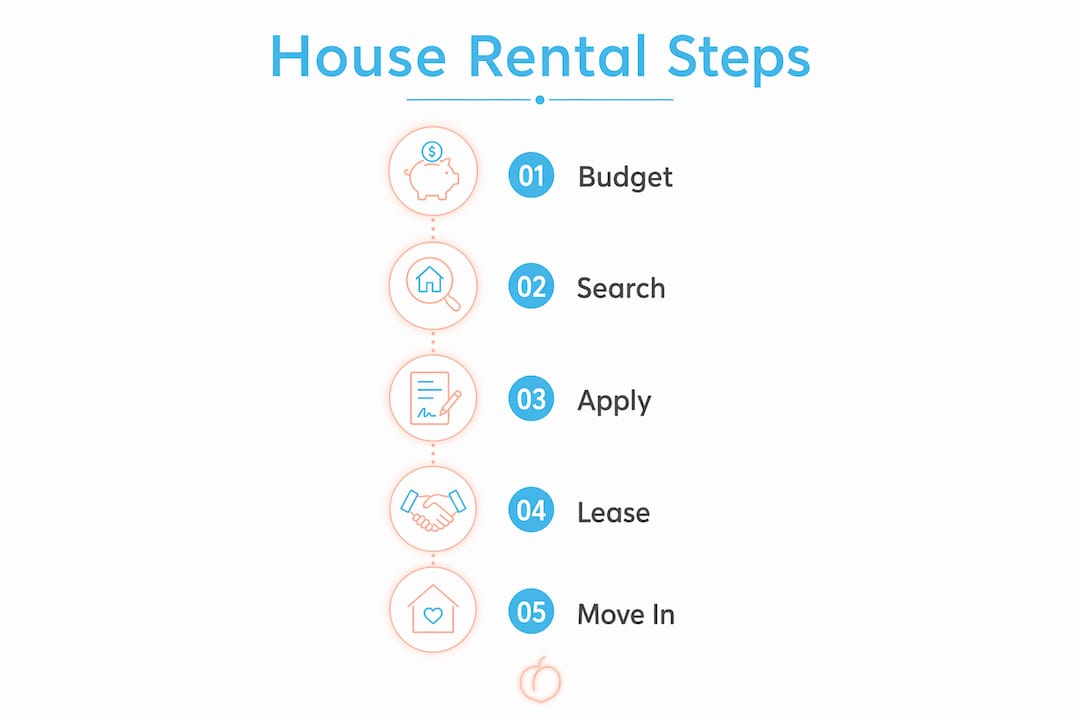
The house rental process follows a predictable sequence, and skipping any step creates problems that show up later. ApartmentGuide advises factoring in all monthly housing costs beyond just rent to get a true picture of affordability. Here is the full sequence broken down.
-
Check your credit and set your budget. Pull your credit report from Equifax, TransUnion, or Experian before any landlord does. Most landlords require a minimum score of 620 to 650. Apply the 30% rule: your monthly rent should not exceed 30% of your gross monthly income. Then add utilities, renters insurance, and a security deposit to that number. The real cost of renting a house is almost always higher than the advertised rent.
-
Define your location and must-haves. Decide on your non-negotiables before you search. Commute distance, school districts, pet policies, and parking availability all narrow the field fast. Write your list down. Renters who skip this step waste weeks touring properties that never would have worked.
-
Search online and schedule tours. Platforms like Zillow, Trulia, and Homes.com let you filter by price, bedrooms, and neighborhood. Schedule at least three to five in-person tours. Photos are always flattering. Touring in person reveals noise levels, natural light, storage space, and the actual condition of appliances.
-
Prepare your application documents. Most landlords require a government-issued ID, two to three months of pay stubs or bank statements, a letter of employment, and two personal or professional references. Having these ready before you find the right property saves days of back-and-forth.
-
Understand and sign the lease. Read every clause before you sign. Pay close attention to the lease term, rent amount, late fee structure, renewal conditions, and any rules about subletting or alterations. If a clause is unclear, ask the landlord to explain it in writing.
-
Complete the move-in inspection and set up utilities. Walk through the property with the landlord before you move a single box in. Document every scratch, stain, and broken fixture with timestamped photos. NYC Bar recommends signed written inspection agreements before occupancy as the strongest protection against deposit disputes.
Pro Tip: Schedule your utility transfers for two days before your move-in date, not the day of. Gas, electric, and internet providers often require 24 to 48 hours to activate service, and moving into a house with no power is a miserable experience.
How does renting a house compare to renting an apartment?
Renting a house and renting an apartment serve different lifestyles, and the cost and responsibility gap between them is larger than most first-time renters expect. ApartmentGuide highlights key differences in privacy, amenities, costs, and lease terms that renters must weigh before choosing. The table below breaks down the most important distinctions.

| Factor | House rental | Apartment rental |
|---|---|---|
| Space and privacy | More square footage, private yard, no shared walls | Shared building, common areas, less outdoor space |
| Maintenance | Tenant often handles lawn care and minor repairs | Landlord or building management typically handles maintenance |
| Monthly costs | Higher rent plus separate utility bills | Rent sometimes includes water or trash; utilities often lower |
| Lease flexibility | Annual leases are standard; month-to-month is rare | More options for short-term or flexible lease arrangements |
| Storage | Garage, basement, and attic space common | Limited to unit storage or paid external units |
| Community | Quieter, more independent living | Built-in neighbor proximity; amenities like gyms and pools |
The maintenance responsibility difference is the one that surprises renters most. In an apartment, a broken dishwasher is a phone call to management. In a house rental, your lease may require you to handle lawn care, gutter cleaning, or minor plumbing issues yourself. Read the maintenance clause in any house lease with extra care. You can explore types of travel accommodations to understand how house rentals fit within the broader spectrum of rental options before you commit.
What should renters know about lease agreements and security deposits?
A lease agreement is a legally binding contract, and every word in it carries weight. The lease defines your rent amount, payment due date, late fee structure, lease term, and the conditions under which either party can terminate the agreement. Understanding these terms before you sign is not optional. It is the difference between a smooth tenancy and a costly dispute.
Security deposits are the most common source of landlord-tenant conflict. Hawaii's Residential Landlord-Tenant Code caps security deposits at one month's rent and requires landlords to provide itemized deduction notices when returning deposits. Many states follow similar frameworks, though the specific caps and timelines vary. Knowing your state's rules before you hand over a check gives you real leverage.
Key lease terms every renter must understand:
- Rent and due date. The exact monthly amount and the date it is due. Most leases charge late fees after a 3 to 5 day grace period.
- Security deposit amount and conditions. How much is held, what it covers, and the timeline for return after move-out.
- Lease term. The start and end date of your tenancy and what happens if you need to leave early.
- Maintenance responsibilities. Which repairs fall to you and which fall to the landlord.
- Pet and subletting policies. Whether pets are allowed, any associated fees, and whether subletting is permitted.
- Renewal terms. Whether the lease auto-renews, requires notice to terminate, or converts to month-to-month.
Pro Tip: Document the property's condition with timestamped photos on move-in day and email them to your landlord immediately. That email creates a date-stamped record that is far harder to dispute than verbal agreements.
"Move-in inspections serve as evidentiary baselines. Timestamped photos and signed records before moving in represent the strongest protection a tenant has when disputing deposit deductions." — NYC Bar
Managing your long-term rental budget from day one, including deposits and recurring costs, prevents the financial stress that catches many renters off guard mid-lease.
What key questions should renters ask before signing a house rental lease?
Apartments.com provides a 20-question checklist that renters must work through before signing any lease. Many rental problems stem from questions that were never asked. The list below covers the questions that matter most for house rentals specifically.
- What is the exact lease length, and what are the renewal options? Month-to-month flexibility costs more. Know what you are committing to.
- What does the monthly rent include? Confirm whether trash, water, landscaping, or any utilities are covered. Assume nothing is included unless it is written in the lease.
- Who handles maintenance requests, and what is the response time? Get a direct contact name and number, not just a general email address.
- Which appliances are included, and what is their condition? Refrigerator, washer, dryer, and dishwasher status should be confirmed in writing before move-in.
- Is renters insurance required? Many landlords now require proof of renters insurance as a lease condition. A basic policy from State Farm or Lemonade runs $15 to $30 per month.
- What is the pet policy, and are there additional deposits or monthly fees? Pet deposits are often non-refundable. Confirm this before you move in with animals.
- What are the rules on alterations? Painting walls, mounting TVs, or installing shelving may require written landlord approval.
- What is the neighborhood noise situation? Ask about nearby construction, traffic patterns, and any known community issues. Visit the street at different times of day before signing.
- How is rent paid, and are there fees for specific payment methods? Some landlords charge a processing fee for credit card payments.
- What is the early termination policy? Life changes. Know the financial penalty for breaking the lease before the term ends.
Reviewing a rental questions checklist for group or multi-bedroom rentals adds another layer of clarity, especially when multiple people share a lease.
Key takeaways
A successful house rental depends on budgeting accurately, reading the lease in full, and documenting the property's condition before you move in.
| Point | Details |
|---|---|
| Use the 30% rule | Keep rent at or below 30% of gross monthly income, then add utilities and insurance. |
| Read every lease clause | Understand rent terms, late fees, maintenance duties, and early termination costs before signing. |
| Complete a move-in inspection | Document all existing damage with timestamped photos and a signed checklist to protect your deposit. |
| Know your deposit rights | Security deposit rules vary by state; some cap deposits at one month's rent and require itemized returns. |
| Ask questions before signing | Clarify what rent covers, who handles repairs, and what the pet and subletting policies are upfront. |
What I've learned from watching renters skip the basics
Most rental problems are not caused by bad landlords or bad luck. They are caused by renters who moved too fast. I have seen people lose full security deposits over damage that existed before they moved in, simply because they never did a documented inspection. I have seen renters blindsided by $200 monthly utility bills they assumed were included in rent. These are not edge cases. They are the norm for renters who treat the lease as a formality.
The 30% budgeting rule is a floor, not a ceiling. In most mid-size and large American cities in 2026, utilities, renters insurance, and parking can add $300 to $600 per month on top of rent. Budgeting beyond just rent is not optional advice. It is the difference between financial stability and a lease you cannot sustain.
House rentals also carry a maintenance burden that apartment renters genuinely underestimate. Lawn care, pest control, and minor exterior repairs often fall to the tenant in a house lease. That is not inherently bad. It is just a different contract than most renters have experienced before. Read the maintenance section of any house lease twice.
The one habit that separates renters who come out ahead from those who do not is documentation. Photos on move-in day, emails confirming verbal agreements, and a signed inspection checklist cost you thirty minutes. They can save you hundreds of dollars and weeks of stress at move-out. Treat every rental like a business transaction, because legally, it is one.
— Rasmus
Experience the rental difference at Peach-residence
If you are weighing your next rental move and want a property where the process is transparent and the experience is genuinely worth it, Peach-residence in Palm Springs delivers exactly that. Four distinct bedrooms, freshly updated in 2025, with mountain views and a private desert setting that no apartment building can replicate. The indoor/outdoor flow is real, the space fits up to 8 people comfortably, and rates start at $65 per person per night.

Peach-residence commits to the kind of clarity this guide talks about: no hidden fees, no surprises, just a well-maintained property with everything documented and ready. Browse current availability and house details to see what a rental experience done right actually looks like.
FAQ
What is a house rental guide?
A house rental guide is a step-by-step resource covering budgeting, searching, applying, leasing, and moving into a rental home. Homes.com frames the full process as 10 practical steps from credit checks to move-in setup.
How much should I budget for renting a house?
Rent should not exceed 30% of your gross monthly income, but total housing costs including utilities, insurance, and deposits will run higher. ApartmentGuide recommends accounting for all monthly costs, not just the advertised rent figure.
What is a security deposit, and how do I get it back?
A security deposit is a refundable amount held by the landlord to cover damage beyond normal wear and tear. To recover it in full, complete a documented move-in inspection with timestamped photos and a signed checklist, as NYC Bar advises.
What questions should I ask before signing a house lease?
Ask what the rent covers, who handles maintenance, what the pet policy is, and what the early termination penalty is. Apartments.com provides a 20-question checklist that covers the full range of issues renters commonly overlook.
How is renting a house different from renting an apartment?
House rentals typically offer more space and privacy but require tenants to handle more maintenance responsibilities. Apartment rentals often include building management for repairs and may offer more flexible lease terms, as outlined by ApartmentGuide's comparison.