

Choosing where to sleep shapes your entire trip. The sheer variety of types of travel accommodations available today, what the hospitality industry calls "lodging categories," can make the decision feel harder than booking the flights. Hotels, vacation rentals, hostels, glamping sites, eco-lodges, and a dozen more options all compete for your attention and your budget. This guide breaks down every major category, compares them honestly, and helps you match the right lodging to your specific trip so you stop second-guessing and start packing.
Table of Contents
- Key takeaways
- 1. The main types of travel accommodations explained
- 2. Hotels: full-service, boutique, and business
- 3. Vacation rentals and serviced apartments
- 4. Budget and shared accommodations: motels, hostels, and capsule hotels
- 5. Unique and specialized stays worth knowing about
- 6. How to actually choose between accommodation types
- My honest take on choosing accommodations
- Where Peach-residence fits into your accommodation search
- FAQ
Key takeaways
| Point | Details |
|---|---|
| Match lodging to trip length | Short stays favor hotels; stays over two weeks often cost less in a serviced apartment or rental. |
| Rentals win for groups | Vacation rentals give families and groups more space, kitchen access, and better per-person value. |
| Budget options have evolved | Many hostels now offer private rooms, making them viable beyond the backpacker crowd. |
| Unique stays deliver memories | Eco-lodges, glamping, and themed properties offer experiences that outlast any standard hotel stay. |
| Hidden costs change the math | Cleaning fees, resort charges, and deposits can shift a "cheap" option into the most expensive one. |
1. The main types of travel accommodations explained
Every lodging category was built around a specific traveler need. Understanding what problem each one solves makes the decision much clearer. The GSA distinguishes short-term lodging (up to 29 nights) from long-term lodging (30 or more nights), and that single distinction explains why so many separate accommodation categories exist. Your trip length is the first filter you should apply before comparing anything else.
The broad categories covered here are: hotels (full-service through boutique), vacation rentals and serviced apartments, budget and shared accommodation, and unique or specialized stays. Each has a different cost structure, amenity profile, and ideal traveler type.
2. Hotels: full-service, boutique, and business
Hotels are the default for a reason. You check in, the room is ready, and someone else handles every operational detail. That reliability is worth real money, especially on short or business trips where logistics need to disappear.
The four main hotel types worth knowing:
- Full-service hotels include on-site restaurants, fitness centers, concierge, room service, and housekeeping. They suit travelers who want everything in one place.
- Limited-service hotels strip out the restaurant and extras but keep clean, predictable rooms at lower rates. Think roadside stays or one-night layovers.
- Boutique hotels have fewer than 100 rooms, distinct design identities, and a local personality that chain properties can't replicate. Strong choice for travelers who care about atmosphere.
- Business hotels prioritize meeting rooms, fast Wi-Fi, airport proximity, and early breakfast. Solo corporate travelers are their entire reason for existing.
Hotels provide daily housekeeping and room service, which makes them predictable and low-effort. That predictability is both their greatest strength and their limitation. You get reliability but almost no flexibility on space or cooking.
Star ratings offer a rough guide to service level, but a four-star boutique in New Orleans will feel completely different from a four-star business hotel at an airport. Read recent reviews alongside the star rating, not instead of it.
Pro Tip: Book directly with the hotel's website for the best cancellation terms. Third-party platforms often quietly strip flexible cancellation from the same room.
3. Vacation rentals and serviced apartments
Vacation rentals and serviced apartments represent the biggest shift in traveler behavior over the last decade. Private rental interest rose from 25% to 29% in 2026 alone, and the reason is simple: space and autonomy that hotels cannot match at comparable prices for groups or families.
A vacation rental gives you the whole property, usually including:
- A full kitchen for preparing meals
- Multiple bedrooms and shared living areas
- Laundry facilities
- Private outdoor space in many cases
Vacation rentals give greater space and kitchen facilities, and for a group of four or more people, the per-person nightly rate often undercuts comparable hotel rooms by a significant margin.
Serviced apartments sit between hotels and vacation rentals. They offer hotel-style check-in with on-site staff and professional cleaning, but give you a kitchen, living room, and more square footage. For 1 to 4 week stays, hotels price per night while serviced apartments often use weekly or monthly rates, which starts looking much better the longer you stay.

The real watch-out with vacation rentals: quality consistency varies. Photos can be optimistic. Read reviews that specifically mention cleanliness and whether the listing matched reality.
Pro Tip: Always check the total price with fees before comparing to hotel rates. Cleaning fees on a two-night rental can add $150 or more, which changes the math entirely.
If you're planning a group stay with multiple bedrooms, a dedicated rental property almost always delivers more value than booking adjacent hotel rooms.
4. Budget and shared accommodations: motels, hostels, and capsule hotels
Affordable lodging has gotten more sophisticated. These aren't just fallback options anymore.
Motels are the original road-trip accommodation. Exterior-access rooms, parking right outside your door, and rates that beat most hotels. They work perfectly for single-night stops on long drives. Don't expect amenities. Do expect efficiency.
Hostels were built for backpackers but have evolved considerably. Hostels offer the cheapest lodging with shared dorms and social spaces, and many now include private room options that balance low price with actual privacy. The communal kitchen, common room, and built-in social atmosphere make hostels genuinely enjoyable for solo travelers who want to meet people.
Capsule hotels, originating in Japan, offer individual sleeping pods stacked in rows with shared bathrooms. Privacy is limited to your pod, but the cost is extremely low and the novelty factor is high. Major cities worldwide now have capsule concepts aimed at budget urban travelers.
The honest downside of shared accommodation is noise, limited storage, and variable bathroom access. If you sleep lightly or travel with valuables, factor that in.
5. Unique and specialized stays worth knowing about
This is where accommodation stops being functional and starts being the trip itself. These different lodging options attract travelers who want the stay to be part of the experience, not just a place to drop luggage.
Here is a quick comparison of the most popular specialized types:
| Accommodation type | Best for | Key feature | Price range |
|---|---|---|---|
| Resort | Leisure vacations | On-site activities and amenities | $$$-$$$$ |
| Bed and breakfast | Cultural immersion | Personal host, home-cooked breakfast | $$-$$$ |
| Eco-lodge | Sustainability-focused travel | Nature setting, low-impact design | $$-$$$ |
| Glamping | Outdoor comfort | Nature + amenities combined | $$-$$$$ |
| Pop-up hotel | Festival or event stays | Temporary, location-specific | $$-$$$ |
Resorts focus on leisure with on-site pools, restaurants, and entertainment, sometimes packaged as all-inclusive deals. Beach, ski, golf, and spa resorts each cater to a specific vacation personality. If you want every decision handled for you and you're committed to one location, a resort delivers.
Bed and breakfasts offer something resorts cannot: a human host who knows the neighborhood, cooks breakfast from scratch, and treats you like a houseguest rather than a room number. They work especially well in small towns and wine regions where local knowledge matters more than amenities.
Eco-lodges prioritize sustainability practices while glamping combines nature and comfort. Both have expanded well beyond their niche origins. Yellowstone National Park, for example, offers nine distinct lodging options ranging from historic hotels to rustic cabins, many without air conditioning or TVs. That's a feature for some travelers and a dealbreaker for others.
Pro Tip: For national park stays and eco-lodges, check the official concessionaire site directly. Third-party platforms often list these properties inaccurately, with wrong amenity details or outdated cancellation policies.
6. How to actually choose between accommodation types
Knowing the categories is only useful when you apply them to your specific trip. Here is a practical framework for matching lodging to reality.
| Factor | Best accommodation match |
|---|---|
| Solo, budget travel | Hostel (dorm or private room) |
| Solo business trip | Business or limited-service hotel |
| Couple, short city stay | Boutique hotel |
| Family or group, any length | Vacation rental |
| Stay of 2 to 4 weeks | Serviced apartment |
| Experience-first vacation | Resort, eco-lodge, or glamping |
Beyond the table, a few things most travelers underweight:
- Location relative to your itinerary. A cheap hotel 40 minutes from everywhere costs more in time and transit than a pricier option in the center.
- Check-in flexibility. Vacation rentals and some boutique hotels have narrow check-in windows. If your flight lands at 11 PM, that matters.
- Group size and sleeping arrangements. Hotels force you into multiple bookable rooms. A rental built for 8 people keeps the group together under one roof, which changes the whole dynamic of a trip.
Travelers in 2026 plan to spend 17% more on trips while prioritizing comfort over price. That doesn't mean spending more on accommodation blindly. It means being deliberate: spend where it affects your experience, cut where it doesn't.
Pro Tip: Read the one-star reviews before booking any vacation rental. Not because they're always right, but because they reveal what the listing photographs hide.
My honest take on choosing accommodations
I've spent years watching travelers default to hotels out of habit, even when a vacation rental or serviced apartment would have served them significantly better. The 81% of Americans who plan hotel stays this summer are not wrong, but many of them are paying for consistency they don't need and missing out on space and experience they would have actually preferred.
The shift I find most interesting is how private rentals are gaining ground not because they're cheaper, but because travelers are increasingly aware of what a hotel room cannot offer. No shared lobby. No checkout at 11 AM if you negotiate. A living room where the group can actually sit together. A kitchen that saves you $80 a day on restaurant breakfasts.
My actual advice: stop treating accommodation as a logistics problem and start treating it as a trip design decision. Where you sleep and how that space functions affects every other hour of your day. A crowded hostel in a prime neighborhood beats a private hotel room two bus rides from everything. A mountain-view rental with four bedrooms changes a group trip from a series of hotel hallway encounters into something people actually talk about afterward.
The best travel accommodations aren't the most expensive or the most Instagrammable. They're the ones that match how you actually want to spend your time.
— Rasmus
Where Peach-residence fits into your accommodation search
If you're planning a desert getaway for a group and want something well beyond a block of hotel rooms, Peach-residence in Palm Springs was built for exactly that.
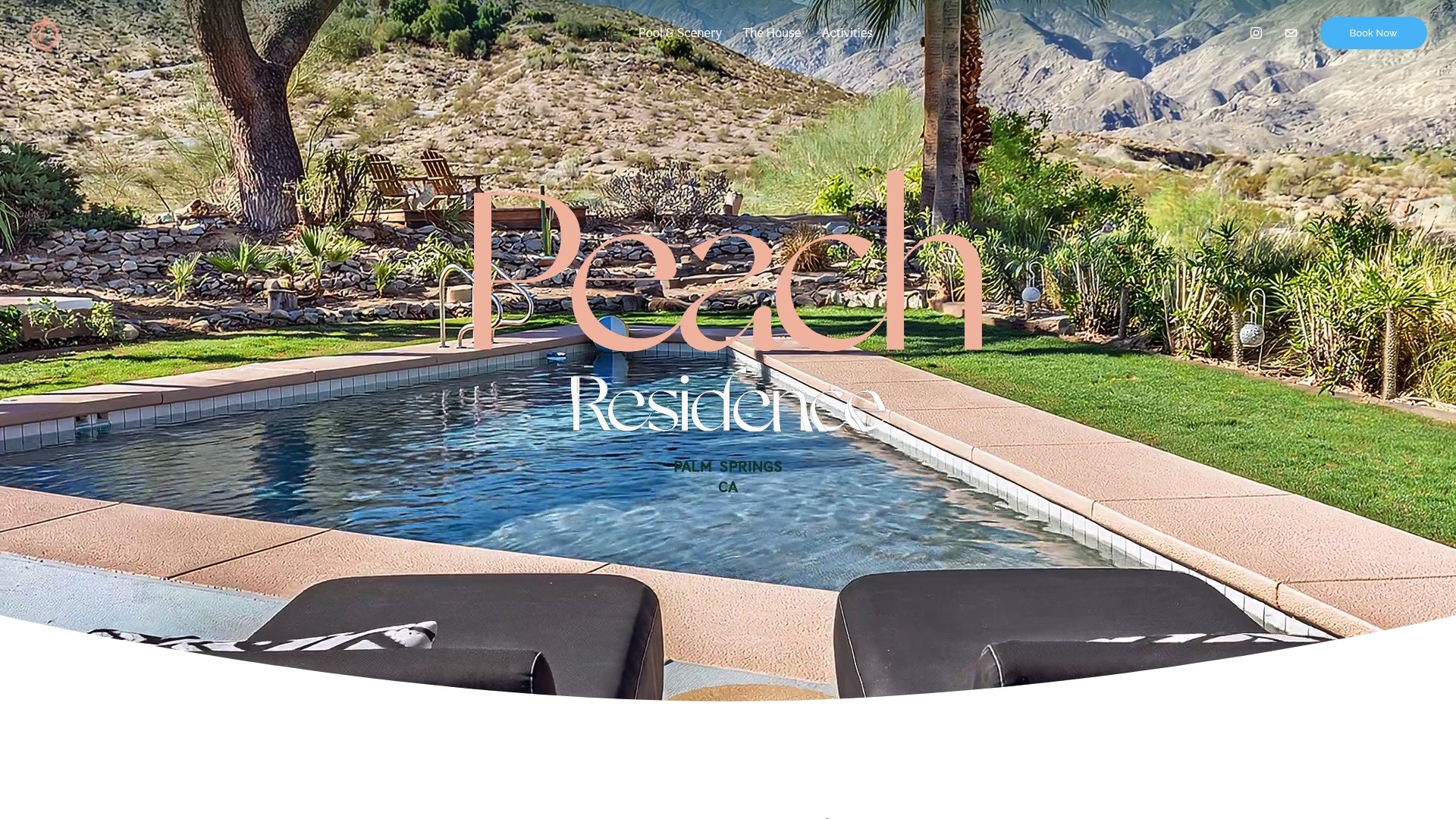
Four bedrooms, room for 8 people, freshly updated in 2025, and positioned at the end of a cul-de-sac with unobstructed mountain views and zero city noise. The indoor/outdoor Palm Springs lifestyle is the whole point here. Doors open, desert air in, and a setting that makes the rental the destination rather than just the place you sleep. Rates start at $65 per person per night. See the full property to check availability and get a feel for what four bedrooms with distinct personalities actually looks like in practice. You can also browse local activities to build the rest of your trip around it.
FAQ
What are the main types of travel accommodations?
The main lodging categories are hotels (full-service, boutique, and limited-service), vacation rentals, serviced apartments, hostels, motels, resorts, bed and breakfasts, eco-lodges, and glamping sites. Each serves a different traveler need based on budget, group size, and trip length.
What is the difference between a hotel and a hostel?
Hotels offer private rooms with full services and predictable standards; hostels offer shared dorms or private rooms at lower prices with communal spaces. Many hostels now include private rooms, making the hotel vs hostel choice more about social preference than privacy alone.
When does a vacation rental beat a hotel?
A vacation rental is typically better for groups of three or more people, stays longer than a few nights, families needing kitchen access, or any trip where living together as a group matters. The per-person cost drops significantly compared to booking multiple hotel rooms.
What are unique places to stay for a special trip?
Eco-lodges, glamping sites, bed and breakfasts, boutique resorts, and national park lodges all offer experiences that standard hotels cannot match. Yellowstone alone has nine distinct lodging types ranging from historic hotels to rustic cabins.
How do I compare accommodation types for cost accuracy?
Always calculate the total cost including cleaning fees, resort fees, parking, and deposits. A vacation rental with a $100 nightly rate and a $200 cleaning fee costs more than a $130 hotel room for a two-night stay. Total price, not headline price, is the only fair comparison.