

Getting everyone on the same page about where to sleep is often the hardest part of any group trip. Group travel accommodation tips sound obvious until you're managing eight different opinions, three different budgets, and a checkout time nobody agreed to. Whether you're planning a family reunion, a friend getaway, or a corporate retreat, the difference between a trip everyone raves about and one that breeds resentment usually comes down to how you handle the lodging. Here's what actually works.
Table of Contents
- Key takeaways
- 1. Start with group travel accommodation tips before you start searching
- 2. Know your group accommodation types before committing
- 3. Go direct to unlock the best group rates
- 4. Coordinate payments and communication before they become problems
- 5. Build in flexibility with contracts and release dates
- 6. Match your accommodation to the type of group trip
- My honest take on booking group accommodation
- Where Peach-residence fits into your group trip plans
- FAQ
Key takeaways
| Point | Details |
|---|---|
| Lock in logistics early | Confirm group size and set RSVP deadlines before contacting any property or hotel. |
| Go direct for better rates | Calling a hotel's group sales team beats any online booking platform for pricing and perks. |
| Use a trip brief document | One shared document with all booking details replaces dozens of confusing group messages. |
| Know your deposit exposure | Hotels typically require 25 to 50% non-refundable deposits on group bookings. |
| Match lodging to group profile | Choosing accommodation that fits how your group actually travels reduces friction and fatigue. |
1. Start with group travel accommodation tips before you start searching
The single biggest mistake group organizers make is jumping straight to search before defining what they actually need. You cannot shop effectively without a clear list of requirements.
Start with a hard headcount. Set an RSVP deadline at least six to eight weeks before your intended travel dates, and hold to it. Rooms and rentals size up fast, and every day you wait with a fuzzy number is a day you lose leverage with properties. Once you have a confirmed count, agree on a realistic budget range per person. Not a vague "we'll figure it out," but an actual number with a ceiling.
From there, assign roles. Dividing organizational tasks across the group prevents one person from burning out and reduces miscommunication. You need someone handling vendor communication, someone tracking payments, and ideally someone managing the group chat so every question doesn't land in your inbox at 11 p.m.
Finally, discuss location priorities as a group before you book anything. Proximity to activities, parking availability, public transit access, and accessibility needs all affect which properties even qualify.
Pro Tip: Send a one-page survey to the group covering budget ceiling, must-have amenities, and preferred check-in date before you open a single browser tab.
2. Know your group accommodation types before committing
Not every lodging type works for every group dynamic. Choosing the wrong format is how you end up with eight people in a hotel corridor wishing they had a kitchen.

Hotel room blocks are the classic choice for larger groups of 10 or more. You get proximity, a front desk for emergencies, and structured common spaces. The tradeoff is that everyone is in separate rooms, which limits the communal experience. Most hotels require 10 or more rooms to qualify for group rates, so this option really only makes sense for bigger parties.
Vacation rentals and private homes flip the model entirely. Everyone shares a space, which is either the dream or the nightmare depending on your group's dynamic. The shared kitchen alone can cut food costs dramatically. Private homes also give you the flexibility to set your own schedule without hotel checkout pressure breathing down your neck.
Resort packages and buyouts suit groups that want an all-inclusive, low-planning experience. The cost per person is higher, but so is the hands-off factor. These work well for corporate retreats where the company is covering the bill.
Hostels, B&Bs, and multi-house rentals round out the options for budget-conscious groups or those with diverse sleeping preferences. Multi-house rentals on the same street are an underused strategy that gives you the privacy of separate units with the proximity of shared activities.
| Accommodation type | Best for | Cost level | Group flexibility |
|---|---|---|---|
| Hotel room block | Large groups, 10+ people | Medium to high | Low |
| Vacation rental | Small to mid-size groups | Medium | High |
| Resort package | Corporate or luxury groups | High | Low |
| Multi-house rental | Diverse groups with mixed budgets | Medium | Very high |
| Hostel or B&B | Budget-focused young travelers | Low | Medium |
Pro Tip: For groups of 6 to 10, a private vacation rental almost always beats a hotel block on both cost and experience. Run the math before defaulting to hotel rooms.
3. Go direct to unlock the best group rates
Online booking platforms are fine for solo travel. For groups, they are often the most expensive and least flexible option available to you.
Hotels have a separate group sales department specifically for this purpose. Bypassing the front-facing booking engine and calling that department directly puts you in a completely different conversation. You can negotiate room rates, request complimentary upgrades, and ask for perks like private dining spaces or dedicated check-in areas.
Here is how to approach that call:
- Lead with your room commitment number. The stronger your guaranteed block, the more leverage you hold.
- Ask specifically about complimentary rooms. Larger group commitments often earn free rooms for organizers, typically one free room per every 10 to 15 booked.
- Request a rate hold with a cutoff date. This gives your group time to confirm before you're financially committed.
- Get cancellation and attrition terms in writing before you sign anything.
- Ask about food and beverage minimums if you're planning any group meals on property.
Hotels often require non-refundable deposits of 25 to 50% at contract signing. Knowing that upfront changes how you structure your group's payment collection timeline.
Pro Tip: Call on a Tuesday or Wednesday morning. Group sales teams are less pressured mid-week and more willing to have a real conversation about terms.
4. Coordinate payments and communication before they become problems
Group travel tension commonly arises from unclear money expectations. It is rarely about the amount. It is almost always about timing and transparency.
Set up a shared expense tracker from day one. Apps like Splitwise or a simple shared Google Sheet work well. What matters more than the tool is the agreement: who pays what, by when, and what happens if someone backs out after the deposit is paid.
A trip brief sent two weeks before departure does more work than any group chat thread. One document covering the property address, check-in time, emergency contacts, the Wi-Fi password, and the full expense breakdown cuts down on repeated questions and gives late-arriving members a single source of truth.
A few practices that prevent friction:
- Collect all money before confirming the booking, not after
- Specify whether the deposit is refundable if a member drops out
- Set a final payment deadline with at least two weeks of buffer before the property's own deadline
- Keep a separate line item for shared costs like groceries, shared activities, and cleaning fees
Pro Tip: Name one person as the sole financial contact for the property. Multiple people calling with payment questions creates confusion on the property's end and delays confirmations.
5. Build in flexibility with contracts and release dates
The most underappreciated group travel lodging advice you will get is this: read the contract before you sign it, not after a cancellation happens.
Vacation rental contracts with release dates and cancellation terms allow small reductions in room blocks without triggering penalties. This flexibility is your buffer for the person who confirms and then backs out two weeks before the trip. Without a release clause, you are paying for their room either way.
For hotel room blocks, attrition clauses matter just as much. Attrition means the hotel holds you financially responsible for a percentage of your reserved rooms even if your group shrinks. A typical attrition clause requires you to fill 80 to 90% of your reserved rooms or pay the difference. Knowing this going in changes how conservatively you should block rooms.
6. Match your accommodation to the type of group trip
A corporate retreat has completely different lodging needs than a bachelorette weekend or a multigenerational family vacation. The best group accommodation choices align with the actual profile of your group, not just the price point.
Here is a practical framework:
| Trip type | Recommended accommodation | Key priority |
|---|---|---|
| Family reunion | Large private home or resort | Space and shared communal areas |
| Friend adventure | Vacation rental or multi-house | Shared kitchen and flexible schedule |
| Corporate retreat | Hotel block or resort package | Meeting spaces and structured amenities |
| Milestone celebration | Private home or boutique resort | Privacy and personalization |
Planning one main group activity daily with built-in free time keeps the group together without creating a forced itinerary that exhausts everyone. The accommodation choice should support that structure. A rental with a great outdoor space handles the casual hangout time. A hotel lobby serves the same purpose for a corporate group.
Before you finalize any booking, run through this checklist:
- Headcount confirmed with a signed-off RSVP list
- Budget per person agreed upon in writing
- Cancellation and deposit policy reviewed and understood
- Roles assigned for communication, payments, and logistics
- Trip brief template created and ready to send two weeks out
My honest take on booking group accommodation
I've coordinated more group trips than I'd like to count, and the pattern is almost always the same. The trips that went sideways had nothing to do with the destination or even the budget. They fell apart in the gap between "we're going" and "here's exactly how it's happening."
What I've learned is that the accommodation itself accounts for maybe 30% of the group experience. The other 70% is the clarity you create around it. When I started treating the booking process as a communication project rather than a logistics exercise, everything got easier. The group brief, the assigned roles, the upfront money conversation. Those are not administrative chores. They are the product.
I've also found that private home rentals for smaller groups almost always beat hotels on experience, even when the per-night price is similar. You get a kitchen, a living room, a real outdoor space. You get a place that feels like a trip rather than a business stay. Properties like Peach-residence in Palm Springs are built for exactly this. The structure of a private home that the whole group actually wants to be inside of.
The uncomfortable truth is that group travel is booming but most people still plan it the way they'd plan a solo trip, just with more browser tabs open. The groups that have the best time are the ones that treated planning as seriously as the trip itself.
— Rasmus
Where Peach-residence fits into your group trip plans
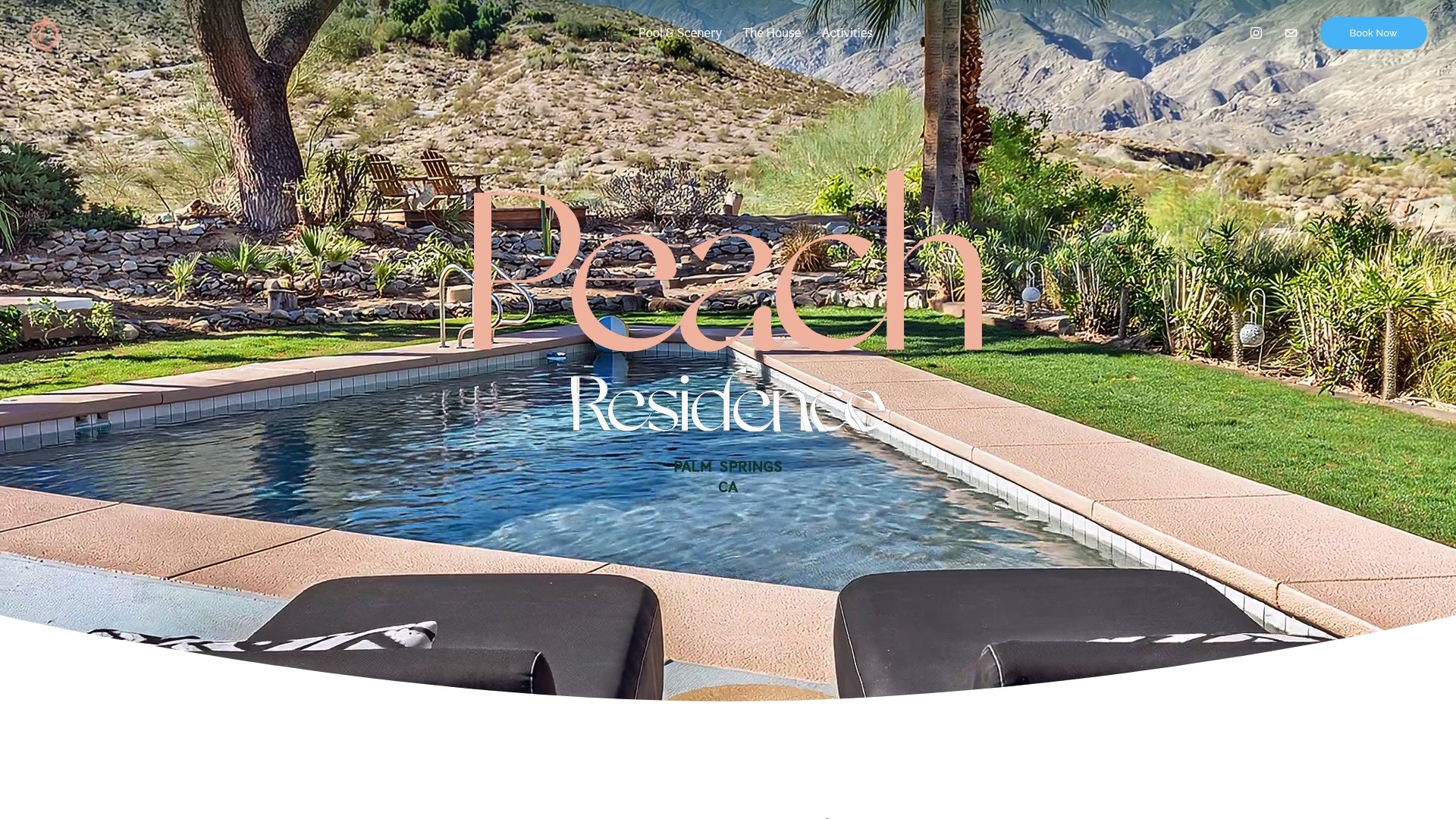
If you've worked through this article and landed on "private home rental for a group of up to 8," Peach-residence in Palm Springs is worth a hard look. Four bedrooms with distinct personalities, desert mountain views that genuinely stop conversation, and an indoor/outdoor layout designed for exactly the kind of trip where nobody wants to leave the property. Starting at $65 per person per night, the group accommodation value here is hard to argue with. Direct booking means you talk to real people about your group's specific needs, arrival timing, and any logistics that matter to your crew. Check the available activities and you will see the property pulls double duty as both the retreat space and the launchpad.
FAQ
How far in advance should groups book accommodation?
Book at least three to six months ahead for popular destinations, especially for private rentals. Hotels with group sales departments can sometimes accommodate shorter timelines, but deposit terms become less flexible.
What is the minimum group size for hotel group rates?
Most hotels require a minimum of 10 rooms to qualify for group rates negotiated through their sales department. Smaller groups are usually better served by vacation rentals.
How do you split costs fairly for group accommodation?
Set up a shared tracker before booking and collect all funds before confirming. Agree upfront on what happens if someone cancels after the deposit is paid. A clear trip brief with an itemized expense breakdown prevents confusion and post-trip resentment.
What should you check in a group accommodation contract?
Focus on the deposit amount and refund policy, attrition clauses for hotel blocks, the cancellation window, and any release dates that let you reduce your room commitment without penalties.
Are vacation rentals better than hotels for groups?
For groups of 6 to 10 people, vacation rentals typically offer better value and a more connected experience. Shared kitchens, common living spaces, and private outdoor areas create the kind of trip that hotel corridors simply cannot replicate.