

A hassle-free stay is defined as an accommodation experience where comfort, cleanliness, and logistics work together without friction, leaving you free to actually enjoy your trip. Achieving that consistently requires smart booking choices, solid preparation, and realistic expectations. This guide to hassle-free stays covers every stage: choosing the right property, preparing before you arrive, testing your accommodation on day one, and handling problems when they show up. Whether you're booking a vacation rental, a boutique hotel, or a private residence like Peach-residence in Palm Springs, the same principles apply.
How to choose the right accommodation for a hassle-free stay
Location is the single most important factor in accommodation quality, and marketing copy almost always overstates it. A listing that claims to be "minutes from the beach" may mean a 20-minute uphill walk on uneven terrain. True location convenience accounts for walking terrain and transit timing, not just proximity claims. Open Google Maps in satellite view, drop a pin on the property, and time the actual route to your key destinations before you book.
Flexible cancellation policies are non-negotiable for stress-free travel. Non-refundable bookings risk real losses if plans change, while flexible rates often cost less over time when you factor in the financial protection they provide. Experienced travelers consistently favor flexible bookings over initial discounts. The small premium is cheap insurance.
When evaluating amenities, separate must-haves from nice-to-haves before you search. Must-haves typically include:
- Reliable Wi-Fi with a stated minimum speed
- A kitchen or kitchenette if you plan to cook
- Quality bedding and blackout curtains
- Air conditioning or heating appropriate to the climate
- Adequate outlets and USB ports near the bed
Nice-to-haves include pools, gym access, and scenic views. Knowing the difference stops you from paying for features you won't use or skipping ones you actually need.
Recent guest reviews on noise and sleep quality reveal more accurate stay expectations than any listing photo. Filter reviews to the last three months and search specifically for the words "noise," "sleep," and "cleanliness." Listings with strong recent scores on those three factors outperform properties with higher overall ratings but older feedback.

Pro Tip: Photos on rental listings often mask environmental or comfort flaws. Look for reviews that mention specific details like street noise, light coming through curtains, or water pressure. Vague five-star reviews with no specifics are nearly useless for predicting your actual experience.
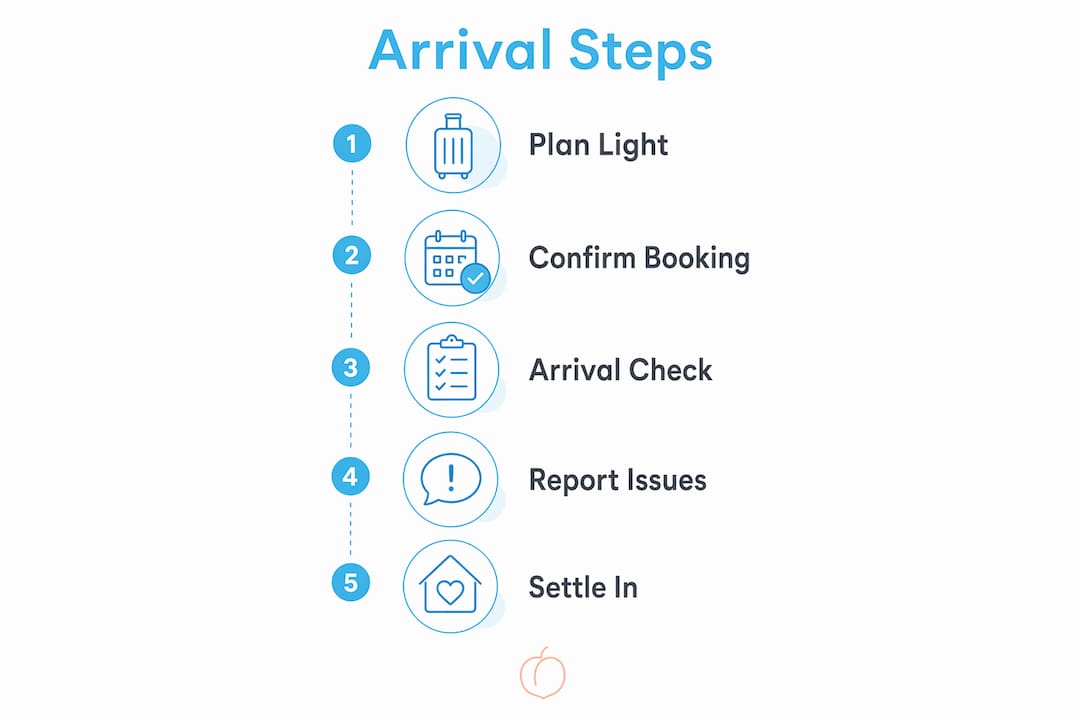
What pre-arrival steps prevent the most common problems?
Preparation done before you leave home eliminates the majority of travel headaches. The steps below are ordered by the damage they prevent if skipped.
-
Confirm passport validity. Many countries require passports to be valid at least six months beyond your entry date. Check this at least three months before departure to allow time for renewal.
-
Book flights and accommodation early. Experts recommend booking summer flights 4 to 10 months in advance for the best value. Accommodation in popular destinations books out fast at peak times.
-
Build a packing checklist. Use a shared document or an app like Google Keep to track what you need. Divide it into categories: documents, clothing, toiletries, electronics, and medications.
-
Arrange grocery delivery for arrival day. Arranging grocery deliveries before you arrive means you walk into a stocked kitchen instead of hunting for a supermarket after a long journey. Services like Instacart or local equivalents can deliver to most vacation rentals.
-
Book key reservations in advance. Restaurants, tours, and activity slots at top destinations fill up weeks ahead. Locking in two or three key bookings before you travel removes the stress of scrambling on arrival.
-
Organize all confirmation documents in one folder. Create a single folder in your email or a cloud service like Google Drive. Include your booking confirmation, check-in instructions, host contact details, and travel insurance policy.
Pro Tip: Plan your arrival day with minimal activities. Treat it as a transition day, not a sightseeing day. Fatigue on arrival is the most common trigger for early trip frustration. Give yourself two to three hours to settle in before committing to anything.
What should you check on arrival to confirm your stay is solid?
The first 30 minutes in any accommodation are your quality control window. A structured arrival check prevents small issues from becoming multi-day problems.
A test-night inspection is the most underused travel tool. Most travelers unpack and hope for the best. The ones who check systematically are the ones who sleep well every night of their trip.
Here is the arrival checklist that experienced travelers use:
-
Test the noise environment. Open windows, stand quietly, and listen for traffic, HVAC systems, or neighboring units. Test nights reveal subtle conditions like HVAC noise and light leaks that photos never show.
-
Check light control. Close all curtains or blinds and assess how dark the room gets. A room with poor blackout coverage will wake you at sunrise regardless of how tired you are.
-
Run the water. Test hot water pressure in the shower and at the sink. Cold or weak water pressure is one of the most common complaints in vacation rentals and one of the easiest to catch early.
-
Test the Wi-Fi speed. Use Speedtest by Ookla on your phone. A connection below 25 Mbps will struggle with video calls or streaming. If the speed is inadequate, flag it with the host immediately.
-
Inspect the bedding and bathroom. Pull back the duvet and check the mattress and pillows. Check the bathroom for mold, adequate towels, and working fixtures. These are the two areas most likely to affect your daily comfort.
-
Count and locate outlets. Verify that outlets near the bed and desk are functional. Travelers with multiple devices need at least two accessible outlets per sleeping area.
Raise any issues with the host or property manager within the first two hours of arrival. Most hosts respond quickly to early, polite reports. Waiting until checkout to mention a problem removes your ability to get it fixed.
How do you manage daily routines and unexpected issues mid-stay?
Comfort during a stay depends as much on daily habits as on the property itself. Travel stress often arises from unmet expectations rather than actual events. A simplified daily schedule reduces the pressure that turns minor inconveniences into major frustrations.
Practical habits that protect your comfort mid-stay:
- Build in rest days. Schedule at least one low-activity day for every four days of travel. Fatigue compounds every small problem.
- Pre-plan some meals. Decision fatigue greatly affects vacation relaxation. Knowing where you'll eat two or three meals a week in advance removes a daily source of friction.
- Keep host contact details accessible. Save the property manager's number in your phone on arrival day. Do not wait until something breaks to find it.
- Handle disputes promptly and respectfully. A calm, specific message to a host resolves most issues faster than escalating to a platform's customer service. State the problem, the impact, and what you need.
- Know your refund options. Review the cancellation and refund policy before you need it. If a property is genuinely uninhabitable, platforms like Airbnb and Vrbo have guest protection policies that cover rebooking costs.
The total cost of a stay includes more than the nightly rate. Cleaning fees, transportation, and groceries all add up. Travelers who budget for these costs in advance avoid the unpleasant surprise of spending far more than planned. Check the vacation rental perks that come included before comparing properties on price alone.
Key Takeaways
The most effective approach to hassle-free stays combines flexible booking, thorough pre-arrival preparation, and a structured arrival check to eliminate the majority of common travel problems.
| Point | Details |
|---|---|
| Choose location carefully | Use satellite maps and transit tools to verify actual walking distance and neighborhood character. |
| Book flexible rates | Flexible cancellation policies protect your budget and schedule when plans change unexpectedly. |
| Prepare before departure | Confirm passport validity, book early, and organize all documents in one accessible folder. |
| Run an arrival check | Test noise, light, water, Wi-Fi, and cleanliness within the first 30 minutes of check-in. |
| Manage daily stress actively | Pre-plan meals, build in rest days, and keep host contacts ready to handle issues fast. |
What I've learned from years of testing accommodations the hard way
The conventional wisdom says book the highest-rated property you can afford and everything will work out. That advice is incomplete. Rating averages smooth over the specific details that actually determine whether you sleep well or spend three nights staring at the ceiling.
The single habit that changed my travel experience was running a structured arrival check every time, without exception. I once caught a serious HVAC noise problem within 20 minutes of checking in. The host moved me to a quieter unit the same evening. Without that check, I would have assumed the noise was temporary and suffered through it.
Flexibility matters more than price. I have paid slightly more for a refundable rate and been glad I did when a flight delay pushed my arrival back by a full day. The traveler who booked the non-refundable rate in the same property lost the first night's cost entirely. The math on flexible bookings favors you over time.
Small comforts have an outsized effect on overall relaxation. Blackout curtains, a good mattress, and a quiet neighborhood are worth more to your actual enjoyment than a rooftop pool you use once. Prioritize the basics first. Treat the extras as bonuses. And lower your expectations for perfection. The best stays are the ones where the fundamentals work and you stop worrying about the rest.
— Rasmus
Peach-residence: where hassle-free is built into the property
Planning a stress-free desert stay starts with choosing a property that removes friction by design. Peach-residence in Palm Springs was updated in 2025 and accommodates up to 8 travelers across four distinct bedrooms, starting at $65 per person per night.

The property sits at the end of a quiet cul-de-sac with one neighbor, no city noise, and unobstructed mountain views. The indoor/outdoor layout, quality bedding, and full kitchen cover every must-have on the comfort checklist. Flexible booking options and clear guest communication mean you arrive prepared, not anxious. Book your Palm Springs stay directly and see why travelers consistently rate the experience above comparable properties in the region. For a full picture of the property and its amenities, visit the Peach-residence main page.
FAQ
What makes a stay truly hassle-free?
A hassle-free stay is one where location, cleanliness, noise levels, and amenities all match what was advertised. The key is verifying these factors before and immediately after arrival, not hoping they work out.
How far in advance should I book accommodation?
Book popular destinations 4 to 10 months ahead for summer travel to secure the best availability and rates. For flexible travel windows, booking 6 to 8 weeks out typically offers a good balance of choice and price.
Are flexible booking rates worth the extra cost?
Flexible rates are worth the premium in most cases. Flexible bookings offer financial and schedule protection that often results in lower net costs when plans change, compared to losing a non-refundable deposit.
How do I spot reliable guest reviews?
Filter reviews to the last three months and search for specific mentions of noise, sleep quality, and cleanliness. Recent, specific review content is more reliable than overall star ratings or vague praise.
What should I do if my accommodation has a serious problem on arrival?
Report the issue to the host or property manager within the first two hours with a clear description and photos. If the host does not respond, contact the booking platform directly. Most platforms including Airbnb and Vrbo have guest protection policies that cover rebooking in genuine cases of misrepresentation.