

If you're weighing why host in Palm Springs versus another vacation market, the answer starts with one undeniable fact: few destinations in the American West combine consistent demand, a world-class climate, and genuine cultural magnetism the way Palm Springs does. But there's more complexity underneath that appeal than most prospective hosts realize. Permit caps, contract limits, and enforcement teeth make this a market where preparation separates profitable hosts from costly cautionary tales. This article cuts through the noise and gives you exactly what you need to make a clear-eyed decision.
Table of Contents
- Key Takeaways
- Why host in Palm Springs: the core advantages
- What the regulations actually mean for you
- Market trends and timing your hosting strategy
- Palm Springs vs. other hosting markets
- My honest take on the Palm Springs hosting market
- Experience Palm Springs hosting firsthand with Peach-residence
- FAQ
Key Takeaways
| Point | Details |
|---|---|
| Permit caps are real | Palm Springs limits vacation rental permits to 20% per neighborhood, so availability must be confirmed before you buy. |
| Contract limits shape strategy | Full permit holders can rent up to 26 contracts per year, making minimum stay lengths a critical income lever. |
| Demand is year-round | Winter festivals and summer meetings keep occupancy strong across all seasons, not just peak months. |
| Violations are costly | Unpermitted rentals can trigger fines up to $5,000 and a permanent ban from the market. |
| Community culture drives loyalty | Palm Springs attracts a diverse, returning visitor base that rewards hosts who invest in guest experience. |
Why host in Palm Springs: the core advantages
Palm Springs is not just a pretty backdrop. It is a destination with infrastructure, identity, and a visitor economy built to sustain hosting businesses over the long term. Understanding what is hospitality in Palm Springs means recognizing that it operates at a higher standard than most markets.
Here are the advantages that consistently pull serious hosts into this market:
- Climate and scenery. With over 300 sunny days per year and mountain views that genuinely stop people mid-sentence, the physical environment does a significant portion of your marketing for you.
- Event-driven demand. Coachella, Stagecoach, Palm Springs International Film Festival, and dozens of corporate retreats generate year-round visitor traffic that most markets simply cannot match.
- LGBTQ+ friendly community. Palm Springs has one of the most intentionally inclusive, walkable communities in the country, which draws a loyal, repeat visitor base that actively seeks out welcoming hosts.
- Tourism infrastructure investment. The Palm Springs Hospitality Association drives initiatives that invest $4M annually through the Tourism Improvement District, funding modernization projects that directly benefit hosts by keeping the destination competitive.
- Arts, wellness, and outdoor recreation. Guests are not just here to sit by a pool. The combination of galleries, hiking trails, spa culture, and desert adventure means longer stays and higher satisfaction rates.
Pro Tip: When listing your property, lead with specifics: mountain view orientation, cul-de-sac privacy, or proximity to downtown Palm Springs. Generic descriptions get skipped. Specific ones get bookings.
The benefits of hosting in Palm Springs are real, but they come packaged with a regulatory framework that demands your attention before you sign a purchase agreement.
What the regulations actually mean for you
This is where many prospective hosts get tripped up, and it is worth being direct about it. Palm Springs does not run a loose short-term rental market. The city enforces its rules with the kind of consistency that makes compliance non-negotiable.
The core regulatory facts every prospective host must know:
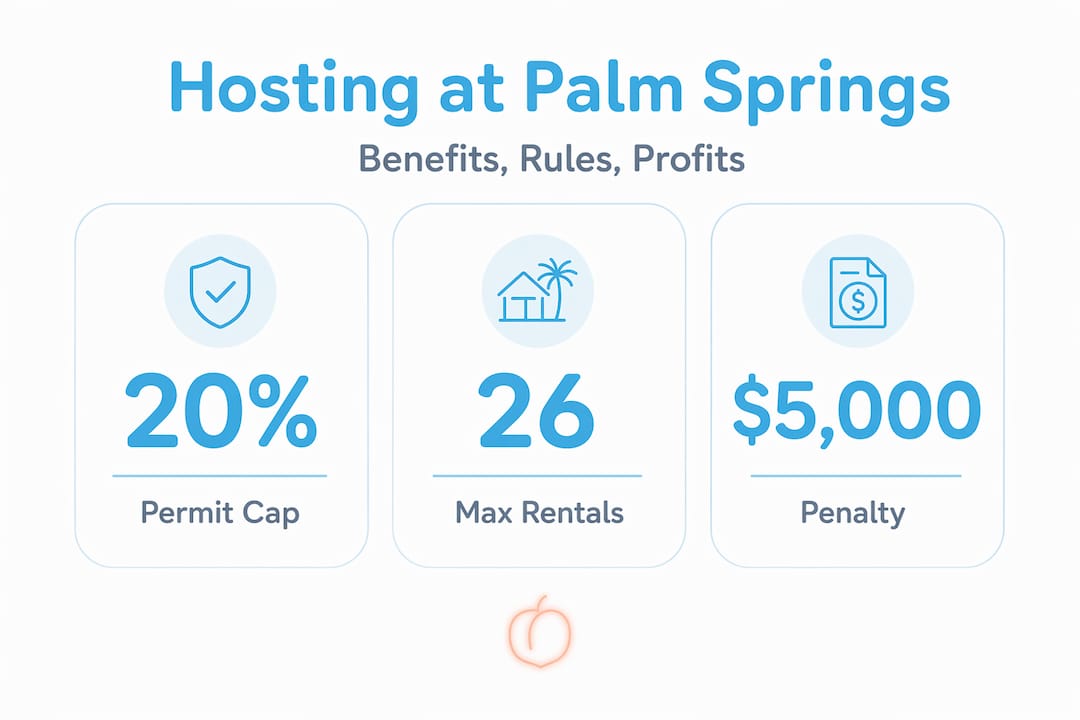
- Palm Springs caps vacation rental permits at 20% of residential units per neighborhood. Once that cap is hit, new applicants go on a waitlist. This is not a formality. In many desirable neighborhoods, the cap is already reached.
- Properties with a full Vacation Rental Certificate can execute up to 26 rental contracts per calendar year. Junior permits drop that number to just 6. Any stay of 28 days or fewer counts as a contract.
- Permit applications are not accepted if the property is in escrow. You must confirm permit availability before making a purchase offer, not after.
- Violations are pursued aggressively. Palm Springs enforces with over a 98% success rate on appeals, meaning once a violation is found, fighting it is nearly impossible.
"Failure to submit required contract summaries results in a $2,500 fine and permit suspension. Operating without a valid permit at all can mean fines up to $5,000 and a permanent ban from the vacation rental market." — Palm Springs vacation rental ordinance 2026
The penalty structure is not designed to be lenient. Hosts who treat the rules as suggestions find themselves permanently locked out of a market they paid real money to enter. Your due diligence process should include a direct check with the city on neighborhood permit density status before you make any offer. This single step can save you from an expensive and irreversible mistake.
For more context on group rental rules in Palm Springs, that breakdown covers the practical realities hosts face day to day.
Market trends and timing your hosting strategy
Once you have your permit sorted, the next question is how to actually make the numbers work inside Palm Springs' 26-contract annual ceiling. This is where strategy matters more than most new hosts expect.
Here is how the seasonal calendar plays out and how experienced hosts respond:
- November through April (peak season). Winter brings snowbirds, festival crowds, and premium nightly rates. This is when demand is highest and competition is sharpest. Properties with standout features, think unobstructed mountain views or true end-of-cul-de-sac privacy, command the strongest premiums.
- May and early June (shoulder season). Crowds thin, but serious leisure travelers remain. This window is ideal for longer stays from guests seeking a slower pace.
- July through September (summer meetings season). This is the most misunderstood window. Palm Springs actively markets summer for corporate meetings, offering incentives and unique activities to attract groups. Smart hosts who position their properties for small corporate retreats or wellness groups fill nights that competitors leave dark.
- October (pre-season ramp-up). Event calendars start filling again, and forward-thinking hosts who locked bookings early capture the best rates.
Pro Tip: Set minimum stays of 4 to 7 nights during peak and festival periods. Experienced hosts use this approach to optimize income under contract limits while reducing the administrative load of frequent guest turnover.
Here is how the guest profile breaks down across seasons:
| Season | Primary guest type | Typical stay length | Key motivator |
|---|---|---|---|
| Winter/festival | Leisure travelers, event-goers | 3 to 7 nights | Festivals, warm weather, culture |
| Shoulder | Couples, remote workers | 5 to 10 nights | Relaxation, slower pace |
| Summer | Corporate groups, wellness travelers | 2 to 5 nights | Meetings, value pricing, activities |
| Fall | Early-season leisure, groups | 4 to 7 nights | Pre-peak pricing, outdoor recreation |
Understanding these patterns lets you price intentionally rather than reactively. A host who maximizes their 26 annual contracts through strategic minimum stays and seasonal positioning will consistently outperform one who lists at flat rates year-round.

Palm Springs vs. other hosting markets
Choosing Palm Springs means choosing a regulated, premium market. That trade-off is worth examining honestly.
| Factor | Palm Springs | Typical beach markets | Mountain resort towns |
|---|---|---|---|
| Permit availability | Capped at 20% per neighborhood | Generally more open | Varies widely |
| Annual contract limit | 26 (full permit) | Usually unlimited | Often unlimited |
| Enforcement strictness | Very high | Moderate to high | Moderate |
| Year-round demand | Strong across all seasons | Summer-heavy | Winter or summer-heavy |
| Community culture | Strong, loyal, diverse | Transient | Mixed |
| Average nightly rate | Premium, especially peak season | Premium (seasonal) | Premium (seasonal) |
The tradeoff is clear. Palm Springs gives you stronger year-round demand and a guest base that returns because of Palm Springs location advantages, including its community character and natural setting. What you give up is the flexibility of an unregulated market. Hosts who thrive here tend to be organized, compliance-focused, and willing to think about their property as a true hospitality operation rather than a passive income stream.
One specific challenge: the competitive inventory in this market is genuinely strong. Mid-century modern architecture, resort-style pools, and designer interiors are table stakes in many price brackets. Hosts who differentiate through personal touches, local knowledge, and standout amenities consistently outperform those who rely on the destination alone to do the selling.
My honest take on the Palm Springs hosting market
I've watched people walk into Palm Springs assuming the permit is just a checkbox and the income will follow automatically. It almost never works that way.
What I've found is that the hosts who build real income here are the ones who treat regulatory compliance as a competitive advantage, not a burden. Because permits are capped, having one is genuinely valuable. It signals to guests that you are an established, professional operation. That matters.
What most new hosts overlook is the guest expectation level in Palm Springs. This is not a market where a bare-bones listing with stock photos will compete. Guests arriving here have done their research. They expect a property with personality, with an indoor/outdoor flow that actually works, genuine mountain views if you promise them, and a sense that someone thought carefully about their stay.
My contrarian take: the 26-contract limit is not a ceiling for ambitious hosts. It is a filter. It pushes you toward quality over volume, longer stays over churn, and guests who treat your home with care. The hosts I've seen struggle are the ones who fight that logic instead of working with it.
Palm Springs is exceptional for hosting. But exceptional does not mean easy.
— Rasmus
Experience Palm Springs hosting firsthand with Peach-residence
If you want to understand why Palm Springs draws serious hosts and serious guests, staying at a property that gets it right is the fastest education available.
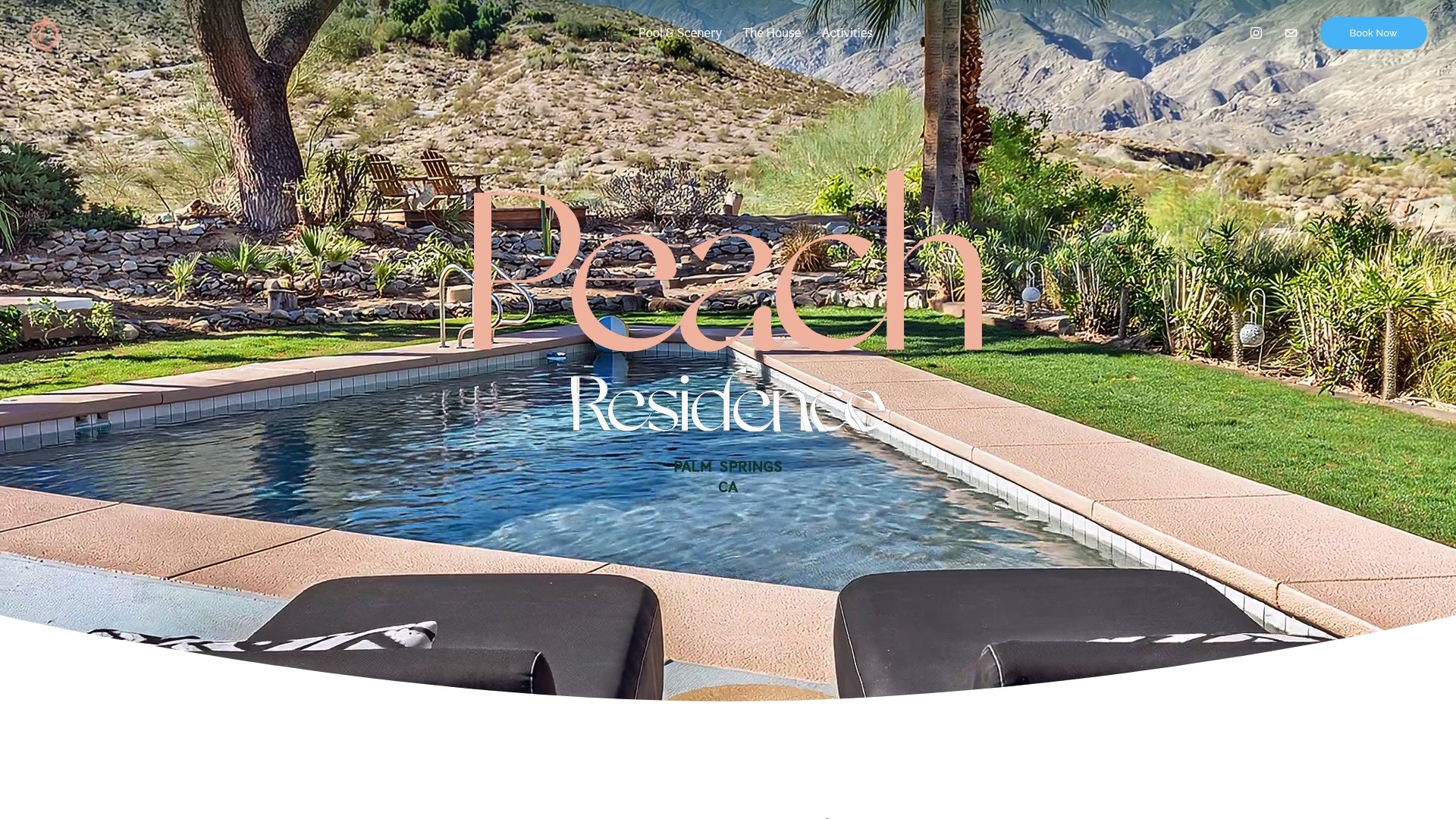
Peach-residence is a four-bedroom private property on a quiet cul-de-sac in Palm Springs, freshly updated in 2025, with mountain views that are genuinely unfiltered. No city light interference. No noise. Each bedroom carries its own character because a guest who books a personality-driven stay is a guest who comes back. The property sleeps up to 8 people, with rates starting at $65 per person per night. It is designed for the indoor/outdoor Palm Springs lifestyle with doors that open wide and a setting that makes the desert feel personal. Explore available local activities to see what your guests could experience during their stay.
FAQ
What is the permit cap for hosting in Palm Springs?
Palm Springs limits Vacation Rental Certificates to 20% of residential units per neighborhood. Once that cap is reached, new applicants are placed on a waitlist.
How many times can I rent my Palm Springs property per year?
Full Vacation Rental Certificate holders can execute up to 26 rental contracts per calendar year. Junior permits allow only 6 contracts, with any stay of 28 days or fewer counting as one contract.
What are the penalties for renting without a permit?
Operating without a valid permit can result in fines up to $5,000 and a permanent ban from the vacation rental market in Palm Springs.
Why choose Palm Springs for events or group stays over other destinations?
Palm Springs offers consistent year-round demand driven by festivals, corporate meetings, and a culturally rich, LGBTQ+ welcoming community, combined with tourism infrastructure investment that keeps the destination actively competitive.
Can I apply for a vacation rental permit while purchasing a property?
No. Permit applications are not accepted while a property is in escrow. Confirming permit availability in the target neighborhood must happen before making a purchase offer.