
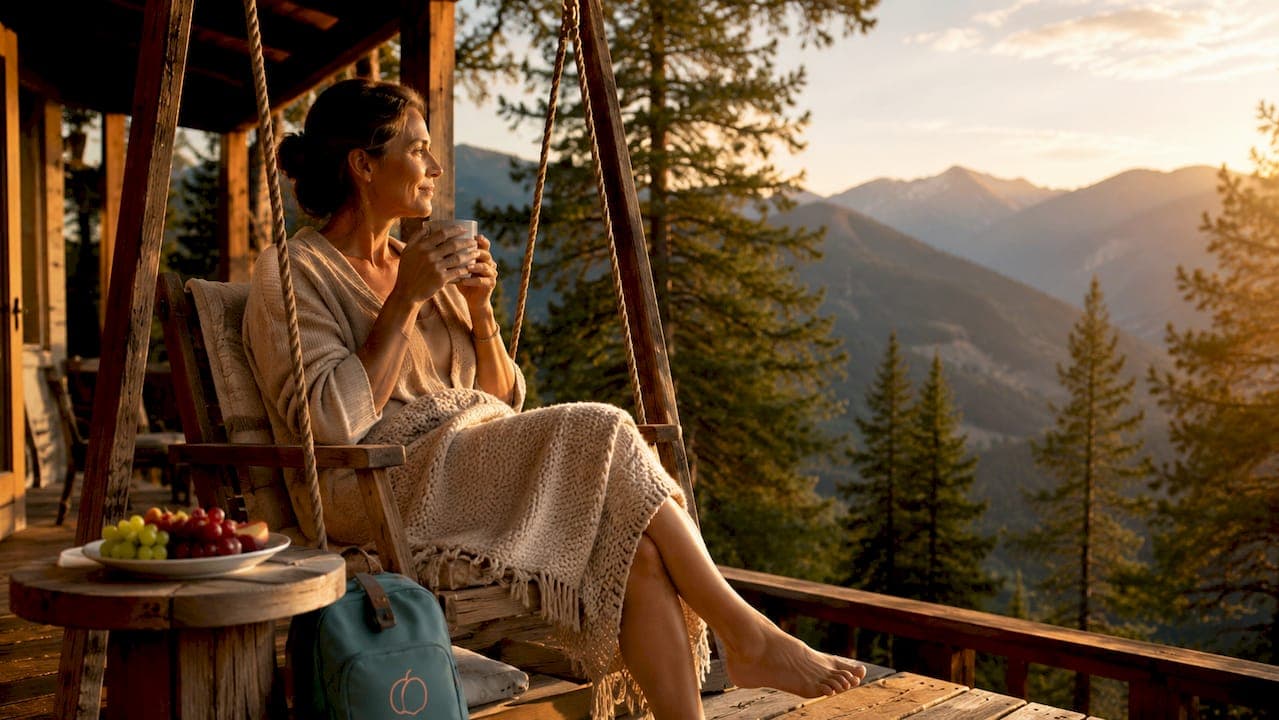
Mountain views are defined as one of the most powerful environmental tools for resetting the nervous system and deepening the wellness impact of any retreat. Research confirms that exposure to mountainous landscapes reduces tension significantly compared to urban settings. The role of mountain views in retreats goes far beyond aesthetics. They shape physiology, guide architectural decisions, and determine whether retreat participants leave genuinely restored or simply rested. This guide covers the science, the design principles, and the practical steps that make mountain scenery work for you.
What role do mountain views play in retreat wellness?
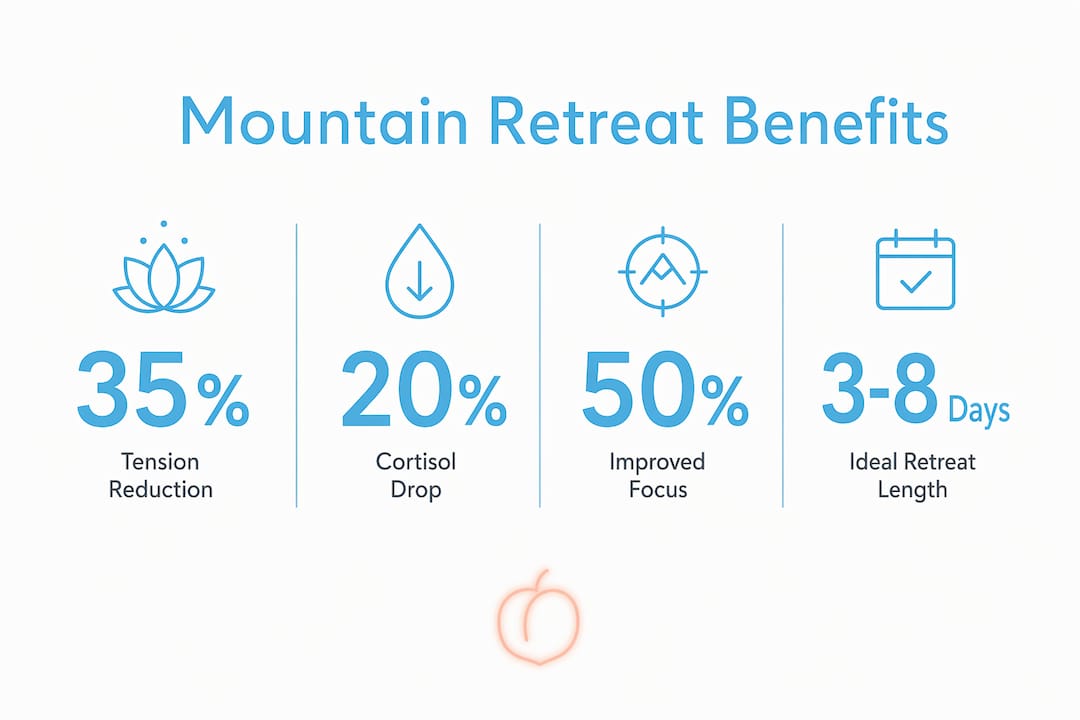
Mountain views are active wellness tools, not passive backdrops. A 2026 study measured tension levels on the POMS scale and found that participants exposed to mountainous landscapes dropped from 18.6 to 12.3. That is a measurable physiological shift, not a subjective feeling. For retreat planners, this means the view itself is part of the program.
The benefits of mountain views extend into the body. Mountain settings lower cortisol, reduce pulse rates, and improve cardiovascular efficiency. Moderate altitude exposure also stimulates red blood cell production and improves metabolic rates. These are the same mechanisms that make high-altitude training effective for athletes, applied here to recovery and rest.
Wide horizons also shift how the brain processes attention. In urban environments, the brain operates in directed attention mode, constantly filtering noise, screens, and demands. Mountain scenery triggers what researchers call effortless attention, where the brain focuses outward with no effort. That shift is what makes a mountain retreat feel genuinely different from a city spa weekend.
"When you stand at elevation and look out at a vast landscape, ordinary worries shrink. The perspective shift is real and measurable." — Scott Rollins, on the hormesis and perspective benefits of mountain environments.
Mountain environments also function as hormetic stressors. Mild challenges like cool air, uneven terrain, and steep trails activate the body's adaptive responses. The result is a stronger, more resilient nervous system after the retreat ends.
Key physiological benefits at a glance
- Cortisol reduction: Lower stress hormone levels within hours of mountain exposure
- Cardiovascular improvement: Reduced pulse rate and better heart efficiency at moderate altitude
- Red blood cell boost: Improved oxygen delivery from altitude-stimulated production
- Cognitive reset: Shift from directed to effortless attention reduces mental fatigue
- Hormetic strengthening: Mild physical challenges build resilience rather than depletion
How do mountain views shape retreat design and architecture?
The best mountain retreat architecture does not compete with the landscape. It prioritizes the view as the primary visual focus and builds everything else around it. Santani Kandy in Sri Lanka is the clearest example of this principle in practice. Its buildings use low profiles and floor-to-ceiling glass to frame the surrounding hills without interruption. The design philosophy is simple: the mountain is the feature, the building is the frame.
Pro Tip: When evaluating a retreat property, stand at the main living or meditation space and check whether the view is fully unobstructed. A single roofline, parking lot, or neighboring structure in the sightline reduces the psychological impact significantly.
Sightline privacy is equally critical. The Hidden Ridge Wellness Retreat defines this as the ability to enjoy views without visual intrusions like neighbors, cars, or commercial signage. Unobstructed views with privacy create the conditions for genuine solitude. Without that privacy, the nervous system stays partially alert, scanning for social cues and movement.
Sound is the most overlooked dimension of mountain retreat design. Natural soundscapes like wind, birdsong, and distant water are critical for nervous system recovery. Tourist noise, road traffic, or nearby construction can cancel out the visual calm entirely. Retreat planners should audit the acoustic environment as carefully as the view itself.
Design elements that maximize mountain scenery
- Floor-to-ceiling glass: Removes visual barriers between interior and landscape
- Low-profile building footprint: Keeps structures from blocking horizon lines
- End-of-road or cul-de-sac positioning: Eliminates through traffic and reduces noise
- Acoustic zoning: Separates guest spaces from any noise sources on the property
- Orientation toward the best view angle: Not all mountain views are equal; morning light on a western range looks flat
For retreat planners working with existing properties, the design strategies for maximizing views can be applied through furniture placement, window treatments, and outdoor seating orientation even without structural changes.
What should retreat planners and guests know before arriving?
Preparation determines how much of the mountain experience you actually absorb. Typical mountain retreats run 3–8 days and combine guided hiking, yoga, and communal meals. That schedule demands a baseline level of physical fitness. Arriving unprepared means spending the first two days sore and distracted rather than present.
- Train before you arrive. Walk with a weighted pack for two to three weeks before the retreat. Steep trails at altitude feel significantly harder than flat-ground cardio.
- Acclimatize on arrival. Spend the first 24–48 hours hydrating and doing only light restorative activity. Altitude headaches and fatigue are preventable with a gradual adjustment strategy.
- Balance activity and rest. A common mistake is filling every hour with guided sessions. Schedule at least two unstructured hours daily to sit with the view and let the nervous system do its work.
- Audit the location before booking. Check for nearby roads, tourist attractions, or commercial properties. A beautiful mountain view paired with a noisy environment delivers a fraction of the wellness benefit.
- Protect your quiet time. Limit phone use during the retreat. The effortless attention mechanism that mountain views activate is disrupted by notifications and social media scrolling.
Pro Tip: Book a property at the end of a cul-de-sac or a private road. Through traffic is the single most common acoustic problem at otherwise excellent mountain retreat locations.
The mountain view villa booking guide covers the specific questions to ask before committing to a property, including view angle, neighbor proximity, and noise environment.
How do mountain views build lasting mindfulness and creativity?
The psychological impact of mountain scenery does not end when the retreat does. Post-retreat behavioral changes documented in wellness research include increased outdoor activity, stronger prioritization of rest, and deliberate protection of quiet time. These are not temporary mood lifts. They are habit shifts driven by the perspective reset that mountain environments produce.
Creativity follows the same pattern. When the brain exits directed attention mode and enters effortless attention, it becomes more associative and less linear. Writers, designers, and executives who attend mountain retreats consistently report breakthroughs on problems they had been stuck on for weeks. The mechanism is not mystical. It is the result of giving an overloaded prefrontal cortex a genuine rest.
"Transitioning from directed attention to effortless attention in mountains reduces mental fatigue and fosters deep relaxation." — Research on nature's restorative effects on cognitive function.
The perspective shift that elevation provides is a separate mechanism. Scott Rollins describes it as a form of hormesis: the mild stress of altitude and physical challenge strengthens mental resilience. Retreat participants who engage with the landscape physically, through hiking or outdoor yoga, report stronger and longer-lasting mood improvements than those who only observe the view from indoors.
Lasting benefits that extend beyond the retreat
- Habit formation: Outdoor activity and rest prioritization persist weeks after return
- Creative unblocking: Effortless attention mode generates associative thinking
- Resilience building: Hormetic mountain challenges strengthen stress response
- Perspective recalibration: Elevation physically reframes the scale of daily problems
- Sleep improvement: Reduced cortisol and physical activity combine for deeper sleep
The reasons to choose mountain views for any extended stay go well beyond the visual. The physiological and psychological mechanisms described here are why nature-based hospitality continues to grow as a category in wellness travel.
Key Takeaways
Mountain views are the most direct environmental lever retreat planners have for producing measurable wellness outcomes in participants.
| Point | Details |
|---|---|
| Views reduce tension measurably | Exposure to mountain landscapes dropped POMS tension scores from 18.6 to 12.3 in a 2026 study. |
| Design must prioritize the landscape | Low-profile buildings, floor-to-ceiling glass, and sightline privacy maximize the calming effect. |
| Sound matters as much as sight | Natural soundscapes are critical; tourist noise cancels out the visual calm of even the best views. |
| Preparation prevents wasted days | Acclimatize in the first 24–48 hours and train physically before arrival to stay present from day one. |
| Benefits outlast the retreat | Post-retreat habit changes including rest, outdoor activity, and quiet time protection persist long after return. |
Why most retreat planners underestimate the view
I have visited and evaluated dozens of retreat properties across the American Southwest, the Rockies, and internationally. The single most consistent mistake I see is treating the mountain view as a selling point rather than a design constraint. Planners spend months on program content, chef menus, and yoga schedules, then book a property where a neighbor's roofline cuts through the best sightline.
The view is not decoration. It is the primary therapeutic mechanism. Everything else, the guided sessions, the meals, the breathwork, amplifies what the landscape is already doing to the nervous system. When the view is compromised by noise, visual clutter, or poor orientation, the program has to work much harder to deliver the same result.
The other thing most guests overlook is the acoustic dimension. I have stayed at properties with genuinely spectacular mountain panoramas that were acoustically ruined by a nearby highway. The eyes see calm. The nervous system hears threat. The result is a retreat that feels good in photos but leaves you only partially restored.
My advice is simple. Before you book, spend 30 minutes on the property at dawn and at dusk. Listen as carefully as you look. The retreats that change you are the ones where both senses confirm the same thing: you are genuinely away.
— Rasmus
Peach-residence: mountain views built into every hour
Peach-residence in Palm Springs delivers exactly what the research describes: unobstructed desert mountain views, end-of-the-cul-de-sac quiet, and zero light pollution. The property sits with one neighbor and wide-open skies that shift from gold to deep violet as the sun drops behind the San Jacinto range.
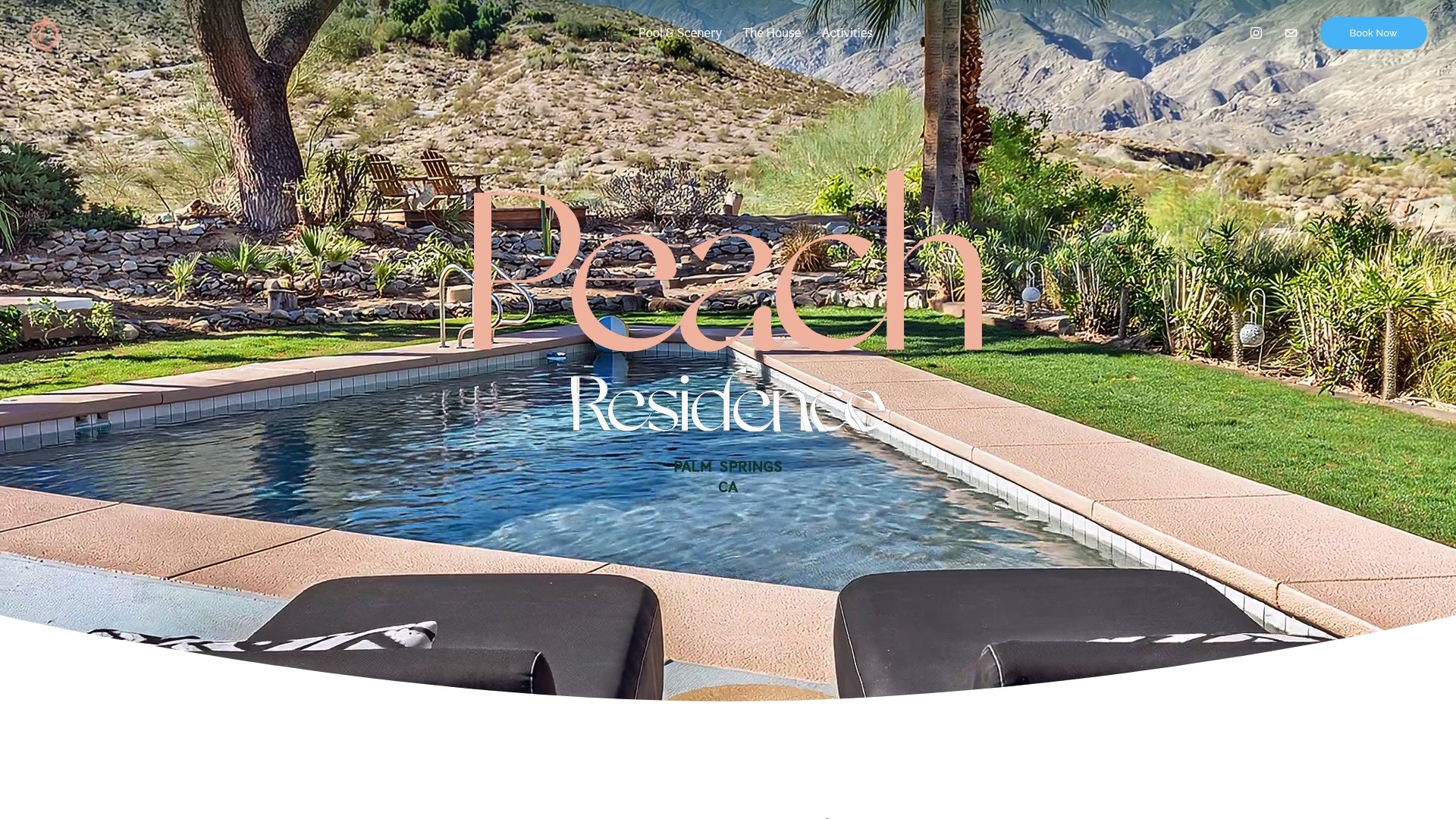
The four-bedroom layout sleeps up to 8 people, making it a natural fit for small group retreats, creative offsites, or family wellness weekends. Freshly updated in 2025, the indoor/outdoor design keeps the mountain scenery in frame from every main living space. Starting at $65 per person per night, it is one of the most accessible mountain view retreats in the Palm Springs area. Check availability and room details at the Peach-residence house page.
FAQ
What is the role of mountain views in retreats?
Mountain views reduce cortisol, lower tension scores, and trigger effortless attention in the brain. These physiological and psychological effects make them the primary wellness mechanism in any well-designed mountain retreat.
How long should a mountain retreat last to see real benefits?
Most mountain retreats run 3–8 days. Research suggests that meaningful physiological changes, including cortisol reduction and cardiovascular improvement, begin within the first 24–48 hours of mountain exposure.
Does altitude affect the retreat experience?
Yes. Moderate altitude improves metabolic rates and red blood cell production, which supports healing and energy. Acclimatization in the first 24–48 hours with hydration and light activity prevents headaches and fatigue.
Why does sound matter as much as the view?
Natural soundscapes like wind and birdsong are critical for nervous system recovery. Tourist noise or road traffic disrupts the same calming mechanisms that mountain views activate, reducing the overall wellness benefit.
Can mountain retreat benefits last after you go home?
Research confirms that post-retreat behavioral changes, including increased outdoor activity, better rest habits, and protection of quiet time, persist well beyond the trip itself.