

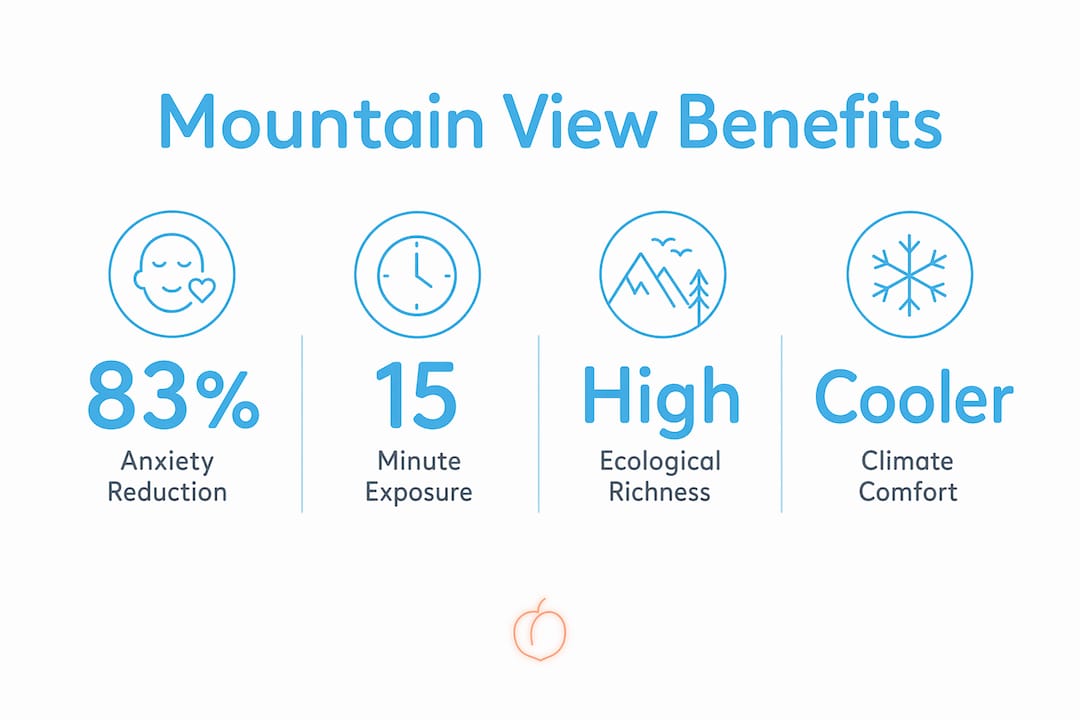
Mountain views are the single most restorative vacation scenery available to travelers, combining measurable mental health benefits, cooler climates, and ecological richness that beaches and cityscapes simply cannot match. The science behind this claim is now substantial. A 2026 meta-analysis covering over 10 million participants confirmed that nature exposure reduces anxiety with an effect size of SMD=−0.83 and depressive symptoms by SMD=−0.72. That is not a marginal improvement. It means the case for choosing mountain scenery as your vacation backdrop is backed by some of the strongest evidence in environmental psychology today.
Why choose mountain views for mental health and relaxation
The psychological case for mountain views starts with what researchers call nature-based interventions, a term covering any deliberate exposure to natural environments as a tool for mental restoration. Visual contact with green, layered mountain landscapes is one of the most effective forms this intervention takes.
A VR-EEG study with 480 participants found that green views raised restorative scores on the Restorative Outcome Scale and measurably lowered anxiety across different soundscape conditions. This matters because it confirms that simply seeing a mountain landscape from a window or a porch delivers real physiological change. You do not need to hike for hours to get the benefit.
"Visual exposure to mountain views is a primary pathway to perceived psychological restoration, even without constant physical activity like hiking." — Nature Human Behaviour meta-analysis, 2026
Attention Restoration Theory, developed by Rachel and Stephen Kaplan at the University of Michigan, explains the mechanism. Natural environments capture what researchers call involuntary attention, giving your directed attention system a chance to recover. Mountain landscapes, with their depth, color variation, and organic complexity, are particularly effective triggers for this recovery process.
The practical implication is straightforward. Even brief exposure works. Short nature exposures of 5 to 15 minutes produce measurable cognitive restoration, meaning a morning coffee on a mountain-view terrace is not indulgence. It is a legitimate mental health practice.
What makes mountain landscapes aesthetically and ecologically superior?
Not all green views are equal. Research published in Frontiers in Forests and Global Change identified the specific landscape qualities that drive restorative benefits, and mountain scenery scores high on nearly every dimension.
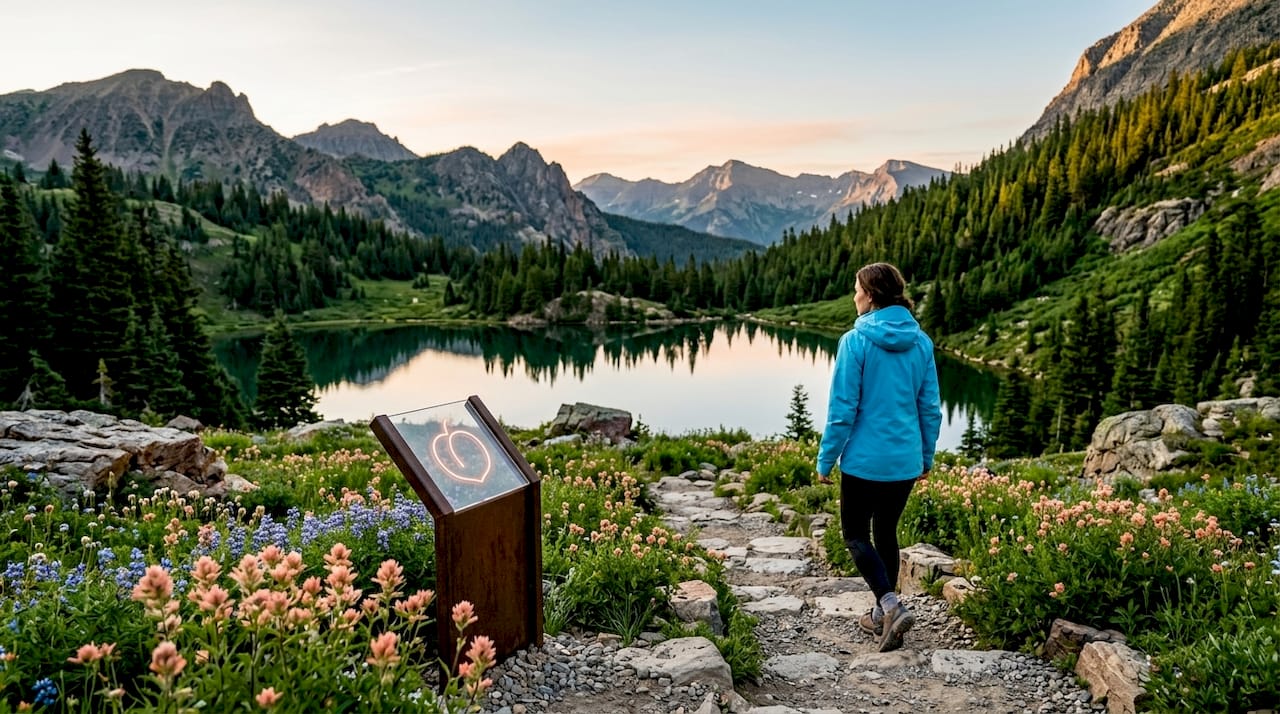
The study found that ecological and color attributes directly improve restorative outcomes, while spatial features work indirectly through perceived restorative experience. In plain terms, a mountain view rich in plant species diversity, seasonal color shifts, and layered depth does more for your wellbeing than a flat, uniform green field.
| Feature | Mountain view quality | Impact on restoration |
|---|---|---|
| Ecological richness | High plant species diversity, varied textures | Directly improves restorative benefit |
| Color diversity | Seasonal shifts from green to gold to rust | Enhances visual engagement and mood |
| Spatial balance | Mix of open panoramas and sheltered terrain | Increases psychological comfort and security |
| Structural complexity | Layered ridgelines, rock faces, tree canopy | Sustains involuntary attention longer |
The concept of prospect and refuge is worth understanding here. Prospect refers to open, wide views that give you a sense of control and awareness. Refuge refers to sheltered, enclosed spaces that create a sense of safety. Mountain landscapes naturally offer both: a sweeping ridgeline view paired with a shaded canyon or forested slope. Research confirms that balanced prospect and refuge qualities maximize psychological comfort in ways that purely open ocean views or enclosed urban settings cannot replicate.
Pro Tip: When evaluating a mountain view rental, look for rooms where you can see both an open panorama and some foreground vegetation or rock formation. That combination triggers the deepest restorative response, not just the widest view.
Mountain views vs ocean views and cityscapes: which wins?
The comparison between mountain views and other vacation scenery is not purely subjective. Climate, noise levels, crowd density, and activity access all factor into the restorative quality of a destination.
Mountain resorts like Brian Head in Utah, Spruce Peak in Vermont, and Laurel Highlands in Pennsylvania maintain temperatures well below surrounding lowlands during summer months. Juneau, Alaska averages summer highs in the 50s and 60s Fahrenheit while coastal cities bake. That temperature differential is not just comfort. Heat stress measurably impairs mood, sleep quality, and cognitive performance, so the cooler mountain climate is a direct wellness advantage.
| Factor | Mountain views | Ocean/beach views | City views |
|---|---|---|---|
| Summer temperature | Cooler, often 10 to 20°F below lowlands | Hot, humid, sun-exposed | Hot, urban heat island effect |
| Noise level | Low, natural soundscapes | Moderate, waves and crowds | High, traffic and construction |
| Crowd density | Generally lower | High in peak season | Very high |
| Restorative quality | High, synergy of visual and acoustic calm | Moderate, visual benefit reduced by noise | Low, urban stimulation overrides restoration |
| Outdoor activity access | Hiking, wildlife watching, stargazing | Swimming, water sports | Urban exploration |
The noise factor deserves particular attention. VR-EEG research confirms that quiet soundscapes amplify the restorative effect of green visual environments. A beach view next to a crowded boardwalk delivers far less psychological restoration than the same quality of green view in a quiet mountain setting. The synergy between what you see and what you hear determines the outcome.
Pro Tip: When booking a mountain view property, prioritize end-of-road or cul-de-sac locations over properties on main roads. The reduction in ambient traffic noise compounds the visual restoration benefit significantly. You can find detailed guidance on selecting mountain-view lodging that maximizes both factors.
How to get the most out of a mountain view vacation
Knowing the science is useful. Applying it to your actual trip planning is where the real gains come from. These strategies are grounded in the research above, not generic travel advice.
Choose your accommodation deliberately. The quality of your view matters more than the quantity of amenities. Look for properties where the main living spaces face the mountain rather than a parking lot or road. Window views with vegetation directly affect your relaxation and restorative experience throughout the stay, not just during planned outdoor time.
Build in deliberate view breaks. Research on cognitive restoration from nature exposure confirms that 5 to 15 minutes of focused attention on a natural view restores directed attention capacity. Schedule these intentionally, especially on travel days or after long drives.
Time your visit for color diversity. Autumn in the Rockies, the San Jacinto Mountains near Palm Springs, or the Blue Ridge Mountains in Virginia delivers the highest ecological color diversity of any season. That color richness directly amplifies the restorative benefit, per the Frontiers research cited above.
Pair views with low-intensity outdoor activity. The following activities complement mountain scenery and extend the wellness benefit beyond passive viewing:
- Early morning walks on trails with open ridgeline views
- Wildlife watching at dawn or dusk when animal activity peaks
- Stargazing from a dark-sky location, which mountain destinations typically offer
- Outdoor meals on a terrace or deck facing the mountain panorama
- Slow photography walks that train your attention on landscape detail
Select destinations with proven view quality. The San Jacinto Mountains visible from Palm Springs, the Teton Range in Wyoming, the Cascades in Oregon and Washington, and the Dolomites in northern Italy consistently rank among the most visually complex and ecologically rich mountain landscapes accessible to travelers. Each offers the layered depth, color variation, and spatial balance that research identifies as the highest-restoration combination.
Key takeaways
Mountain views deliver measurable mental and physical restoration through a combination of ecological richness, cooler climates, and quiet soundscapes that beaches and cities cannot replicate.
| Point | Details |
|---|---|
| Mental health impact | Nature exposure reduces anxiety by SMD=−0.83 and depressive symptoms by SMD=−0.72 in large-scale meta-analysis. |
| Ecological quality matters | Plant diversity, color variation, and spatial balance drive restoration, not just the presence of green. |
| Quiet amplifies the benefit | Mountain soundscapes synergize with visual green cues to produce stronger restorative outcomes than noisy environments. |
| Short breaks are enough | Five to 15 minutes of focused mountain view exposure delivers measurable cognitive and psychological restoration. |
| Accommodation choice is critical | Properties with prospect-and-refuge view balance and low ambient noise maximize the restorative potential of any stay. |
What I've learned from chasing mountain views across three continents
I have spent a lot of time in places with extraordinary views: the Dolomites, the Atlas Mountains in Morocco, the San Jacinto range above Palm Springs. The honest observation after all of it is that most travelers underestimate how much the quality of the view matters relative to the quantity of activities available.
The best mountain view experiences I have had were not at the most famous resorts. They were at quieter properties where the main room faced the mountain, the nearest road was a five-minute walk away, and the only sound at 6 a.m. was wind. That combination, open view plus acoustic calm, is what the research now confirms produces the deepest restoration. I knew it intuitively before I read the studies. The studies just explained why.
The other thing I have noticed is that people plan their mountain trips around hiking schedules and miss the passive benefit entirely. You do not need to earn the view. Sitting with a coffee and looking at a ridgeline for 20 minutes does something real to your nervous system. The EEG data backs this up. Build that into your itinerary the same way you would book a trail.
My practical advice: prioritize the view from your bed and your main living space above everything else when choosing accommodation. You will spend more time looking at that view than you will spend on any single trail. Make it count.
— Rasmus
Experience mountain views at Peach-residence Palm Springs
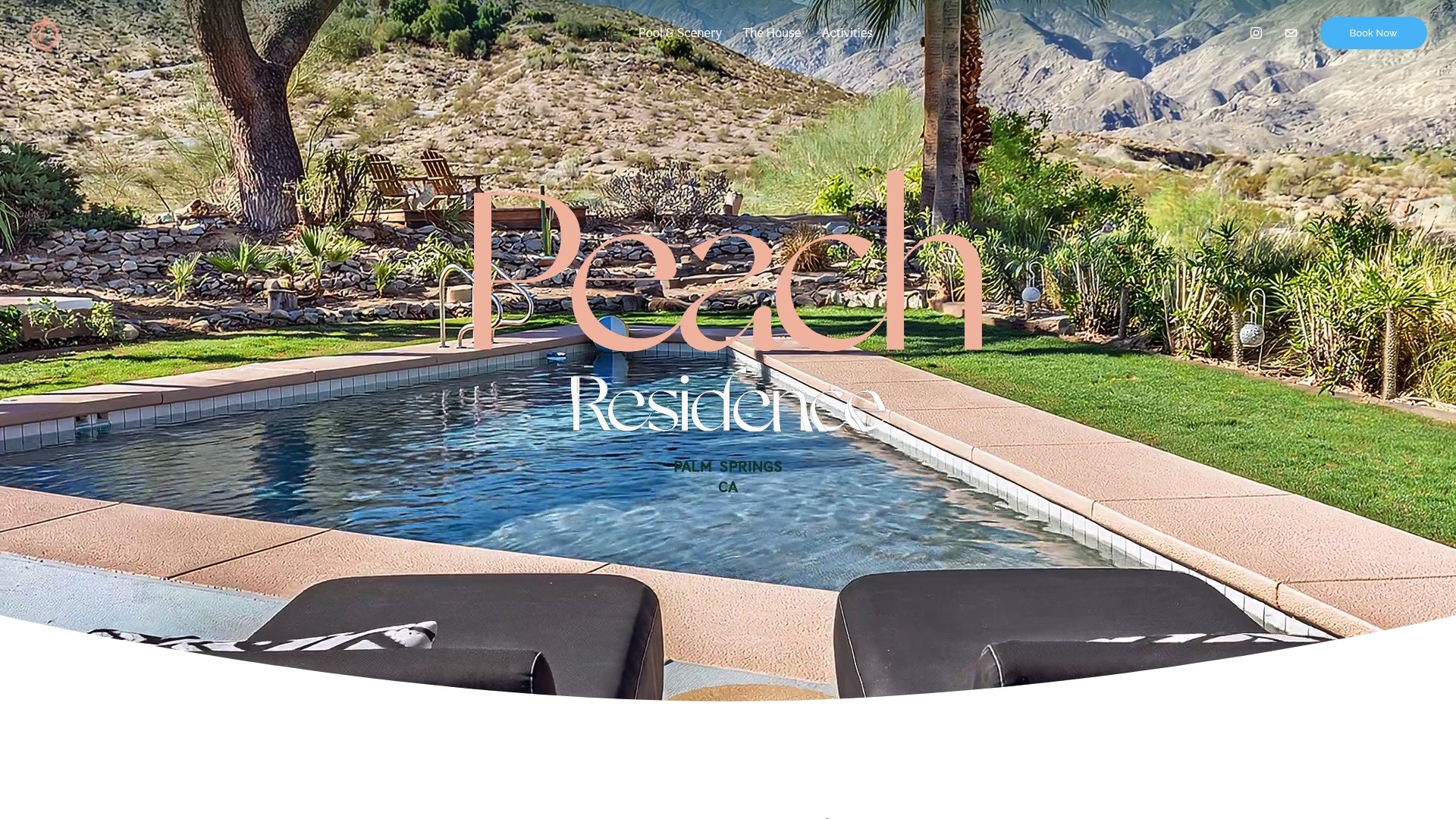
Peach-residence sits at the end of a quiet cul-de-sac in Palm Springs with unobstructed views of the San Jacinto Mountains and exactly one neighbor. The property sleeps eight across four distinct bedrooms, all updated in 2025, and fully commits to the indoor/outdoor lifestyle the research above describes: doors open, mountain panorama visible from the main living space, no city noise, no light pollution. Rates start at $65 per person per night. If you want to understand what the prospect-and-refuge balance feels like in practice, this is the place to experience it. The outdoor activities available from the property extend the wellness benefit well beyond the view itself.
FAQ
What are the main benefits of mountain views?
Mountain views reduce anxiety and depressive symptoms through nature-based visual exposure, with meta-analysis data showing effect sizes of SMD=−0.83 for anxiety and SMD=−0.72 for depression. Cooler temperatures, quieter soundscapes, and ecological richness add physical comfort and deeper psychological restoration on top of those mental health gains.
How long do you need to look at a mountain view to feel the benefit?
Research on attention restoration confirms that 5 to 15 minutes of nature exposure produces measurable cognitive and psychological restoration. Longer exposure compounds the benefit, but even short, deliberate view breaks during a vacation day deliver real results.
Are mountain views better than ocean views for relaxation?
Mountain views generally produce stronger restorative outcomes because they combine visual green complexity with quieter soundscapes. Ocean views offer visual benefit, but beach environments typically carry higher noise and crowd levels that reduce the restorative effect, per VR-EEG research on soundscape and visual synergy.
What should I look for in a mountain view accommodation?
Prioritize properties where the main living space and bedroom face the mountain directly, with some foreground vegetation visible alongside the open panorama. That prospect-and-refuge balance, combined with low ambient noise, produces the highest restorative outcome according to current landscape psychology research.
Why do mountain destinations feel cooler than beach or city destinations?
Elevation reduces ambient temperature, and mountain resorts consistently maintain cooler summer temperatures than surrounding lowlands, often by 10 to 20 degrees Fahrenheit. That temperature difference directly improves sleep quality, physical comfort, and mood throughout a stay.