
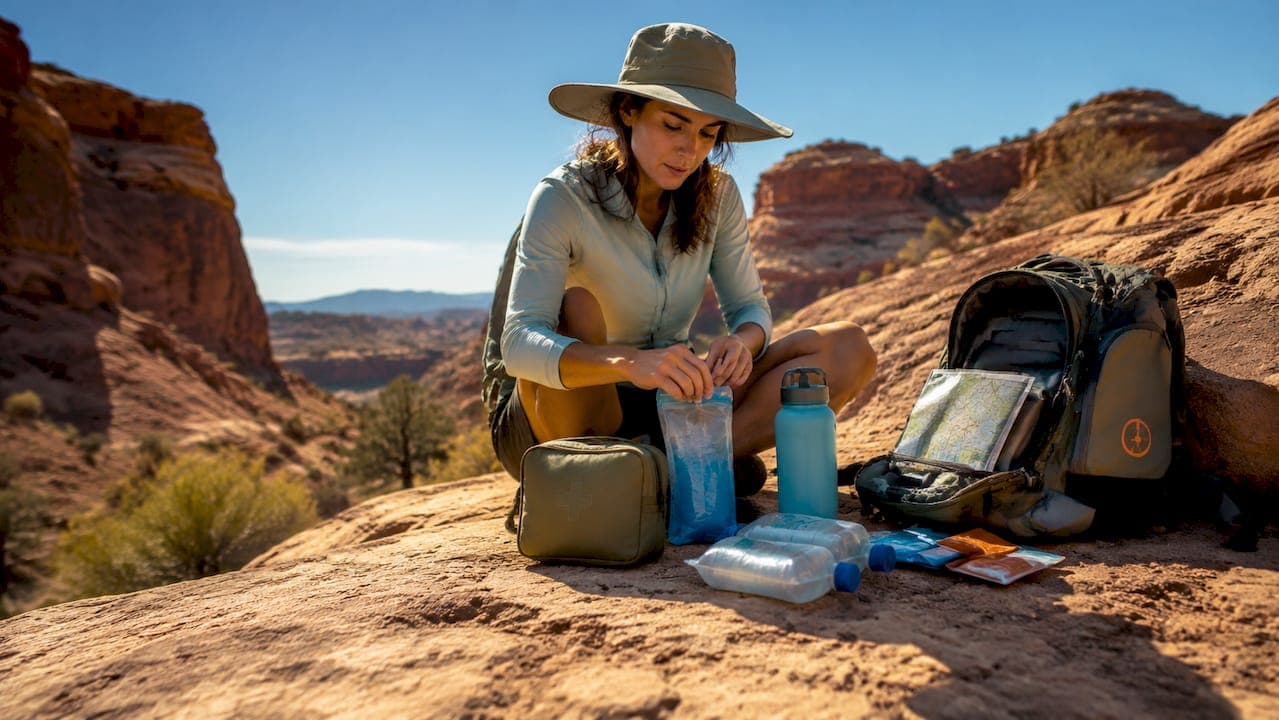
Desert travel safety tips are the practical guidelines that separate a memorable adventure from a life-threatening emergency. The Sonoran Desert, the Sahara, and the Mojave all share one truth: the environment does not forgive poor preparation. Dehydration, flash floods, vehicle breakdowns, and extreme temperature swings are not rare events. They are the default conditions. This article covers the most critical safety measures for desert travel in 2026, drawing on guidance from Backroad Planet, Hema Maps, and desert survival experts to keep you safe from the first mile to the last.
1. Carry far more water than you think you need
The single most important desert travel precaution is water. Travelers should carry a minimum of 1 gallon of water per person per day, and hikers or cyclists in hot conditions should double that to 2 gallons. That baseline assumes no delays, no emergencies, and no unexpected detours. None of those assumptions hold in the desert.
Heat causes dehydration even when you are not visibly sweating, which means your body is losing fluid faster than your thirst signals can track. Drink small amounts steadily throughout the day rather than large quantities at irregular intervals. Waiting until you feel thirsty means you are already behind.
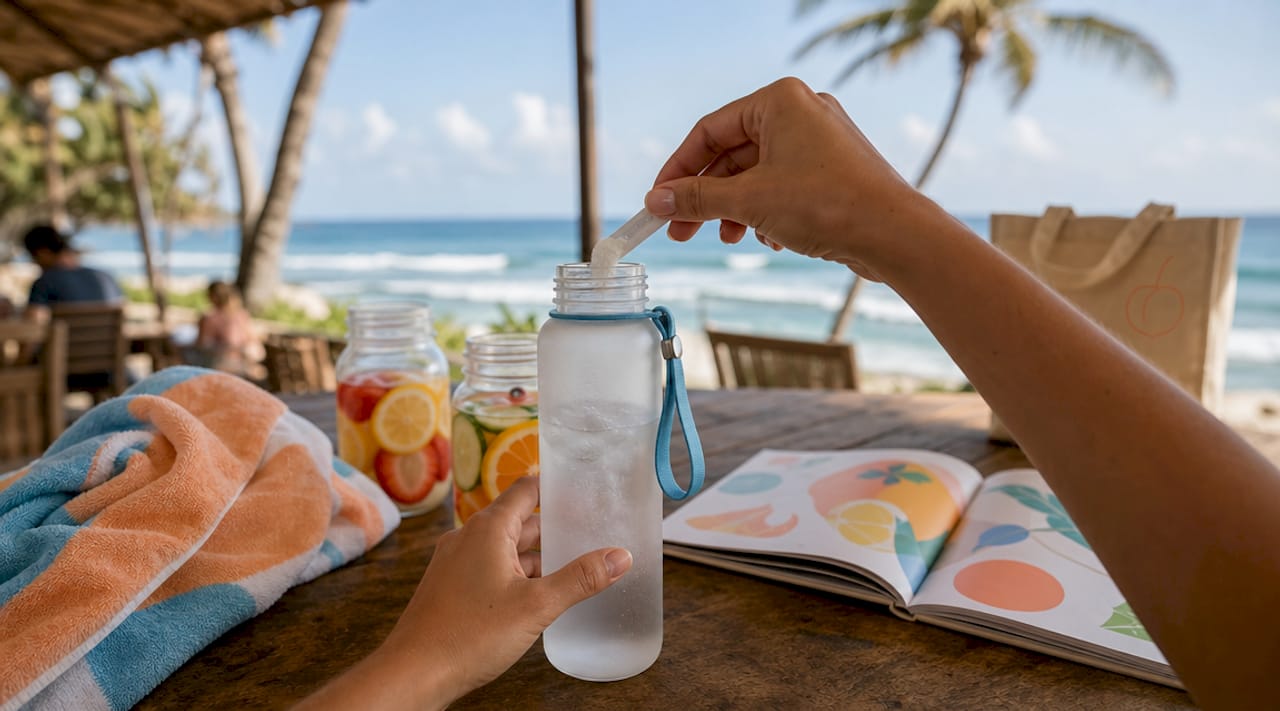
Electrolytes matter as much as volume. Plain water flushes sodium and potassium out of your system during heavy sweating, which can cause hyponatremia, a dangerous drop in blood sodium. Carry electrolyte tablets, sports drinks, or salty snacks to replace what you lose. Brands like Nuun, Liquid I.V., and Pedialyte Sport are compact and effective for desert conditions.
Pro Tip: Pack your water supply in multiple containers rather than one large jug. If one container leaks or cracks in the heat, you still have reserves.
2. Protect yourself from sun and heat exposure
Clothing is your first line of defense against desert heat. Light-colored, loose, breathable fabrics reflect sunlight and allow airflow across the skin. UV-protective shirts rated UPF 50+ from brands like Coolibar or Columbia PFG reduce direct radiation exposure without adding bulk or weight.
A wide-brim hat is non-negotiable. It shades your face, neck, and ears, which are the areas most vulnerable to sunburn and heat absorption. Pair it with wraparound sunglasses rated for UV400 protection and a broad-spectrum SPF 50 sunscreen applied every two hours, including on the backs of your hands and the tops of your feet if wearing sandals.
Schedule your most physically demanding activities for early morning or late afternoon. Between 10 a.m. and 3 p.m., ground temperatures in desert environments can exceed air temperatures by 30 to 40 degrees Fahrenheit. Shade use during peak hours is not a comfort choice. It is a survival strategy. Using shade to reduce exertion directly cuts your water loss rate and lowers your risk of heat exhaustion.
Heat exhaustion presents as heavy sweating, weakness, cold or pale skin, a fast but weak pulse, and nausea. Move the affected person to shade immediately, apply cool wet cloths, and have them sip water. Heat stroke, where the body stops sweating and skin becomes hot and red, is a medical emergency requiring immediate evacuation.
Pro Tip: Carry a small spray bottle filled with water. A fine mist on exposed skin combined with natural airflow creates a cooling effect that costs almost nothing in weight.
3. Prepare your vehicle before you leave home
Vehicle failure in a remote desert is not an inconvenience. It is a survival scenario. Inspect your vehicle mechanically at least four weeks before departure, focusing on coolant levels, brake fluid, engine oil, air filters, and suspension components. Four weeks gives you time to source parts and complete repairs without rushing.
Tire selection matters more than most travelers realize. Light truck construction tires handle the combination of soft sand, sharp rock, and high heat far better than standard passenger tires. Check tire pressure cold before each day of driving, as desert heat causes significant pressure increases that can lead to blowouts.
Keep heavy cargo low and centered in the vehicle. Uneven loading stresses suspension mounts, shifts the center of gravity, and makes the vehicle harder to control on uneven terrain. Water and fuel containers should sit on the floor, not on roof racks, whenever possible.
| Item | Why it matters |
|---|---|
| Spare tire (full size) | A compact spare cannot handle extended off-road driving |
| Extra fuel (10-20% above estimated need) | Desert detours and soft sand increase fuel consumption significantly |
| Coolant and engine oil | Heat accelerates fluid loss; top-ups prevent catastrophic engine failure |
| Tow rope and recovery boards | Self-recovery from sand or mud requires equipment, not just effort |
| Basic tool kit | Loose bolts and minor mechanical issues are fixable roadside with the right tools |
Pro Tip: Pack a 72-hour grab bag with water, food, a first aid kit, a space blanket, and a charged satellite communicator. Keep it accessible in the cab, not buried in the trunk.
4. Master navigation and know your flash flood risk
GPS devices fail. Batteries die. Cell signals disappear within the first few miles of most desert tracks. Layered navigation using GPS, paper maps, a compass, and natural landmarks is the standard for safe desert travel. Each layer backs up the others when conditions change or technology fails.
Before you leave, share your full itinerary with someone who is not on the trip. Include your planned route, campsites, and a check-in schedule. If you miss a check-in, that person should know exactly when to call for help and who to contact.
Flash floods are the most underestimated hazard in desert travel. Flash floods can occur with no warning even when the sky above you is completely clear, because the triggering rainstorm may be miles upstream. Narrow canyons and dry riverbeds are the most dangerous locations during any rain forecast in the region.
| Flash flood warning sign | Correct response |
|---|---|
| Sudden rise in water in a dry channel | Move to high ground immediately |
| Roaring or rumbling sound upstream | Do not wait to confirm. Evacuate uphill now |
| Muddy or debris-filled water appearing | The flood is already in motion. Get out of the channel |
| Rain visible on distant mountains | Avoid all canyon bottoms and washes for the next several hours |
Pro Tip: Download offline topographic maps using apps like Gaia GPS or Maps.me before you lose cell service. These apps work without any signal and show elevation contours that help you identify flood-prone terrain.
5. Handle wildlife encounters and cold desert nights
Desert wildlife encounters are common and manageable when you know what to expect. Snakes, scorpions, and coyotes are the most frequent hazards across North American and Middle Eastern deserts. The majority of snake and scorpion bites happen when travelers reach into dark spaces or step without looking.
Follow these practices at every campsite and trailhead:
- Shake out footwear, clothing, and sleeping bags before use. Scorpions seek warm, dark spaces overnight.
- Use a headlamp when walking after dark. Most venomous snakes in the Mojave and Sonoran deserts are nocturnal.
- Keep your campsite clean and food sealed. Coyotes and rodents attracted by food scraps bring secondary hazards including bites and disease.
- Never reach under rocks, into crevices, or behind logs without first checking with a stick or trekking pole.
- If bitten by a snake, immobilize the affected limb, keep it below heart level, and get to medical care as fast as possible. Do not cut, suck, or apply a tourniquet.
Desert nights drop temperature rapidly, sometimes by 40 to 50 degrees Fahrenheit from the daytime peak. A traveler who was overheating at 2 p.m. can be dangerously cold by midnight without insulating layers. Pack a down or synthetic insulated jacket, thermal base layers, and a sleeping bag rated at least 10 degrees below the expected overnight low. Carry a headlamp with fresh batteries as a separate item from your phone flashlight.
Pro Tip: Check the desert nights guide for specific temperature ranges and gear recommendations by season before your trip.
Key takeaways
Safe desert travel depends on preparation before departure, not improvisation in the field. Every risk from dehydration to flash floods to vehicle failure is manageable with the right systems in place.
| Point | Details |
|---|---|
| Water is your first priority | Carry 1 to 2 gallons per person per day and add electrolytes to prevent hyponatremia. |
| Vehicle prep starts four weeks out | Inspect fluids, tires, and suspension before departure and pack a 72-hour grab bag. |
| Layered navigation prevents getting lost | Combine GPS, paper maps, and a compass so one failure does not strand you. |
| Flash floods need zero warning time | Avoid canyons and dry riverbeds during any regional rain forecast, even with clear skies above. |
| Cold nights are as dangerous as hot days | Pack insulating layers rated for temperatures 10 degrees below the expected overnight low. |
What I've learned from treating every desert trip as a survival exercise
The most common mistake I see is treating desert travel like a road trip with extra sunscreen. People pack for the best-case scenario and get blindsided by the second-worst one. A minor incident becomes an emergency faster in the desert than anywhere else I have traveled, because the environment removes every safety net simultaneously.
The habit that changed how I travel in the desert is building a pre-departure checklist that I treat as non-negotiable. Water quantity, vehicle inspection, navigation backup, and a shared itinerary are not optional items I get to when I have time. They are the price of admission. If any one of them is incomplete, the trip does not start.
I have also learned to respect the midday hours more than any other safety rule. Skipping a two-hour rest during peak heat to cover more ground is a false economy. You burn more water, make worse decisions, and arrive at camp exhausted. The desert rewards patience. The travelers who move slowly, rest in shade, and drink before they are thirsty are the ones who come back with good stories instead of cautionary ones.
The desert vacation health checklist I recommend to anyone planning a first desert trip covers the physical preparation side in detail. Pair it with a solid vehicle inspection and a realistic water plan, and you are already ahead of most people who head out into the sand.
— Rasmus
Stay safe and comfortable at Peach-residence in Palm Springs

Peach-residence sits at the end of a quiet cul-de-sac in Palm Springs, giving you direct access to some of the most dramatic desert terrain in the American Southwest without sacrificing comfort or safety. Four bedrooms, mountain views that do not quit, and a fully updated 2025 property designed for groups of up to eight people. At as low as $65 per person per night, it is the kind of base camp that makes every desert adventure more manageable and a lot more enjoyable.
You get the full Palm Springs indoor/outdoor experience: open doors, fresh desert air, and a space that takes the edge off after a long day in the sun. Book your stay and explore the organized desert activities available through the property for guided, safety-conscious adventures into the surrounding landscape.
FAQ
How much water should I carry for a desert hike?
Carry at least 2 gallons of water per person per day for hiking in hot desert conditions. Add electrolyte supplements to replace sodium and potassium lost through sweating.
What are the biggest dangers in desert travel?
Dehydration, heat exhaustion, flash floods, vehicle failure, and getting lost are the primary hazards. Each one is preventable with preparation, but all five can escalate to life-threatening situations within hours.
How do I stay safe from flash floods in the desert?
Avoid dry riverbeds and narrow canyons during any regional rain forecast. Flash floods can arrive with no warning even under clear skies, because the triggering storm may be miles upstream.
What should I pack for cold desert nights?
Pack an insulated jacket, thermal base layers, and a sleeping bag rated at least 10 degrees below the expected overnight low. Desert temperatures can drop 40 to 50 degrees Fahrenheit from the daytime peak.
Do I need paper maps if I have GPS?
Yes. GPS devices fail, batteries die, and cell signals disappear in remote desert areas. Carrying paper topographic maps and a compass gives you a reliable backup when electronics stop working.