
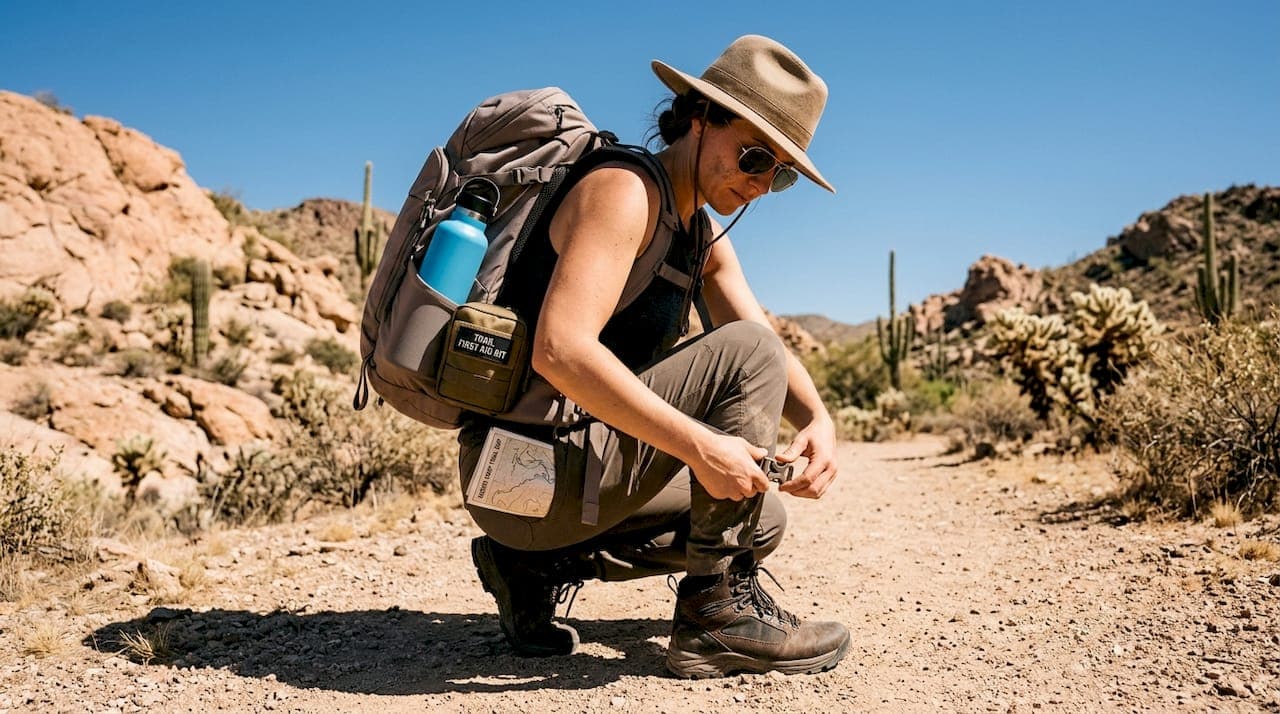
One forgotten detail can turn a dream desert trip into a helicopter rescue. That's not an exaggeration. Every year, unprepared travelers end up in serious trouble at places like the Grand Canyon, Joshua Tree, and Big Bend, not because they were reckless, but because the desert punishes small mistakes fast. The good news? Nearly every desert health emergency is preventable. This guide gives you a practical, expert-backed checklist to prepare your body, pack the right gear, and make smart decisions on the ground so you come home with great stories instead of medical bills.
Table of Contents
- Core health risks every desert traveler must know
- Pre-trip prep: Your desert health essentials checklist
- Smart hydration and nutrition: Avoid dehydration and salt traps
- On the ground: Techniques for heat, wildlife, and storm safety
- Perspective: What most travelers overlook and why checklists save lives
- Plan your worry-free desert escape with us
- Frequently asked questions
Key Takeaways
| Point | Details |
|---|---|
| Understand desert hazards | Heat-related illness and dehydration are the top risks for travelers in desert environments. |
| Prep with the right gear | Bring essential gear, plan your route, and pack a comprehensive first aid kit before your trip. |
| Hydrate and fuel smartly | Drink water steadily and pair it with electrolytes and salty foods, not just plain water. |
| Time activities safely | Hike in cooler hours, rest at midday, and watch for storm and wildlife hazards. |
| Use and trust your checklist | A thorough checklist and careful adherence greatly reduce your risk and increase enjoyment. |
Core health risks every desert traveler must know
Before you pack a single thing, you need to understand what you're up against. The desert is genuinely beautiful and genuinely unforgiving. It doesn't care how fit you are, how experienced you are, or how confident you feel at the trailhead.
Heat-related illness is the number one threat. It exists on a spectrum. Heat exhaustion comes first, showing up as heavy sweating, nausea, dizziness, and weakness. Ignore those signs and it escalates to heatstroke, a true medical emergency where your core temperature climbs above 104°F, you stop sweating, and confusion sets in. Heat-related illnesses cause most rescues in desert parks, and preventive measures reduce those risks significantly. That's not a scare tactic. That's the data.
Dehydration and hyponatremia are both real dangers, and they pull in opposite directions. Dehydration happens when you don't drink enough. Hyponatremia (low blood sodium) happens when you drink too much plain water without replacing the salt your body sweats out. Both can make you feel terrible. Both can become life-threatening. The CDC recommends carrying at least 1 liter of water per hour of hiking, sipping frequently, and checking that your urine stays pale yellow, not clear, not dark.
Some travelers face higher risk than others. If you're a senior, carrying extra weight, or taking medications like diuretics or anticholinergics (common in blood pressure and allergy drugs), your body's ability to regulate temperature is already compromised before you step outside.
| Condition | Symptoms | Risk level | Response |
|---|---|---|---|
| Heat cramps | Muscle spasms, pain | Moderate | Rest, electrolytes, shade |
| Heat exhaustion | Nausea, dizziness, sweating | High | Cool down, fluids, stop activity |
| Heatstroke | Confusion, no sweating, 104°F+ | Critical | Call 911, cool immediately |
| Dehydration | Dark urine, headache, fatigue | Moderate to high | Sip water steadily, add electrolytes |
| Hyponatremia | Nausea, headache, confusion | High | Salty snacks, reduce water intake |
"Most desert rescues are not caused by bad luck. They're caused by ignoring early warning signs and underestimating how fast conditions change." This is the core truth every desert traveler needs to internalize before day one.
Pre-trip prep: Your desert health essentials checklist
Now that you understand the stakes, let's talk about what to do before you leave home. Preparation is where desert trips are won or lost. The gear you pack, the people you tell, and the plans you make in advance are your actual safety net.
Your desert health essentials checklist:
- Electrolyte tabs or powder packets (at least 2 per person per day)
- High-SPF sunscreen (SPF 50+ recommended)
- Wide-brimmed hat and UV-blocking sunglasses
- Lightweight, light-colored, long-sleeved shirt
- Sturdy, broken-in hiking boots with ankle support
- Headlamp with extra batteries
- Fully charged portable power bank
- Offline maps downloaded (Google Maps, AllTrails, Gaia GPS)
- Personal medications plus a 2-day emergency supply
- Desert first aid kit including blister care, tweezers for cactus spines, pain relievers, and a whistle or signal mirror
- Emergency contact card with your itinerary details
Communication is non-negotiable. Always tell someone your itinerary before heading out, check trail conditions and weather, hike with a buddy in remote areas, and carry a map and GPS device. Cell service in desert wilderness is unreliable at best. A satellite communicator like a Garmin inReach is worth every penny for remote trips.
Special considerations for vulnerable travelers matter more than most people realize. Seniors, children, and anyone on medications that affect sweating or circulation should pre-hydrate and acclimate for at least 24 to 48 hours before any strenuous outdoor activity. If you're traveling with kids or older family members, check out the accessibility features for at-risk travelers when choosing your base accommodation. A cool, comfortable home base isn't a luxury. It's part of your health strategy.
| Item | Why it matters | Notes |
|---|---|---|
| Electrolyte tabs | Prevent hyponatremia | 2+ per person per day |
| Signal mirror or whistle | Emergency rescue signal | Lightweight, always pack it |
| Offline maps | Navigation without cell service | Download before you leave |
| Tweezers | Cactus spine removal | Fine-tip works best |
| Headlamp | Safe early morning or late hikes | Extra batteries essential |
Pro Tip: Pack your first aid kit and electrolytes in an exterior pocket of your daypack so you can access them without stopping and unpacking. In the heat, every unnecessary pause matters.
Smart hydration and nutrition: Avoid dehydration and salt traps
Hydration in the desert is more nuanced than "drink more water." That advice alone has actually sent people to the hospital with hyponatremia. Here's how to do it right.
Follow this hydration protocol:
- Start drinking water the night before your hike, not the morning of. You want to begin already hydrated.
- Drink 16 to 20 ounces of water in the hour before you head out.
- Carry at least 1 liter per person for every hour of planned activity. In extreme heat, plan for more.
- Sip steadily throughout your hike rather than gulping large amounts at once.
- Eat salty snacks hourly to replace sodium lost through sweat. Trail mix with salted nuts, pretzels, or jerky all work well.
- Check urine color every time you stop. Pale yellow means you're on track. Clear means you may be overhydrating without enough salt. Dark yellow or amber means drink more.
- Balance water intake with electrolytes to prevent hyponatremia, especially on hikes longer than two hours.
Watch for warning signs in your group. Irrational behavior, unusual irritability, or confusion can all signal dehydration or electrolyte imbalance before the person experiencing it even realizes something is wrong. Group leaders should check in with every member at each rest stop.
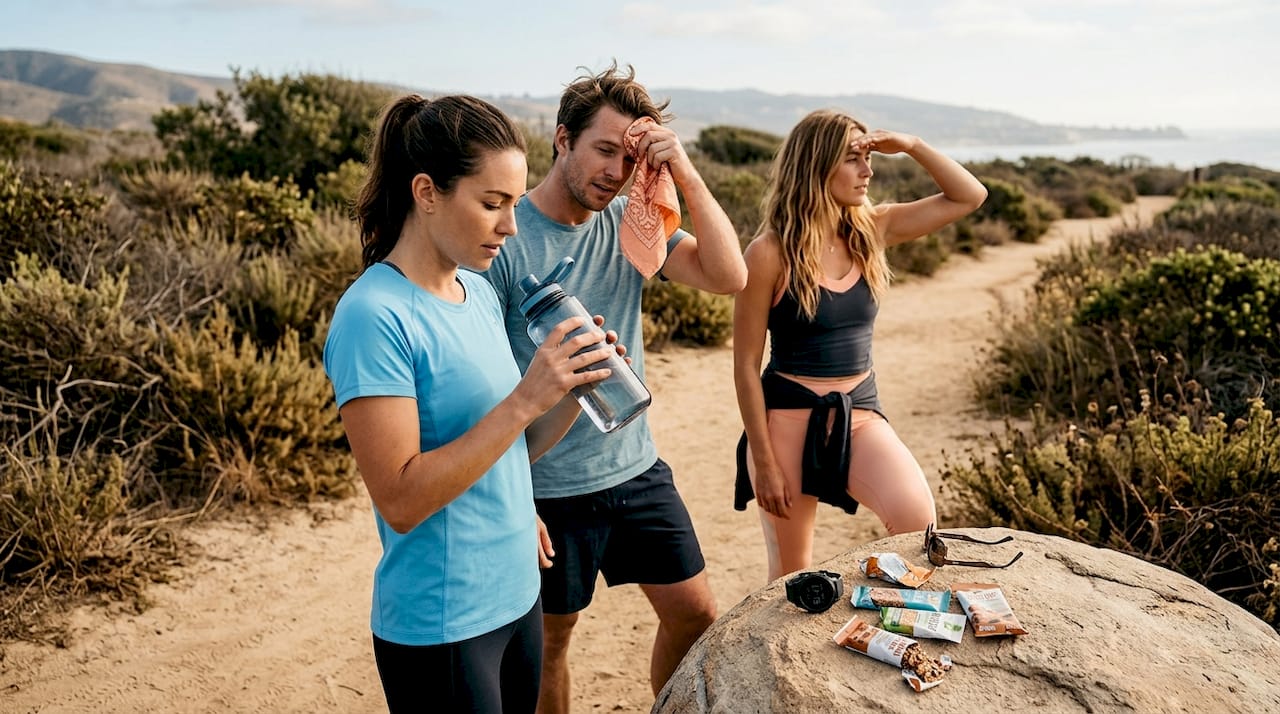
Children and seniors need extra attention. Kids often don't feel thirsty until they're already mildly dehydrated, and older adults have a naturally reduced thirst response. Build in mandatory water breaks every 20 to 30 minutes for these groups, regardless of whether they ask for one.
What to eat matters too. Avoid heavy, hard-to-digest foods during desert activity. Stick to easily digestible, calorie-dense snacks: salted nuts, dried fruit, energy bars, and crackers. Avoid alcohol and caffeine during active outdoor time, since both accelerate fluid loss. Save the cocktail for the evening on the patio when you're safely back at base.
Pro Tip: Freeze half your water bottles the night before. They'll thaw slowly during your hike, giving you cold water when you need it most and helping you regulate body temperature from the inside out.
On the ground: Techniques for heat, wildlife, and storm safety
Preparation gets you to the trailhead safely. These techniques keep you safe once you're out there.
Timing is everything. Avoid hiking during peak heat hours, typically 10am to 4pm in summer. Start before sunrise if possible. The desert at dawn is genuinely magical, and you'll be back in the shade before the real heat hits. If you're caught out midday, find shade and rest. Moving through peak heat is how emergencies happen.
Clothing is your first line of defense. Wear lightweight, light-colored, long-sleeved clothing, a wide-brimmed hat, UV-blocking sunglasses, and high-SPF sunscreen on any exposed skin. Dark colors absorb heat. Synthetic moisture-wicking fabrics outperform cotton in the desert because cotton holds sweat against your skin.
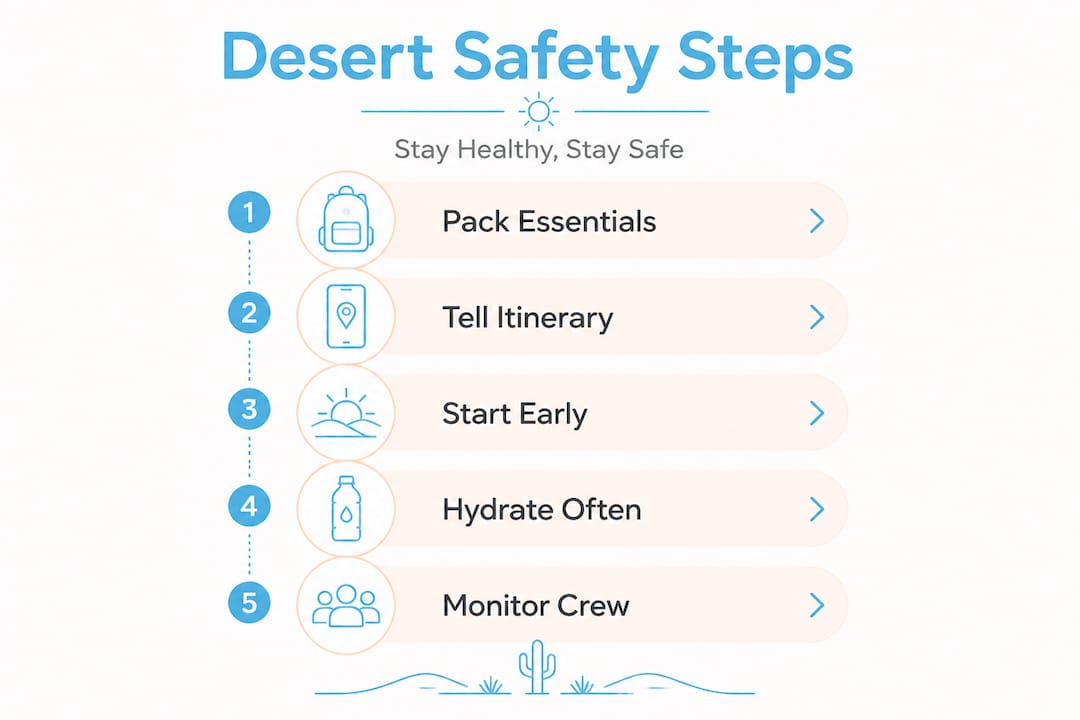
Know the difference between heat exhaustion and heatstroke. Heat exhaustion means your body is struggling but still compensating. Heatstroke, with a core temperature above 104°F, confusion, and absence of sweating, is a life-threatening emergency requiring immediate cooling and emergency services. For heat exhaustion: move to shade, apply cool water to skin, drink electrolytes, and rest. For heatstroke: call 911 immediately and cool the person aggressively with any water available while waiting for help.
Wildlife, floods, and sandstorms are real hazards:
- Watch where you step and where you put your hands. Rattlesnakes, scorpions, and cacti spines cause more injuries than most travelers expect.
- Stay on marked trails, pack out all waste, and never reach into rock crevices or under ledges without looking first.
- Flash floods can occur miles from where it's raining. If you're in a canyon and hear a roaring sound or see water rising, move to high ground immediately without hesitation.
- Sandstorms can appear quickly. Cover your nose, mouth, and eyes, and shelter behind a large rock or in your vehicle until it passes.
"The desert doesn't negotiate. The travelers who stay safe are the ones who respect the environment's rules, not their own assumptions about how tough they are."
Perspective: What most travelers overlook and why checklists save lives
Here's the uncomfortable truth we've seen play out again and again. Experienced hikers get rescued too. Sometimes more often than beginners, because confidence breeds complacency. Someone who has done ten desert hikes without incident starts to skip the prep steps. They leave later than planned. They bring less water because "last time was fine." They don't tell anyone their route because they've done it before.
The desert doesn't care about your track record.
The National Park Service's Hike Smart program makes a point that surprises most people: it takes twice as long to hike out of a canyon as it takes to hike in. That means if you turn around when you're tired, you're already in trouble. They also recommend 10-minute breaks every hour and soaking your shirt in water for evaporative cooling in the inner canyon. These aren't suggestions for beginners. They're what experienced guides do every single time.
Adrenaline and confidence don't beat physics. Heat doesn't care how motivated you are. A checklist is the single most effective tool you have because it removes decision-making from moments when your judgment is already compromised by heat, fatigue, or excitement. You check the list before you leave. You follow the protocol. You come home safe.
We've hosted guests at our safe lodging for desert travelers who arrived with serious outdoor experience and still underestimated the Palm Springs heat in July. The ones who thrived were the ones who treated every outing with the same methodical respect, regardless of how easy the trail looked on paper.
The checklist isn't for people who don't know what they're doing. It's for people who do.
Plan your worry-free desert escape with us
All that preparation deserves an equally thoughtful home base. A cool, comfortable place to recover, rehydrate, and plan your next adventure isn't a nice-to-have. It's part of your health strategy.

Our Palm Springs retreat gives groups of up to eight a private, freshly updated desert sanctuary with mountain views that genuinely stop you mid-sentence. Book your Palm Springs stay and you get four distinct bedrooms, indoor-outdoor living designed for the desert lifestyle, and the kind of quiet that actually lets you rest and recover between adventures. Explore the full range of Palm Springs activities from your front door, and unwind with access to desert resort amenities that make every evening feel like a reward well earned. Starting at just $65 per person per night, it's the smartest investment in your desert trip.
Frequently asked questions
How much water should I bring per person for a desert hike?
You should carry at least 1 liter of water per person for each hour of planned hiking in hot desert environments, and more in extreme heat or for vulnerable travelers.
What should I include in a desert-specific first aid kit?
Include blister treatment, electrolyte tabs, pain relievers, tweezers for spines, personal medications, and a signaling device like a whistle or mirror so rescuers can locate you if needed.
How do I protect myself from both sun and heat during a desert trip?
Wear lightweight, light-colored clothing with long sleeves, a wide-brimmed hat, UV sunglasses, and high-SPF sunscreen, and schedule your most active time outside of the 10am to 4pm heat window.
What's the best way to avoid heat stroke and exhaustion?
Hike early or late in the day, take shaded breaks every hour, drink steadily with electrolytes, eat salty snacks, and know the warning signs of heatstroke including confusion and absence of sweating.
Are seniors or children at bigger risk in the desert, and what can I do?
Both groups face higher risk in heat and should pre-hydrate, acclimate before strenuous activity, avoid peak sun hours, and be closely monitored by group leaders for early signs of dehydration or overheating.