

Retreat accommodation is lodging specifically designed to support personal transformation, wellness, or group connection through intentional environment and structured experience. Unlike a hotel, which prioritizes comfort and convenience, retreat lodging prioritizes purpose. The physical space, the programming, and even the service style all serve a single goal: helping guests step out of daily life and into something more meaningful. Whether you are planning a solo wellness stay or a group getaway for eight, understanding what retreat accommodation actually means will help you choose the right experience and get the most out of it.
What is retreat accommodation, and how does it differ from a hotel?
Retreat accommodation is a category of lodging built around intention rather than amenity count. A hotel gives you a room, a bed, and a lobby. A retreat venue gives you an environment designed to support inner work, rest, or connection. The difference shows up in spatial design, service philosophy, and the presence of structured programming.
Retreat venues differ fundamentally from resorts by being built around intention, with every design element serving the retreat's transformational goals. That means quiet zones instead of bars, ceremony rooms instead of conference suites, and shared meals instead of room service. The physical layout itself becomes part of the experience.
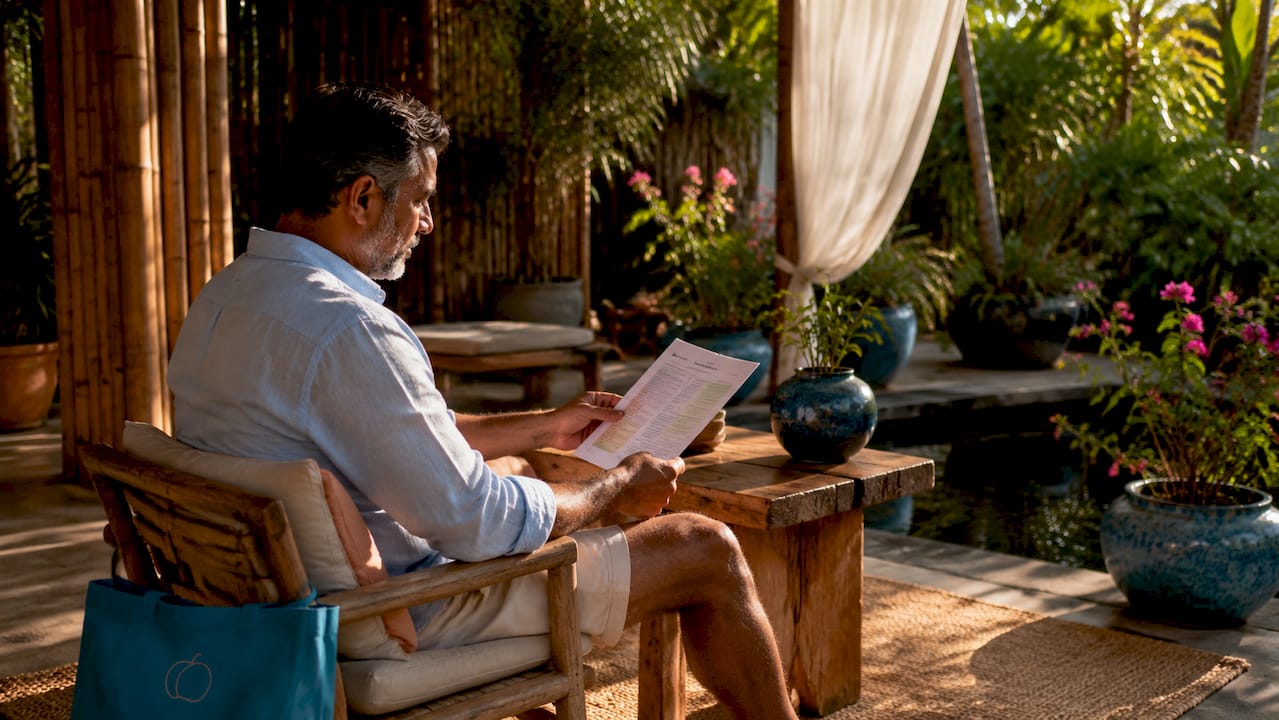
Standard hospitality measures success by occupancy rates and guest satisfaction scores. Retreat accommodation measures success by whether guests leave changed. That shift in purpose changes everything from how rooms are arranged to how staff interact with guests.
What are the main types of retreat accommodation?
Retreat lodging options range from intimate home-based settings to large resort-style wellness campuses. Each format serves a different goal, group size, and budget.
Home-hosted and private residence retreats
Home-based retreats typically host smaller groups of 3–5 people, which creates deeper connection and more personalized facilitation. The setting feels lived-in and human, which lowers the guard faster than a polished resort lobby. Peach-residence in Palm Springs is a strong example: four bedrooms, room for eight guests, end-of-cul-de-sac privacy, and wide-open desert views that do the work of centering you before any program begins.
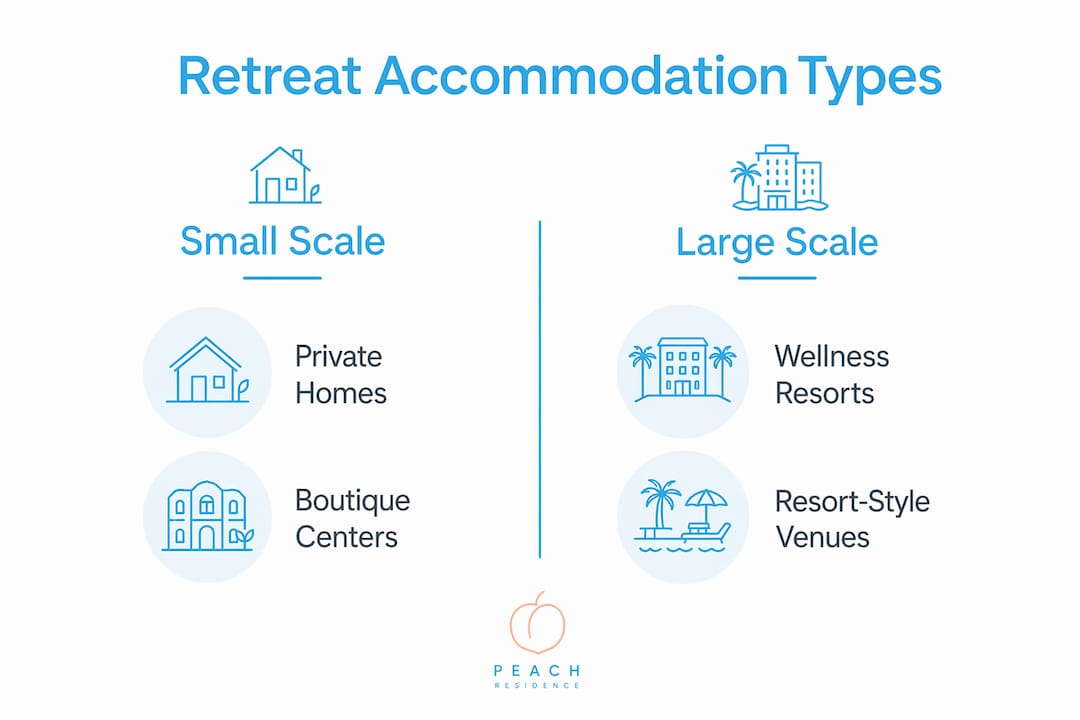
Private residence retreats also cost significantly less. Home-hosted options typically run 40–60% less than resort-based retreats due to lower overhead. That cost difference makes them accessible for groups who want a meaningful experience without a luxury price tag.
Boutique retreat centers
Boutique centers sit between a private home and a full resort. They usually host 10–30 guests, offer structured daily programs, and include dedicated spaces like yoga shalas, meditation halls, and communal dining rooms. The programming is tighter and more intentional than a private rental, but the scale stays small enough for personal attention.
Resort-style wellness venues
Large wellness resorts offer the widest range of amenities: spa facilities, multiple dining options, fitness studios, and professional facilitators on staff. They work well for guests who want a full-service experience or who are attending a retreat led by an outside facilitator. The trade-off is cost and, often, a more anonymous atmosphere.
| Type | Group size | Cost range | Best for |
|---|---|---|---|
| Private residence | 3–8 people | Low to moderate | Intimate groups, custom programs |
| Boutique retreat center | 10–30 people | Moderate | Structured programs, community |
| Resort-style wellness venue | 30+ people | High | Full-service, professional facilitation |
Pro Tip: If your group values connection over programming variety, a private residence retreat will almost always outperform a large resort on that specific goal.
What amenities define a quality retreat accommodation?
The amenities that matter most in retreat lodging are not the ones you find in a hotel brochure. Well-designed retreat venues prioritize intentional space flow, privacy, and dedicated ceremony rooms to support inner work. That design philosophy produces a specific set of features worth looking for.
Key amenities that signal a genuine retreat environment include:
- Private outdoor spaces where guests can sit quietly without interruption
- Dedicated movement areas such as yoga decks, open-air patios, or garden paths
- Communal dining with healthy, whole-food meals that support physical reset
- Quiet zones separated from social areas so guests can choose their level of engagement
- Natural surroundings that reduce sensory overload, whether desert, forest, or countryside
Service style also separates retreat accommodation from standard lodging. Many retreat centers use digital detox policies and shared living spaces to support transformation. That means limited Wi-Fi, no in-room televisions, and a general expectation that guests are present rather than connected. First-time retreat guests often find this jarring. Within 24 hours, most find it the point.
Pro Tip: Before booking, ask the venue directly whether they have a digital detox policy. If they do not have a clear answer, the retreat's design philosophy may not be as intentional as the marketing suggests.
What are the proven benefits of retreat lodging?
The benefits of retreat accommodation are both immediate and lasting. Guests report physical rest, mental clarity, and emotional release during the stay itself. The longer-term outcomes are what make retreat lodging worth the investment.
62% of wellness retreat participants reported sustained stress reduction up to 60 days after their stay. That figure matters because it shows retreat benefits are not just a temporary mood lift. The effects carry forward into daily life when the experience is well-designed.
Duration plays a direct role in those outcomes. Meaningful retreats ideally last 5–7 days to allow deep personal growth. Shorter stays can still be valuable, but the research points to a week as the threshold where real integration begins.
Long-term retreat benefits stem from the combination of movement, rest, and reduced overstimulation, intensified by participant commitment post-retreat. The retreat itself creates the conditions. What guests do with those conditions after they leave determines the lasting impact.
Primary benefits by retreat type:
- Wellness retreats: stress reduction, improved sleep, physical reset
- Group connection retreats: stronger relationships, shared purpose, renewed communication
- Spiritual or contemplative retreats: clarity of values, reduced anxiety, sense of meaning
- Adventure retreats: confidence, physical challenge, team cohesion
"A retreat's success should be measured by the quality of facilitation and safety standards rather than by aesthetics or location." Source
That standard cuts through a lot of marketing noise. A beautiful venue with weak facilitation will underdeliver every time.
How to choose the right retreat accommodation for your needs
Choosing retreat accommodation starts with one honest question: what do you actually need from this experience? Rest, connection, challenge, and spiritual inquiry each point toward different venue types and program structures.
Follow these steps to narrow your options:
-
Define your primary goal. Rest and recovery point toward smaller, quieter venues. Group bonding points toward private residences or boutique centers with communal spaces. Personal growth work points toward centers with credentialed facilitators.
-
Set a realistic budget. Private residence retreats offer the most cost-effective path for groups. Countryside and rural settings also tend to offer strong well-being value at lower price points than urban wellness venues.
-
Check facilitator credentials. Retreat quality depends more on facilitator credentials and programmed experience than aesthetics or location. Ask for training backgrounds, safety protocols, and references before booking.
-
Assess group size fit. A group of six to eight people will feel lost in a 40-person resort program. A private residence built for that exact group size will feel right immediately.
-
Prepare for the service style. Guests should set expectations for minimalism and limited connectivity in many retreat accommodations. Pack accordingly: fewer devices, more journals, and comfortable layers for outdoor time.
Pro Tip: Read the desert retreat setup guide before your first group stay. The logistical details most people overlook, like packing for temperature swings and planning screen-free evenings, make a measurable difference in how the group settles in.
For groups specifically, the Palm Springs group escape guide covers venue selection, activity planning, and what to expect from a private residence stay in a high-desert setting.
Key Takeaways
Retreat accommodation works best when the venue's design, facilitation quality, and group size align with the guest's specific goal.
| Point | Details |
|---|---|
| Definition matters | Retreat accommodation is purpose-built lodging, not just a scenic hotel room. |
| Size shapes experience | Smaller groups of 3–8 people report deeper connection and more personalized outcomes. |
| Duration drives results | Stays of 5–7 days produce the most sustained benefits, including stress reduction lasting 60 days post-retreat. |
| Facilitation over aesthetics | Credentials and program design predict retreat success more reliably than venue beauty or location. |
| Prepare for minimalism | Digital detox policies and shared spaces are features, not drawbacks. Expect them and plan for them. |
Why I think most people choose retreat accommodation for the wrong reasons
Most people book a retreat because they are burned out and the photos looked beautiful. That is not a bad starting point, but it is a shallow one. After spending time in and around retreat settings, I have noticed that the guests who get the most out of these experiences are the ones who arrived with a specific intention, not just a desire to escape.
The trend toward smaller, home-based retreats is one of the most encouraging shifts in this space. A private residence with eight beds and no corporate programming forces a group to show up for each other. There is no spa to disappear into, no resort activity schedule to hide behind. The mountain views and open skies do real work, but the human element does more.
I also think people underestimate how much the post-retreat period matters. The research is clear: benefits compound when guests maintain the practices they started during the stay. A retreat is not a cure. It is a reset that only holds if you do something with it.
My honest advice is to prioritize credentials over aesthetics, connection over amenity count, and duration over convenience. A five-day stay in a well-facilitated private home will outperform a two-night luxury resort stay almost every time.
— Rasmus
Peach-residence: a private retreat in Palm Springs
Peach-residence sits at the end of a quiet cul-de-sac in Palm Springs, with mountain views that make the case for desert retreats better than any brochure could. Four bedrooms, room for eight guests, and a 2025 refresh that commits fully to the indoor/outdoor lifestyle this region is known for.
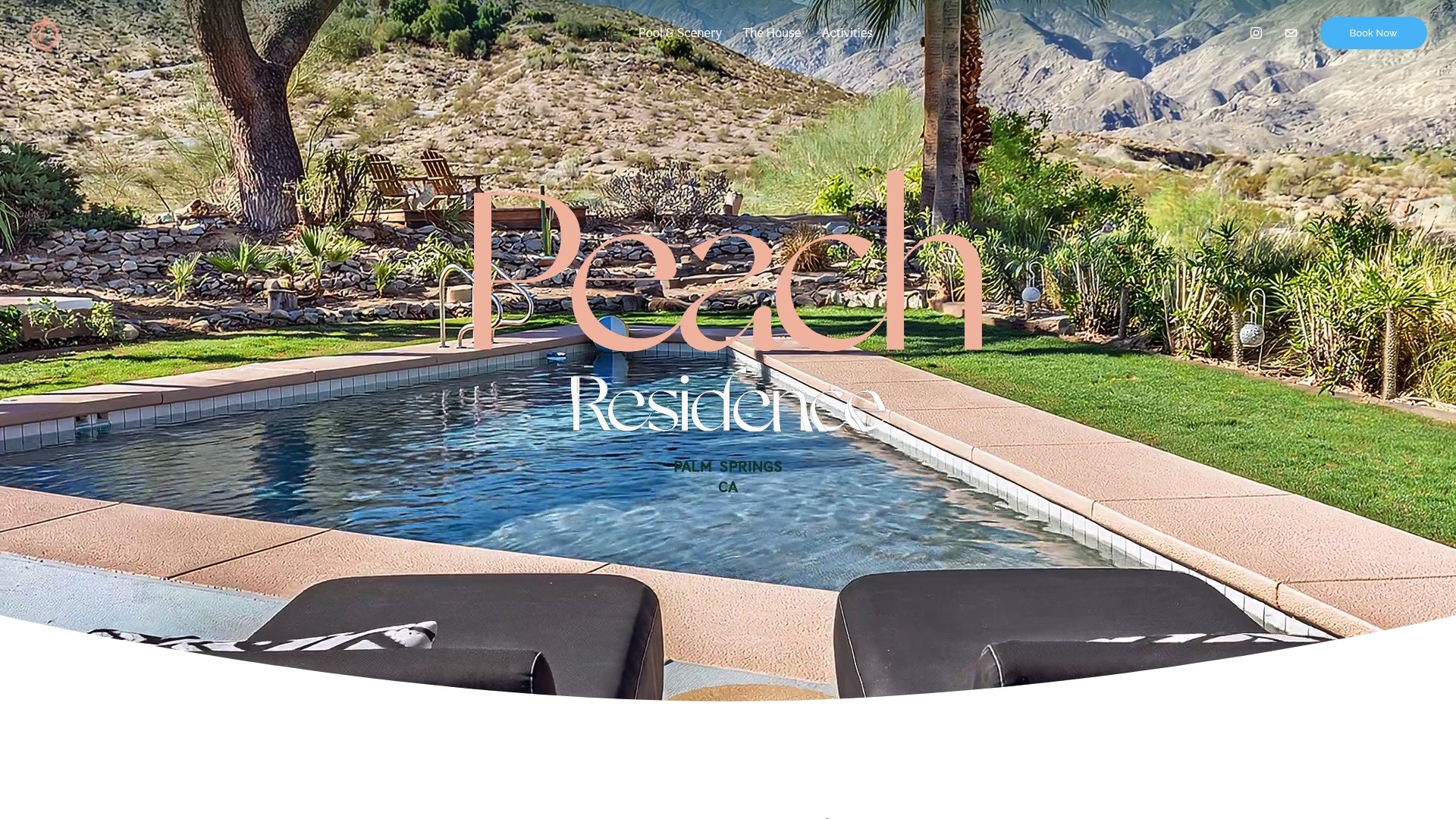
The space works because it is private, intentional, and built for real connection. No city lights, no noise, just open sky and the kind of stillness that actually lets a group breathe. Rates start at $65 per person per night, making it one of the most accessible private retreat options in the region. Check availability and book your stay directly, and browse curated local activities to build a program that fits your group's goals.
FAQ
What is retreat accommodation in simple terms?
Retreat accommodation is lodging designed around a specific purpose, such as wellness, personal growth, or group connection, rather than standard hospitality comfort. The environment, amenities, and service style all support that purpose.
How long should a retreat stay be?
Retreats ideally last 5–7 days to allow meaningful personal growth and integration. Shorter stays can still be restorative, but the research points to a week as the threshold for lasting benefit.
Are home-based retreats as effective as resort retreats?
Home-based retreats often outperform resorts for small groups because smaller group sizes of 3–5 people foster deeper connection and more personalized facilitation. Cost is also 40–60% lower than resort-based options.
What amenities should I look for in retreat lodging?
Look for private outdoor spaces, quiet zones, communal dining with healthy food, and natural surroundings that reduce sensory overload. A clear digital detox policy is a strong signal of intentional design.
How do I know if a retreat accommodation is high quality?
Retreat quality depends more on facilitator credentials and program design than on aesthetics or location. Ask for facilitator training backgrounds, safety protocols, and guest references before committing to a booking.