
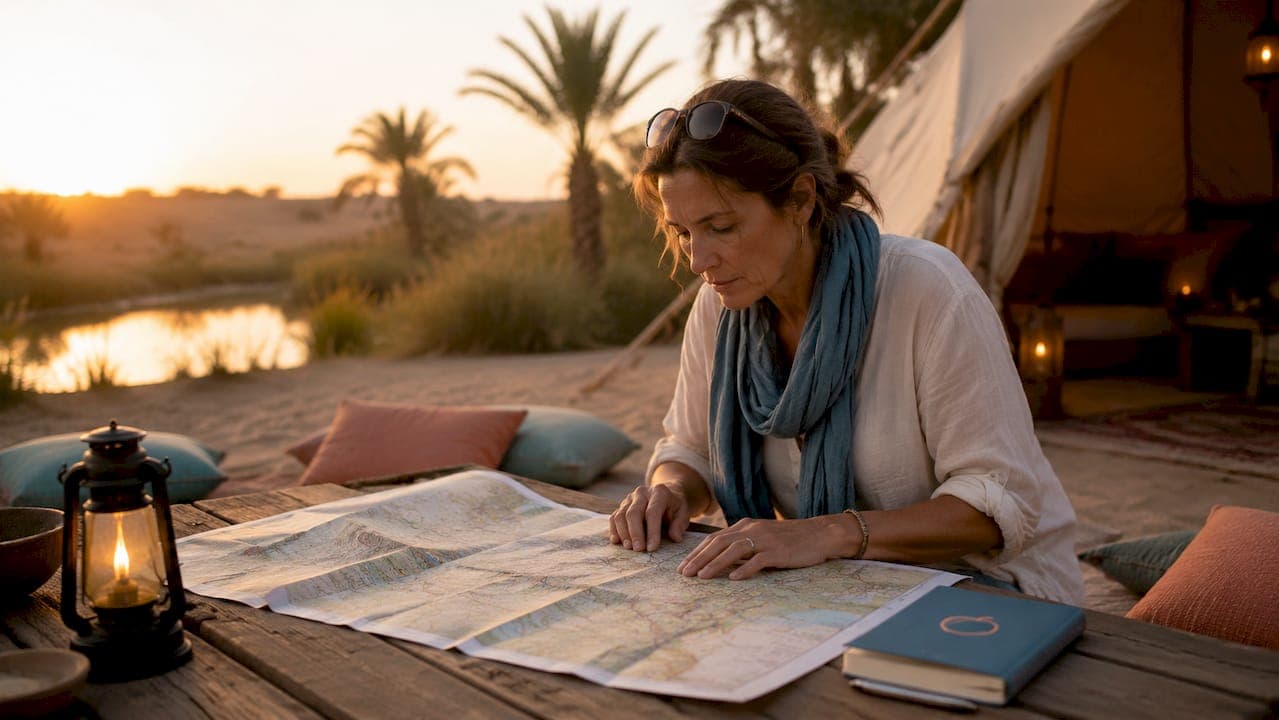
A successful desert retreat setup is defined by three non-negotiable pillars: climate-smart timing, shade and warmth infrastructure, and decor that works with the environment rather than against it. Get any one of these wrong and your guests spend the weekend adapting instead of relaxing. Get all three right and the desert does the heavy lifting for you. This guide covers every layer of desert vacation planning, from choosing the right month to building your outdoor retreat checklist, so you arrive prepared and leave restored.
What is the best timing for your desert retreat setup guide?
The optimal window for a desert retreat is October through April, when daytime temperatures sit between 20 and 30°C. This matters because peak summer heat regularly exceeds 40°C, making outdoor yoga, meditation, or even casual lounging genuinely dangerous rather than restorative.
Timing shapes more than comfort. It dictates your entire activity schedule. Morning sessions from 7 to 10 a.m. and late afternoon sessions from 4 to 7 p.m. are the sweet spots for outdoor programming. The middle of the day belongs to shade, cold drinks, and indoor rest.
A few additional timing factors deserve attention before you lock in dates:
- Local events and cultural calendars. In destinations like Palm Springs or Dubai, local cultural events can affect vendor availability, noise levels, and permit requirements. Check the local calendar before committing.
- Weekend vs. weekday pricing. Desert venues often charge a premium on weekends in peak season. Booking a Thursday to Sunday stay can cut costs while still capturing the best weather.
- Moon phase for nighttime experience. A new moon in October or November produces near-total darkness, which amplifies stargazing and creates a different kind of intimacy than a full-moon weekend.
Pro Tip: Book your venue before you send invitations. Locking the dates first prevents the awkward situation of building guest excitement around a property that's already taken.
How to design your outdoor setup for shade, warmth, and social zones
Desert temperature swings require a two-mode environment: daytime shade with airflow and evening warmth points. This single design principle transforms how participants feel and behave after dusk. A setup that ignores it forces guests to retreat indoors the moment the sun drops, killing the outdoor atmosphere you worked to create.
Here is a practical sequence for laying out your space:
- Map your sun arc first. Walk the site at 10 a.m. and again at 3 p.m. to identify where shade naturally falls. Build your daytime lounge and activity zones into those pockets before adding any artificial shade structures.
- Layer shade structures. Shade sails, pergolas, and large market umbrellas each serve different group sizes. A 10-by-10-foot shade sail covers a meditation circle of six. A pergola with climbing plants adds permanence and visual texture.
- Position fire pits or propane heaters at the perimeter. Outdoor fire pits and heaters placed at the edges of your social zone create a warm boundary that draws people inward rather than scattering them. Two heaters at 45-degree angles from a central seating area cover a group of eight comfortably.
- Create modular zones. Use rugs, low tables, and movable cushion clusters to define a dining zone, a workshop or yoga zone, and a quiet relaxation zone. Modular furniture means you can reconfigure in 20 minutes as the group's needs shift.
- Allow for airflow. Avoid fully enclosed tent structures during the day. Open-sided canopies let the desert breeze do the cooling work that fans and misters cannot replicate.
Pro Tip: Rent a propane fire pit rather than building a wood fire. Propane gives you instant heat control, no smoke, and no ash cleanup. In a desert environment where wind shifts quickly, smoke management is not a minor detail.
What decor and ambiance choices best support relaxation?
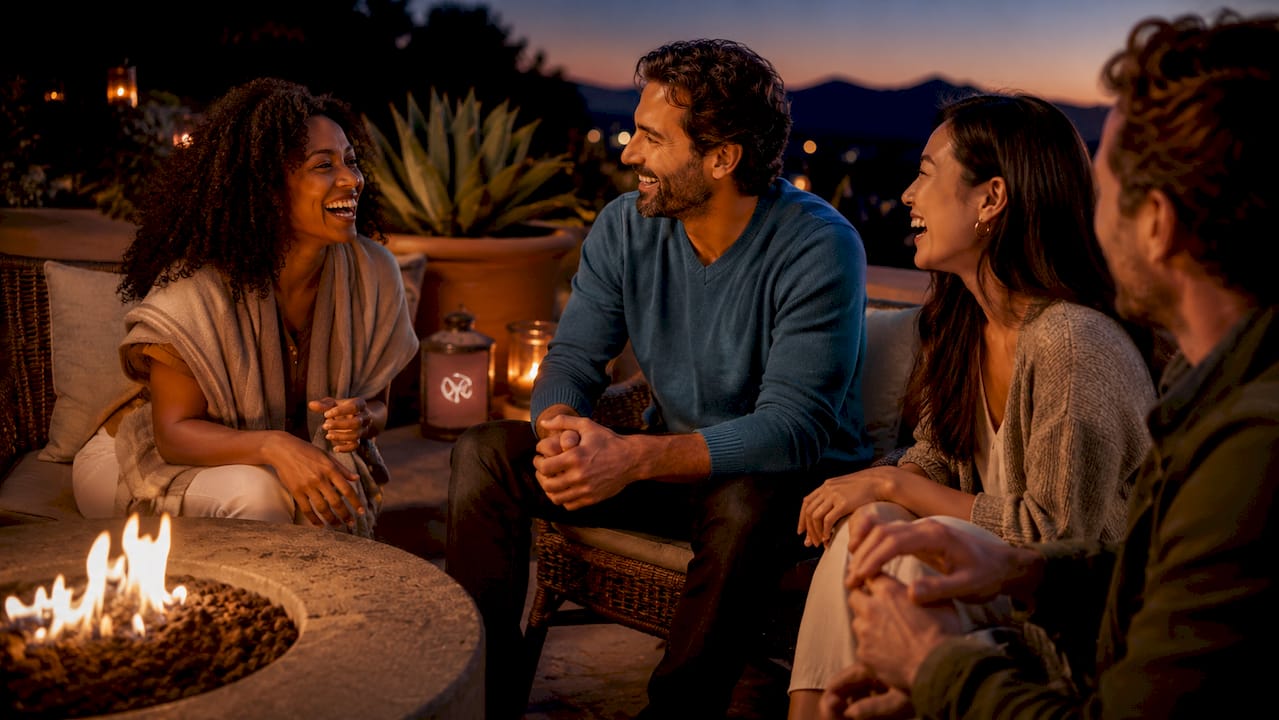
Desert decor works when it uses natural elements and soft evening lighting to create psychological comfort rather than visual spectacle. The goal is an environment that feels like it belongs in the landscape, not one imported from a hotel lobby.
The most effective decor choices for a desert hideaway fall into four categories:
- Color palette. Sand tones, terracotta, warm ochre, and muted sage mirror the surrounding environment. These colors lower visual stimulation, which is exactly what a relaxation-focused retreat needs. Avoid high-contrast patterns or bright accent colors that compete with the natural backdrop.
- Lighting. String lights strung between shade structures, lanterns placed at ground level, and pillar candles on low tables create warmth without glare. Overhead floodlights are the single fastest way to destroy desert ambiance. Keep all artificial light below eye level after sunset.
- Seating. Low seating wins in the desert. Floor cushions, Moroccan-style poufs, and rattan loungers keep guests physically close to the ground, which feels more connected and less formal. Add a few comfortable outdoor lounges for guests who need back support.
- Cultural texture. Woven textiles, hand-thrown ceramic vessels, and locally sourced desert plants like agave or palo verde add authenticity. These details signal intentionality and give guests something to notice and appreciate beyond the view.
The environment-led design approach treats decor as a psychological tool, not a styling exercise. When the space feels coherent with its surroundings, guests stop noticing the setup and start experiencing the retreat.
Which hydration, food, and safety logistics matter most?
Hydration is the operational backbone of any desert getaway. Two gallons of water per person is the baseline for a multi-night retreat, and that number climbs with physical activity or alcohol consumption. Under-provisioning water is the most common and most preventable mistake in desert retreat planning.
Schedule all strenuous activity outside the 11 a.m. to 3 p.m. peak heat window. This is not a suggestion. Heat illness can develop within 30 minutes of unprotected sun exposure at peak hours, and it escalates faster in dry desert air than in humid climates because sweat evaporates before you notice it.
"Scheduling to avoid peak sun hours combined with hydration and shade breaks is the most critical operational decision for heat safety in any desert environment."
Food planning deserves the same rigor as hydration. Treat meals as part of the retreat program by integrating meal timing with activity pacing. Light, cool foods like grain salads, fruit, and chilled soups work better at midday than grilled proteins. Save heavier, warming dishes for the evening when the temperature drops and appetite increases. Always collect dietary restrictions and allergy information during registration, not on arrival day.
Medical preparedness rounds out the safety picture. Confirm that your venue has a clear emergency access route, keep a first aid kit stocked for heat-related illness, and identify the nearest urgent care facility before guests arrive. Some desert locations also require advance permits for group gatherings, so verify local regulations at least eight weeks out.
What are the essential planning steps for a smooth retreat?
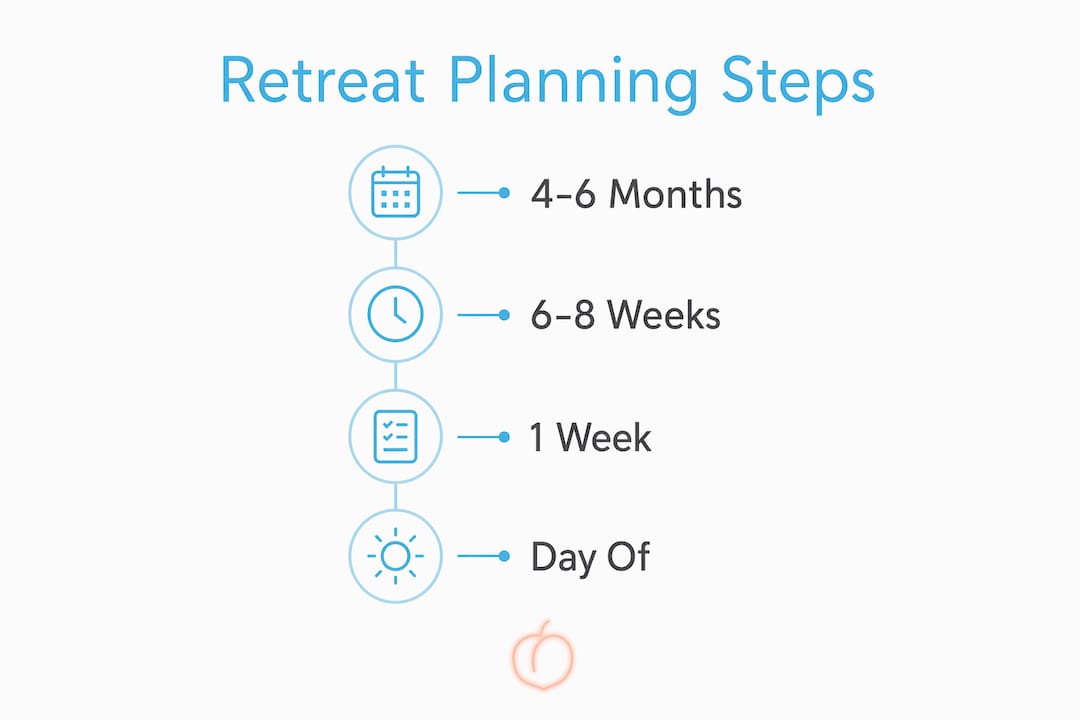
Starting your planning 4 to 6 months in advance is the difference between a retreat that runs smoothly and one that improvises its way through the weekend. Budget allocation follows a reliable pattern: 40 to 50% on venue, 15 to 20% on food and beverage, and 10 to 15% on facilitators. That leaves a 15 to 35% buffer for equipment rental, decor, and contingency.
| Planning phase | Key actions |
|---|---|
| 4 to 6 months out | Book venue, set budget, confirm dates, begin facilitator outreach |
| 6 to 8 weeks out | Open registrations, collect dietary needs, confirm headcount for water and shade provisioning |
| 3 to 4 weeks out | Finalize vendors, order supplies, confirm permits and cultural calendar |
| 1 week out | Confirm all logistics, prepare day-of checklist, brief all staff or co-hosts |
| Day of | Set up zones before guests arrive, test all equipment, station water at every activity point |
Managing registrations 6 to 8 weeks ahead directly controls your provisioning accuracy. Every confirmed guest translates to a specific quantity of water, shade coverage, and bedding. Late registrations create day-of chaos that no amount of goodwill can fix.
The venue assessment checklist should cover lodging privacy, proximity of sleeping areas to activity zones, food allergy accommodations, and medical access. These details shape the physical layout of your entire setup.
Pro Tip: Build a shared digital document for your day-of checklist and share it with every person involved in setup. When everyone can see what is done and what is pending in real time, nothing gets missed and no one asks the same question twice.
Key takeaways
A desert retreat succeeds when climate-smart infrastructure, intentional decor, and tight logistics work together from the first planning decision to the last evening around the fire.
| Point | Details |
|---|---|
| Time your retreat correctly | Book October through April to keep daytime temperatures between 20 and 30°C for safe outdoor activities. |
| Design for temperature swings | Create shaded daytime zones with airflow and position fire pits or heaters at the perimeter for evening warmth. |
| Anchor decor in the environment | Use sand tones, low seating, ground-level lighting, and local textiles to build psychological comfort. |
| Treat hydration as infrastructure | Plan two gallons of water per person and schedule all activity outside the 11 a.m. to 3 p.m. heat window. |
| Start planning 4 to 6 months out | Secure venue, open registrations 6 to 8 weeks ahead, and allocate 40 to 50% of budget to the venue. |
What I've learned planning desert retreats the hard way
The single biggest mistake I see in desert retreat planning is treating infrastructure as an afterthought. People spend hours on playlist curation and zero time on shade coverage per square foot. Then the first afternoon hits 95°F and the entire program collapses into a scramble for the indoors.
The temperature swing is the feature, not the problem. A desert day that moves from 28°C at noon to 12°C after sunset gives you two completely different social environments in one location. The planners who understand this design for both modes deliberately. They create a morning yoga space that becomes an evening fire circle with a single furniture reconfiguration. That kind of intentionality is what separates a memorable retreat from a logistical survival exercise.
I have also found that decor authenticity matters more than decor volume. One hand-woven blanket draped over a rattan chair says more about place than a hundred imported throw pillows. Guests feel the difference even when they cannot articulate it. The Palm Springs retreats that stay with people longest are the ones where the space felt like it grew out of the desert rather than being dropped into it.
One operational lesson I will never forget: do not let registrations stay open past six weeks before the event. Every late addition creates a ripple through water provisioning, shade coverage, and bedding. The retreat experience degrades in proportion to how many last-minute decisions you are making on setup day.
— Rasmus
Plan your desert escape at Peach-residence Palm Springs
If you want a base that handles the infrastructure so you can focus on the experience, Peach-residence in Palm Springs is worth a serious look. Four bedrooms, room for eight guests, and a fully updated 2025 indoor/outdoor layout that commits to the desert lifestyle without apology. The views are unfiltered desert drama: wide-open skies, mountain backdrop, zero city noise.
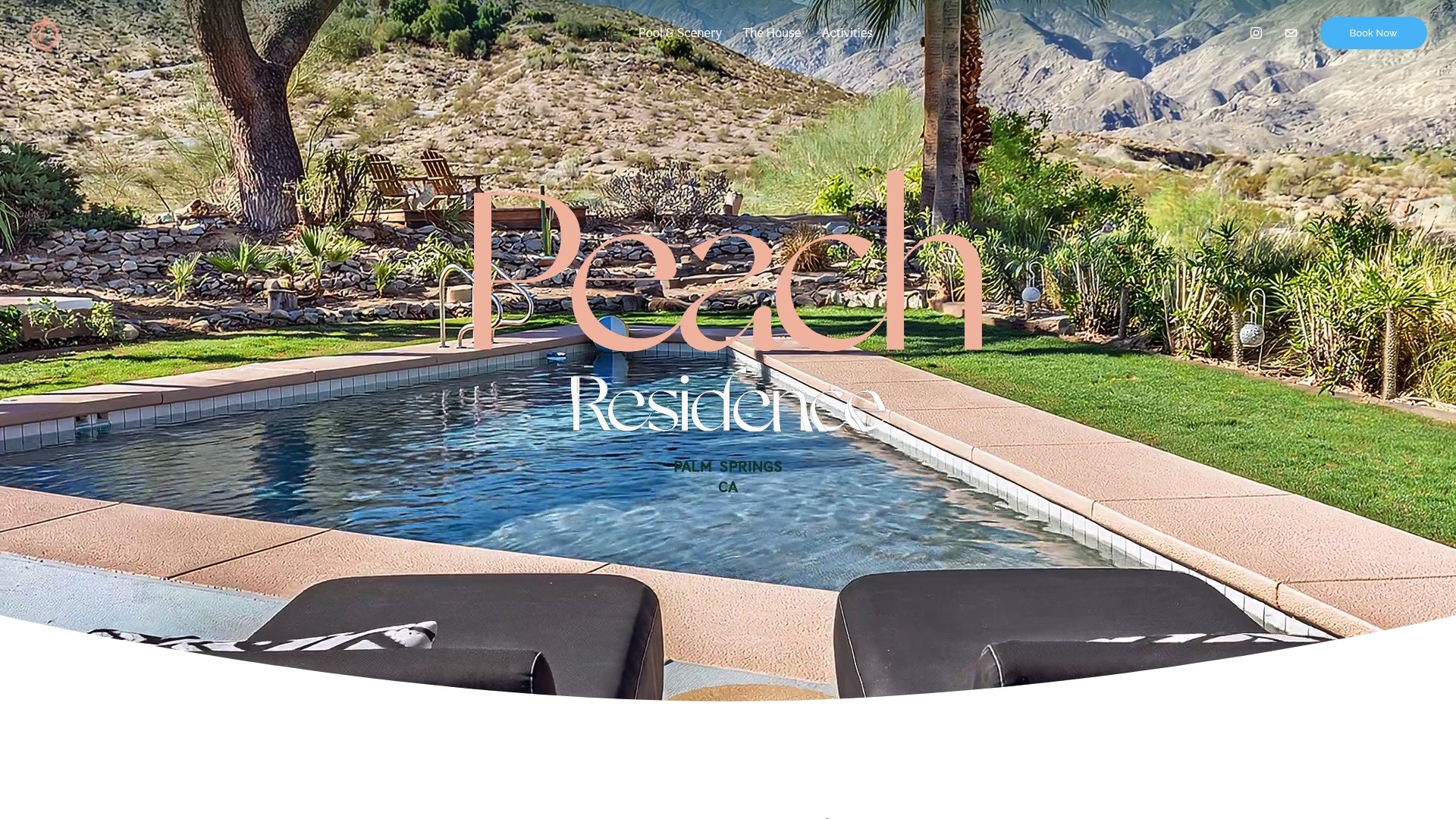
Peach-residence sits at the end of a cul-de-sac with one neighbor and rates starting at $65 per person per night. The house setup is built for the kind of group retreat this guide describes: doors open to the breeze, social zones that flow naturally, and a setting that does the ambiance work for you. Pair it with the available desert activities and your outdoor retreat checklist practically fills itself.
FAQ
What months are best for a desert retreat?
October through April offers the safest and most comfortable conditions, with daytime temperatures between 20 and 30°C. Peak summer heat above 40°C makes outdoor programming genuinely risky.
How much water do you need per person at a desert retreat?
Plan for at least two gallons of water per person per day for a multi-night retreat. Increase that amount if guests are physically active or consuming alcohol.
How far in advance should you plan a desert retreat?
Start the planning process 4 to 6 months before your event date to secure the best venues and vendors. Open registrations 6 to 8 weeks out to finalize headcount and provision supplies accurately.
What is the most important safety rule for desert retreats?
Avoid scheduling strenuous outdoor activity between 11 a.m. and 3 p.m. when heat illness risk peaks. Combine this with consistent shade access and hydration stations at every activity point.
What decor style works best for a desert retreat?
Environment-led decor using sand tones, low seating, ground-level lighting, and locally sourced natural elements creates the strongest sense of place and psychological relaxation.