
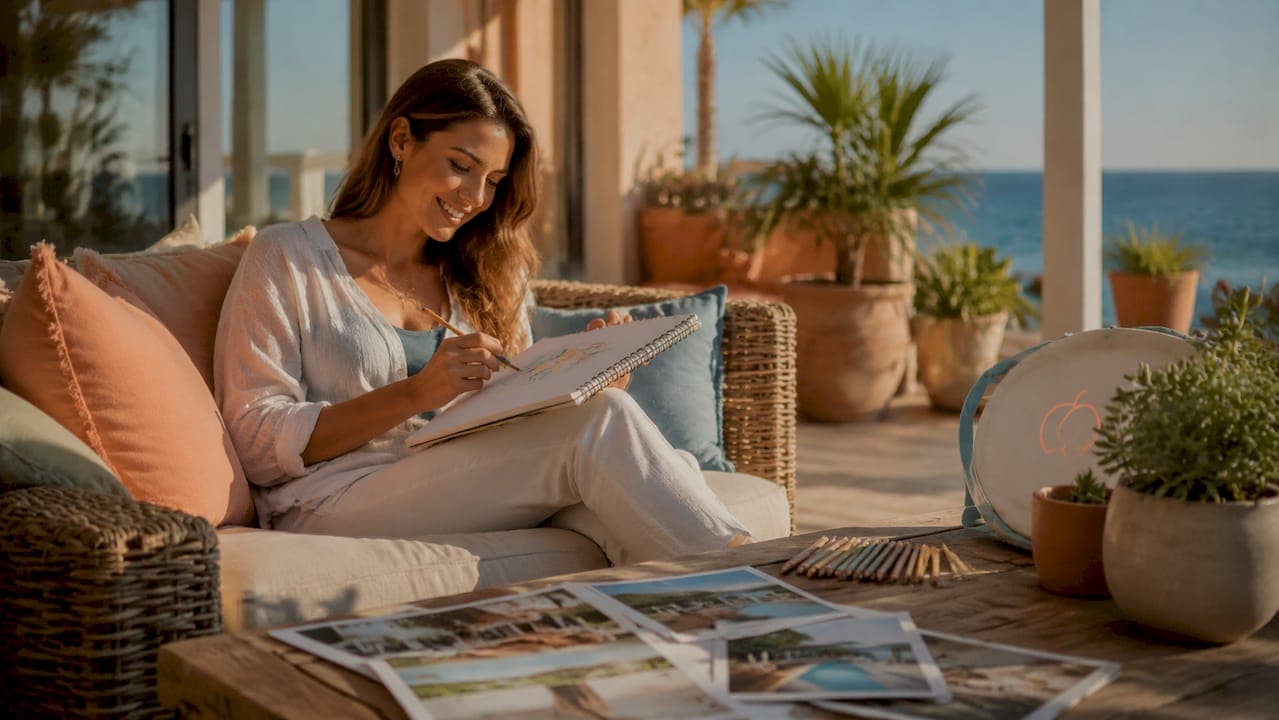
Your home is defined by its personality: the emotional character a space projects through its colors, textures, furniture, and layout. Interior psychologists call this concept "residential identity," and it goes far deeper than aesthetics. The role of house personalities connects directly to who you are, how you live, and how your space makes you feel every single day. For urban homeowners and renters sharing living spaces, understanding this connection is the difference between a home that feels borrowed and one that feels genuinely yours. Environmental psychology research confirms that physical settings shape behavior and emotional states in ways that run deeper than most people realize.
How house personality traits shape interior design choices
House personality traits are the design fingerprints left by the people who live in a space. They show up in every decision: the roughness of a reclaimed wood coffee table, the blankness of a white wall, the warmth of layered rugs. These choices are not random. They reflect psychological needs as clearly as any personality test.
Research confirms that residents who prefer layered interiors score higher in openness to experience, one of the Big Five personality traits, compared to those who prefer minimalist spaces. Minimalists, by contrast, seek autonomy and cognitive control. That distinction explains why two people can look at the same cluttered bookshelf and feel completely opposite emotions.
Common personality-to-style mappings include:
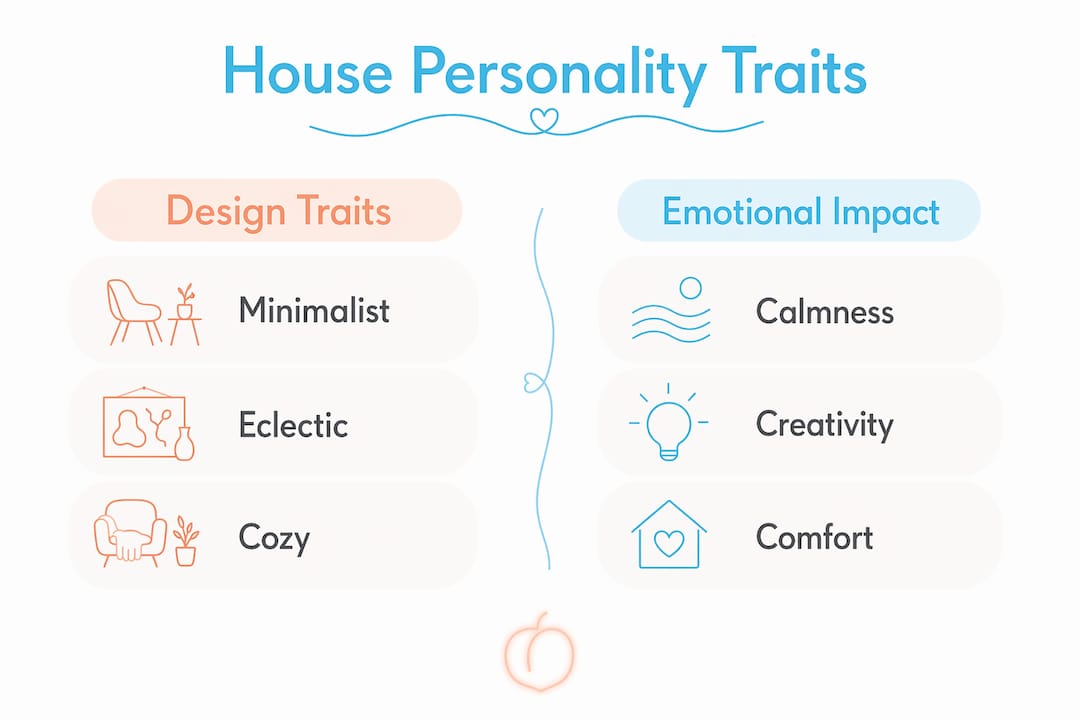
- Minimalist personality: Clean lines, neutral palettes, open floor plans. Driven by a need for order and mental clarity.
- Rustic or farmhouse personality: Natural materials, warm tones, soft textures. Rustic style preferences correlate with a desire for reduced stress and a slower, more balanced pace of life.
- Eclectic personality: Mixed eras, bold colors, collected objects. Reflects curiosity, creativity, and a high tolerance for complexity.
- Contemporary or sleek personality: Polished surfaces, geometric shapes, statement pieces. Linked to ambition, a growth mindset, and originality.
- Transitional personality: Blends classic and modern. Signals a preference for stability with room for change.
These mappings are not rigid rules. They are starting points for self-reflection.
Pro Tip: Before you buy a single piece of furniture, spend one week photographing the corners of your home you actually love. The patterns in those photos reveal your true design personality far more honestly than any mood board.
How do house personalities affect shared urban living spaces?
Shared living spaces are where house personalities get complicated. When two or more people occupy the same home, their individual personality traits compete for expression in the same square footage. Urban apartments and rental homes make this tension sharper because space is limited and every design choice is visible to everyone.
The key insight is that communal areas and private areas serve different psychological functions. A living room in a shared home needs to accommodate multiple personalities without erasing any of them. A bedroom, by contrast, is where individual personality can speak without compromise. Architect Javier De la Cruz argues that creating a home reflecting genuine personal meaning matters more than achieving superficial aesthetics. That principle becomes a practical tool in shared spaces: prioritize meaning over uniformity.
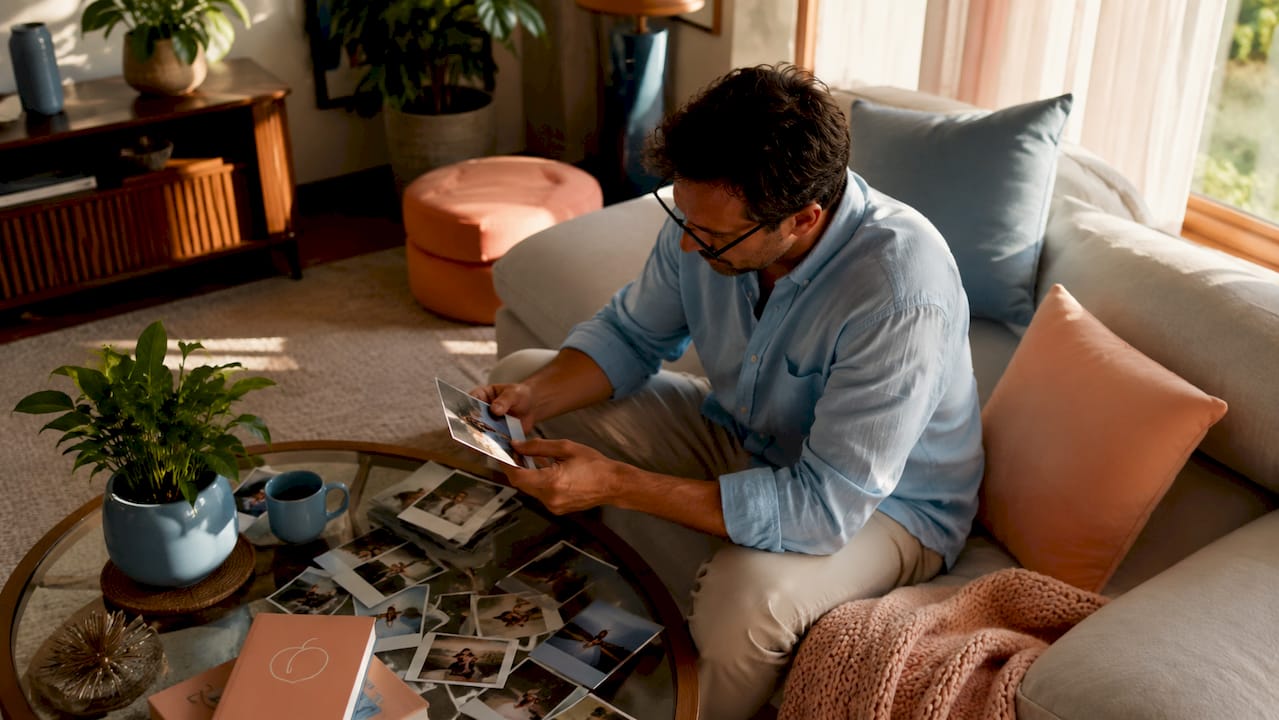
One effective approach is the "zone and layer" method. Communal zones use a neutral base that no one finds offensive, then each occupant adds personal layers through objects, textiles, and art. A shared living room might have white walls and a gray sofa as its foundation, while a collection of travel photographs from one roommate and a set of vintage ceramics from another give the space its actual character. The result feels curated rather than compromised.
Interior psychologists confirm that embracing contradictions in decor fosters a more authentic, autobiographical home identity. In shared spaces, those contradictions are not design failures. They are evidence that real people live there. A home that tells one clean, consistent story often tells no story at all.
The influence of home environments on interpersonal harmony is also worth taking seriously. Roger Barker's behavior settings theory, confirmed by environmental psychology research, shows that spatial arrangements prime occupants' emotional responses in consistent, predictable ways. A cramped, poorly lit kitchen creates friction. A well-lit, open kitchen with room for two people to cook together creates connection. The design is doing emotional work whether you intend it to or not.
How to identify and express your home's personality
Identifying your home's personality starts with observation, not aspiration. Most people design for the life they want rather than the life they actually live. That gap produces beautiful rooms that feel hollow.
The most reliable method is tracking genuine spatial behavior over time. Observing how you actually use each room over several days reveals the authentic personality of your home far more accurately than any design intention. If you always eat at the kitchen counter instead of the dining table, the dining table is aspirational furniture. Your kitchen counter is where your home's real personality lives.
Follow these steps to identify and express your home's personality authentically:
- Audit your actual habits. Spend one week noting where you read, work, relax, and eat. Mark the spaces you use most and least.
- Catalog your objects. Interior psychology distinguishes between "souvenirs" and "set pieces." Souvenirs carry lived experience and sensory memory. Display them prominently. Set pieces are decorative props. Reduce them.
- Choose a color story. Pick two to three colors that appear in objects you already love. Build your palette from what you own, not from what you see in catalogs.
- Edit furniture to function. Remove any piece of furniture that does not serve your actual daily behavior. Replace it with something that does.
- Layer in texture last. Once your layout and palette are set, add rugs, cushions, throws, and plants. Texture is where personality becomes tactile.
Pro Tip: Avoid designing for an aspirational lifestyle. If you have not hosted a dinner party in two years, you do not need a formal dining room. Design for the person you are on a Tuesday evening, not the person you imagine being on a Saturday night.
Understanding house dynamics in a shared home also means recognizing that different residential styles act as psychological markers for life priorities. A conscientious person gravitates toward order and structure. An open, curious person gravitates toward layered complexity. Knowing this about yourself and your housemates makes design conversations far less personal and far more productive.
How do different house personalities affect emotional well-being?
The connection between house personality types and emotional outcomes is well documented in environmental psychology. No single style produces universal well-being. Effectiveness depends entirely on the occupant's psychological makeup.
The table below summarizes key correlations between design styles, personality traits, and emotional outcomes:
| Design style | Core personality trait | Primary emotional outcome |
|---|---|---|
| Minimalist | Conscientiousness, need for control | Reduced cognitive load, mental clarity |
| Rustic or farmhouse | Agreeableness, stress sensitivity | Calm, reduced anxiety, sense of belonging |
| Eclectic or layered | Openness to experience, curiosity | Stimulation, creativity, personal expression |
| Contemporary or sleek | Ambition, growth orientation | Motivation, focus, forward momentum |
| Transitional | Balanced temperament | Stability with room for personal evolution |
Physical settings influence behavior and emotional states often more powerfully than personality traits alone. That finding reframes how you should think about interior design. Your home is not a passive backdrop. It is an active participant in your daily emotional life.
Clutter is a useful example of this dynamic. Clutter reflects emotional states rather than mere disorganization. When a person is under stress, their mental capacity to maintain order drops. The home becomes messier. That messiness then amplifies the stress. The house personality and the occupant's emotional state feed each other in a loop. Recognizing this loop is the first step toward breaking it, not through a cleaning spree, but through designing spaces that are easier to maintain during hard weeks.
Homes also act as quiet self-portraits. Mixing vintage and contemporary is a natural, authentic expression of a life lived across different chapters. A mid-century chair next to a modern lamp is not a design mistake. It is evidence of a person who has changed and grown. The most emotionally resonant homes are the ones that show that kind of honest history. For a deeper look at how home amenities reinforce personality, the connection between comfort and character runs through every design decision.
Key Takeaways
House personality is the single most direct expression of who you are and how your space makes you feel, and designing from that truth produces homes that work.
| Point | Details |
|---|---|
| Personality drives design | Your Big Five traits predict your style preferences more reliably than trend reports or catalogs. |
| Shared spaces need a neutral base | Use a simple foundation in communal areas, then let each occupant add personal layers through objects and textiles. |
| Design for real behavior | Track how you actually use each room for one week before making any design decisions. |
| Clutter signals emotion | A messy home often reflects stress, not laziness. Design for easy maintenance during hard weeks. |
| Contradictions are authentic | Mixing eras and styles reflects a real life lived. Consistency for its own sake produces hollow spaces. |
What I have learned from watching people live in their homes
People consistently make the same mistake: they design the living room first and the bedroom last. The logic seems reasonable. Guests see the living room. No one sees the bedroom. But that logic gets it exactly backwards.
The bedroom is where the house personality tells the truth. It is the room where no performance is required. When I look at someone's bedroom, I see who they actually are: the stack of books on the floor, the mismatched pillows, the single plant they have managed to keep alive. Those details reveal more about a person's character than any carefully staged living room ever could.
The other mistake I see constantly is designing for an imagined future self. People buy formal furniture for dinner parties they never host. They install home offices they use as storage rooms. They choose white sofas because they plan to be more careful. The home ends up reflecting a fictional person, and the real person never quite feels at home in it.
What actually works is treating your home as a living autobiography. Every object you keep is a sentence in that story. Every room you use is a chapter. The homes that feel most alive are the ones where the story is honest, even when it is messy or contradictory or still being written. Your home does not need to be finished. It needs to be real.
— Rasmus
Peach-residence: where personality is built into every room
Peach-residence was designed around a simple belief: four bedrooms should have four distinct personalities, not four identical rooms with different bedspreads. Each space at Peach-residence commits fully to its own character, from the indoor/outdoor Palm Springs flow to the unfiltered desert views that make every morning feel like a private showing.
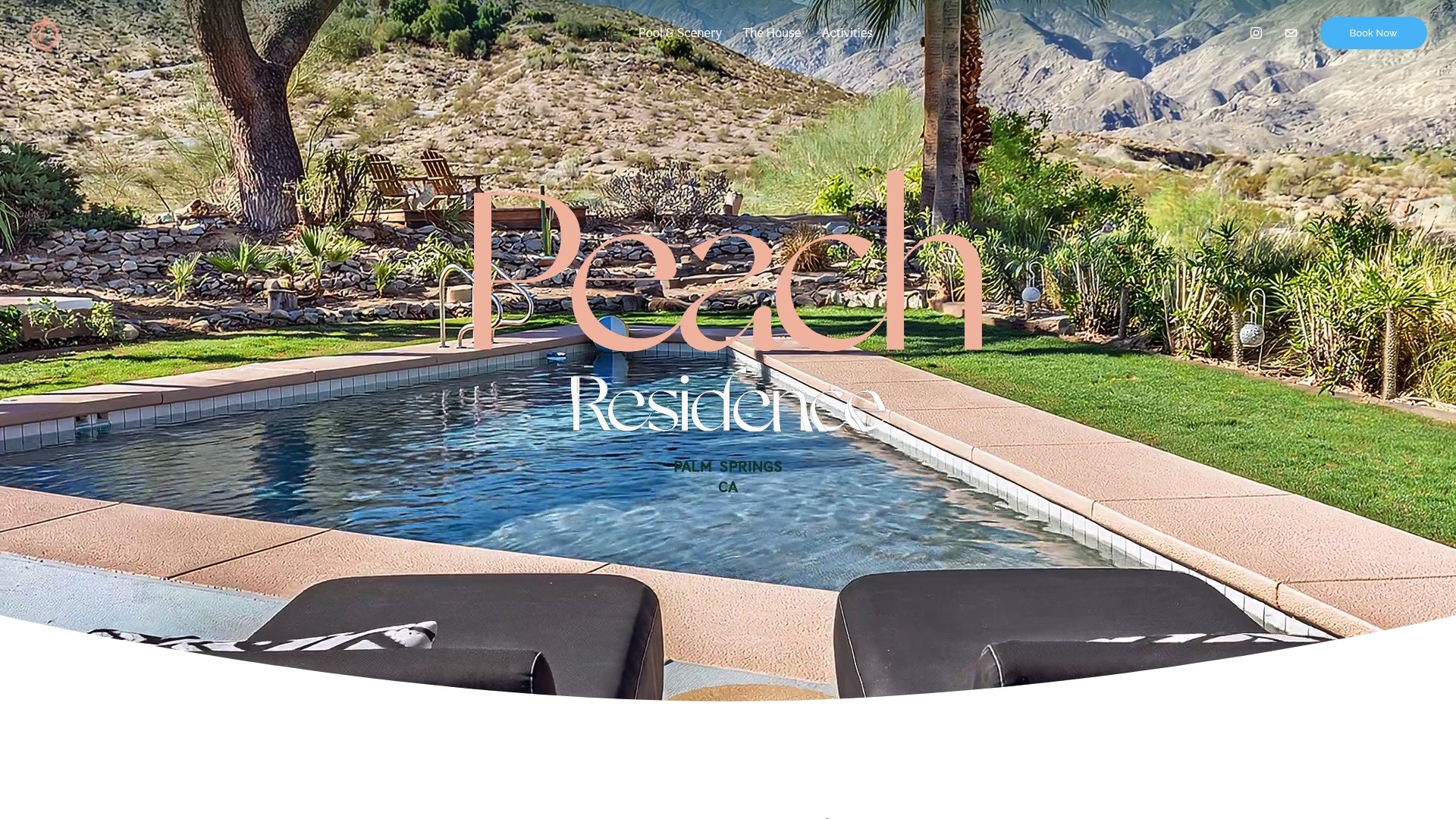
If you are thinking about what it feels like to stay somewhere that actually has a personality, Peach-residence gives you a front-row seat. The activities at Peach-residence extend that character beyond the walls, connecting the space to the landscape and the lifestyle it was built for. Eight guests, one end-of-the-cul-de-sac location, and a home that knows exactly what it is. Starting at $65 per person per night.
FAQ
What is a house personality?
A house personality is the emotional character a home projects through its design choices, including colors, textures, furniture, and layout. Interior psychology treats it as a direct reflection of the occupant's values, habits, and emotional needs.
How do house personalities affect shared living spaces?
Contrasting personalities in shared homes create tension in communal areas. The most effective approach uses a neutral design foundation in shared spaces while allowing each occupant to express their personality through personal objects and private rooms.
Can a home's personality change over time?
Yes. House personality traits shift as occupants' emotional states and life circumstances evolve. Clutter, for example, fluctuates with emotional resilience and reflects current stress levels rather than fixed character.
What design style best supports emotional well-being?
No single style is universally best. Minimalist spaces support cognitive control and clarity, while layered or eclectic interiors support creativity and openness. The right style depends entirely on the occupant's personality traits and psychological needs.
How do I find my home's true personality?
Track how you actually use each room over one week. Genuine spatial behavior reveals your home's authentic personality more accurately than design intentions or aspirational mood boards.