

Hospitality is the defining factor that separates a forgettable luxury rental from one guests talk about for years. The role of hospitality in luxury rentals goes far beyond thread counts and infinity pools. Properties that treat guest experience as their core operating strategy achieve 65%+ occupancy and average daily rates above $250, outperforming properties that compete on features alone. That gap is not accidental. It reflects a fundamental truth: luxury travelers pay for how a stay makes them feel, not just where they sleep. For real estate investors, understanding this distinction is the difference between a passive asset and a high-performing income property.
How does personalized hospitality drive guest loyalty in luxury rentals?
Guest loyalty in luxury rentals is built on personal connection, not property specs. A study published in the International Journal of Hospitality Management found that host-guest rapport is a primary driver of repeat bookings. Guests who feel genuinely seen and welcomed are far more likely to return and to recommend the property to others.
The psychology behind this is worth understanding. Guests evaluate a stay on two levels: affective (how it made them feel) and cognitive (whether it delivered perceived value). Both must be satisfied for a guest to move from satisfied to loyal. A stunning view checks the cognitive box. A host who remembers your coffee preference, leaves a handwritten note, or arranges a last-minute dinner reservation checks the affective one.
"Enjoyment and perceived value predict recommendations and positive reviews more reliably than property features alone." — International Journal of Hospitality Management
Authentic interaction is the key variable here. Transactional service, where a code is texted and a checkout form is emailed, produces neutral reviews at best. Genuine hospitality produces five-star reviews and direct rebookings. The distinction matters enormously for investors tracking revenue per available night.
Luxury rental hospitality also benefits from well-designed guest communication. Personal communication through booking platforms encourages loyalty and positive word-of-mouth well beyond what property features alone can generate. The takeaway for investors: every touchpoint with a guest is either building loyalty or eroding it.
- Personalized pre-arrival messages increase guest anticipation and set a welcoming tone before check-in.
- Local recommendations tailored to the guest's stated interests signal genuine care, not generic hospitality.
- Post-stay follow-up messages convert one-time guests into repeat visitors and brand advocates.
- Remembering guest preferences across stays creates the kind of recognition that luxury hotel brands charge a premium to deliver.
How do you operationalize hospitality in a luxury rental property?
The landlord mindset treats a property as a passive income source. The hospitality professional mindset treats it as a service business that happens to involve real estate. That shift in thinking is the single most important operational change a luxury rental investor can make.
Luxury rental success requires a transition to 24/7 service-driven operations, including crisis management protocols that protect the guest experience when things go wrong. A burst pipe at 11 p.m. is not a maintenance issue. It is a hospitality test. How quickly and calmly it is resolved determines the review the guest leaves the next morning.
Operationalizing luxury rental hospitality means building systems around the following priorities:
- 24/7 guest communication. Guests should never wait more than a few minutes for a response, regardless of the hour. Delayed replies signal indifference, which is the opposite of luxury.
- Crisis management protocols. Every property needs a documented response plan for common emergencies: HVAC failure, plumbing issues, power outages, and noise complaints from neighbors.
- Maintenance response standards. Non-emergency issues should be resolved within 24 hours. Emergency issues require same-day resolution with guest communication at every step.
- Concierge-level communication. Pre-arrival messages, digital welcome guides, and curated local recommendations should be standard, not optional extras.
- Guest screening and onboarding. A brief, warm pre-arrival call or message sets expectations and builds rapport before the guest even arrives.
Pro Tip: Build a local vendor network before you need it. Having a trusted plumber, electrician, and cleaning crew on call is what separates a hospitality professional from a landlord when a crisis hits at midnight.
Designing every guest touchpoint to deliver on the lifestyle promise, from bedding quality to communication speed, is what the hospitality mindset looks like in practice. Investors who internalize this produce properties that guests describe as "better than a hotel." That description is not accidental. It is the result of deliberate operational choices made before the guest ever arrives.

What hospitality services actually elevate a luxury rental experience?
The hospitality services that matter most in luxury rentals are the ones guests cannot easily replicate on their own. Concierge access, curated local itineraries, personalized check-ins, and authentic connections to the destination all fall into this category. These services shift the guest's perception from "I rented a house" to "I had an experience."
Hospitality-focused rentals feature concierge services, experience curation, personalized check-ins, and authentic local connections as standard operating elements. The strongest providers maintain boutique property counts to preserve the quality of attention each guest receives. Scale without service is just a larger version of the same mediocre product.
Core hospitality services that distinguish luxury rentals
The table below maps the most impactful hospitality services to the guest value they deliver.
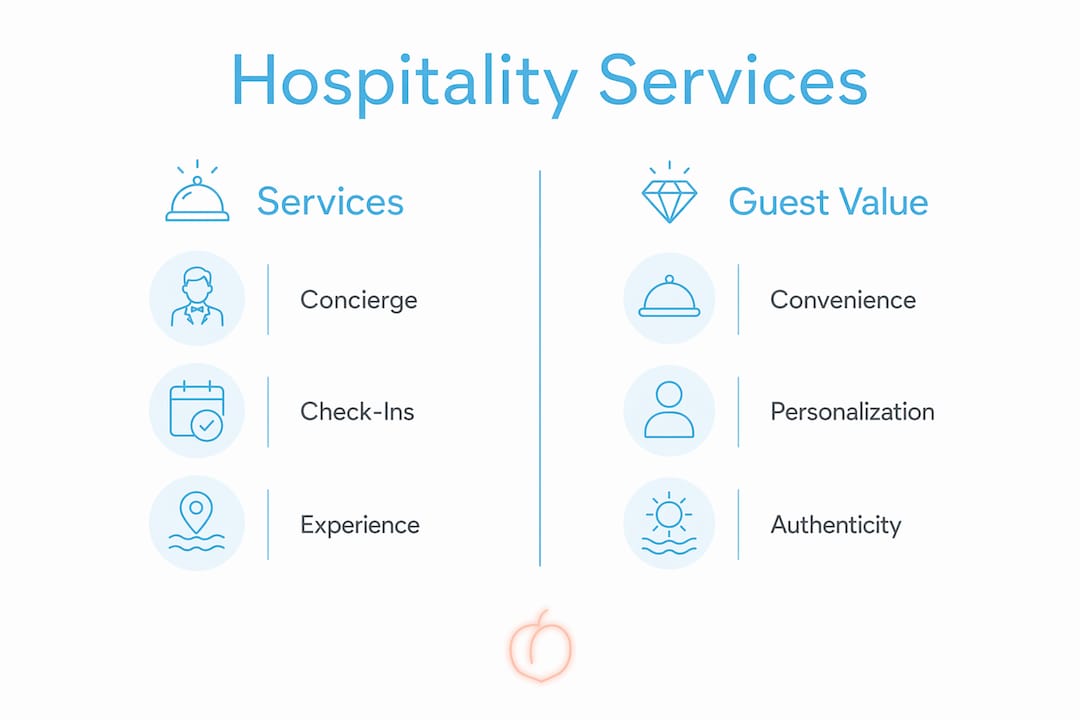
| Hospitality service | Guest value delivered |
|---|---|
| Personalized check-in and welcome | Immediate sense of being expected and valued |
| Concierge and local recommendations | Access to experiences guests cannot find on their own |
| Curated in-property amenities | Spa-quality comfort without leaving the property |
| Private chef or catered meal options | Eliminates friction and adds memorable moments |
| Event and activity booking assistance | Saves time and signals genuine local knowledge |
| 24/7 guest support line | Confidence that any issue will be resolved quickly |
Beyond the table, the physical environment carries hospitality signals too. High-quality bedding, locally sourced welcome baskets, and thoughtfully stocked kitchens communicate care without a single word. Properties that get amenities and comfort right create the sensory baseline that makes every other hospitality gesture land harder.
- Spa-like bathrooms with quality products signal that the host thought about the guest's daily routine.
- A stocked bar cart with local spirits tells a story about the destination and invites guests to settle in.
- Outdoor spaces designed for evening use extend the guest's enjoyment well past sunset.
- Printed or digital local guides with honest, specific recommendations build trust and save guests hours of research.
The importance of hospitality in rentals at this level is not about adding expensive features. It is about removing friction and adding meaning at every point in the guest's stay.
How does hospitality impact luxury rental revenue and occupancy?
Hospitality excellence produces measurable financial results. Properties that adopt a hospitality-first strategy consistently achieve occupancy rates above 65% and average daily rates above $250. Properties competing on location and features alone rarely sustain those numbers across a full calendar year.
Guest reviews are the clearest signal of hospitality quality, and they directly affect booking volume. Guests who rate a stay five stars almost always cite the host's responsiveness, the quality of communication, and the feeling of being genuinely welcomed. Property features appear in reviews, but they rarely explain the difference between four stars and five.
Luxury rentals with 24/7 AI guest communication, dynamic pricing, and guest screening see higher consistent revenue and guest satisfaction scores. That combination works because it removes the two most common friction points: slow responses and pricing that does not reflect real-time demand.
Investors tracking hospitality ROI should monitor three core metrics:
- Occupancy rate: Target 65%+ as the baseline for a hospitality-focused property.
- Average daily rate (ADR): A well-run hospitality operation supports ADR above $250 by justifying premium pricing through service quality.
- Review score and repeat booking rate: These are the leading indicators of long-term revenue health.
The private rental advantages that guests value most, space, privacy, and personalized service, are all hospitality outcomes. Investors who quantify those advantages in their pricing and marketing capture the premium that the market is willing to pay.
Key Takeaways
Hospitality is the operational core of every high-performing luxury rental, and properties that treat it as such consistently outperform those that rely on features or location alone.
| Point | Details |
|---|---|
| Hospitality drives occupancy | Properties with a hospitality-first approach achieve 65%+ occupancy and ADR above $250. |
| Personal connection builds loyalty | Host-guest rapport is the primary driver of repeat bookings and five-star reviews. |
| Operations must be 24/7 | Crisis protocols and round-the-clock communication are non-negotiable in luxury rentals. |
| Services create perceived value | Concierge access, curated experiences, and personalized check-ins justify premium pricing. |
| Reviews reflect hospitality quality | Guest satisfaction scores are the clearest leading indicator of long-term revenue performance. |
Why most luxury rental investors are still thinking too small
I have watched investors spend $50,000 on kitchen renovations and then lose repeat guests because nobody answered a text at 9 p.m. The renovation is visible in listing photos. The unanswered text shows up in the review. That imbalance is the most common and most expensive mistake I see in this market.
The trends in luxury rental hospitality are moving toward deeper personalization, not broader amenity lists. Guests who can afford premium rentals have already stayed in beautiful properties. What they remember is how the experience felt. A host who anticipated their needs, solved a problem before it became one, and made them feel like the only guests that week. That is the standard the market is moving toward, and it is a higher bar than most investors realize.
The good news is that the operational shift is not as expensive as the renovation. It requires systems, attention, and a genuine commitment to the guest's experience as the product. Investors who make that shift early capture the loyalty and the revenue that comes with it. Those who wait will find that the market has already moved on.
— Rasmus
Peach-residence: where hospitality meets the Palm Springs desert
Peach-residence was designed around the idea that a luxury rental should feel like a private world, not a transactional overnight stop.
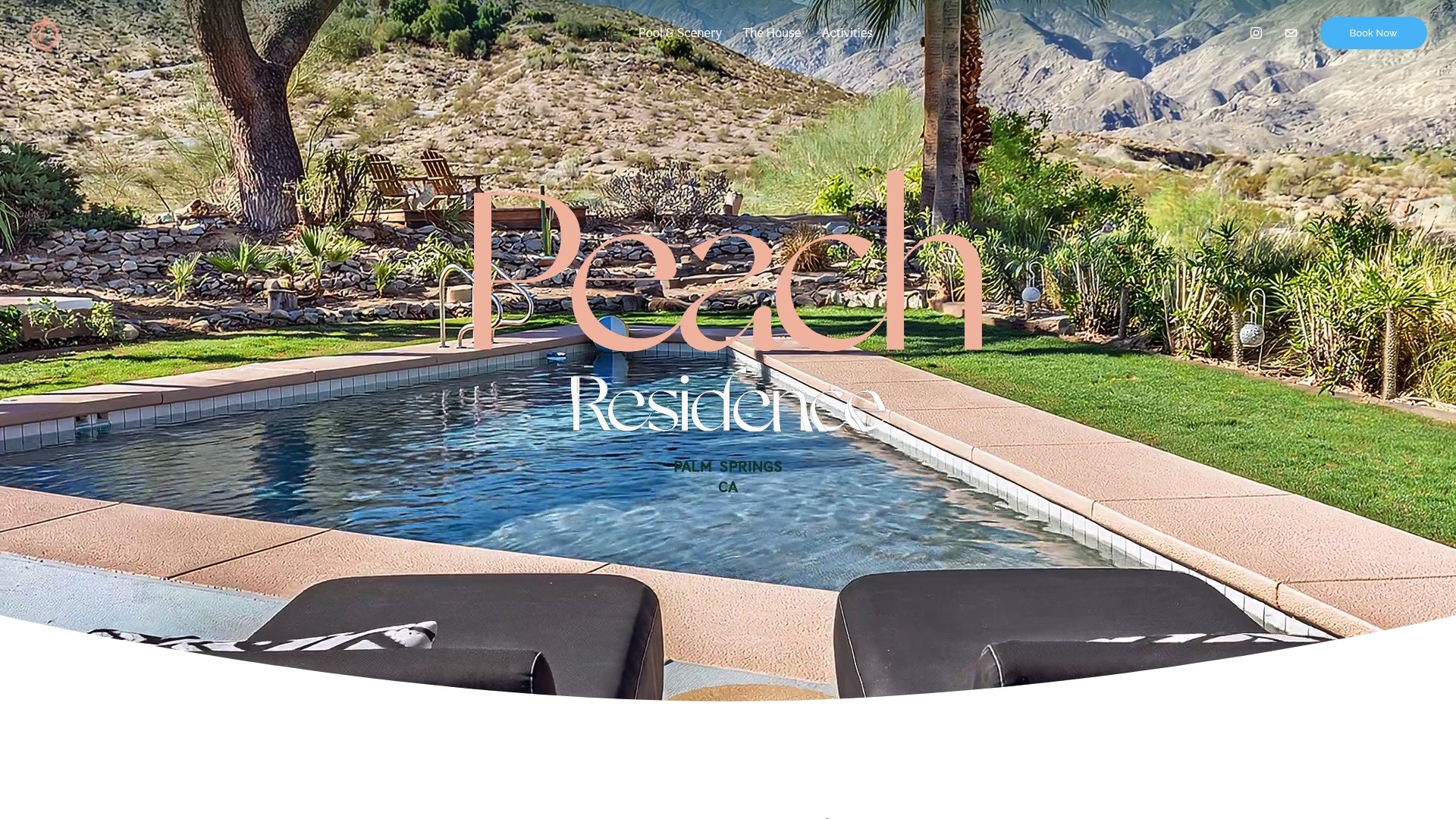
Set at the end of a quiet cul-de-sac with unobstructed mountain views and room for eight guests, Peach-residence delivers the kind of guest experience this article describes: personalized, attentive, and built around the lifestyle guests actually want. Four distinct bedrooms, a fully updated interior, and a commitment to the Palm Springs indoor/outdoor way of life make every stay feel intentional. Rates start at $65 per person per night. Book your Palm Springs stay and see what hospitality-led luxury rental design looks like in practice. If you want to plan your time in the desert, the curated activities page is a good place to start.
FAQ
What is the role of hospitality in luxury rentals?
Hospitality is the operational and experiential core of a successful luxury rental. It transforms a property from a place to sleep into a memorable stay that drives repeat bookings and premium pricing.
How does guest experience affect luxury rental revenue?
Properties that prioritize guest experience achieve occupancy rates above 65% and average daily rates above $250, outperforming properties that compete on features alone.
What hospitality services matter most in luxury rentals?
Concierge access, personalized check-ins, curated local experiences, and 24/7 guest communication are the services that most directly influence guest satisfaction and five-star reviews.
Why do luxury rental guests choose rentals over hotels?
Luxury travelers choose private rentals for the space, privacy, and personalized attention that hotels cannot replicate at scale. Hospitality-focused rentals deliver all three consistently.
How can investors measure hospitality ROI in a rental property?
Track occupancy rate, average daily rate, review scores, and repeat booking rate. These four metrics together give a clear picture of how well hospitality investment is translating into financial performance.