
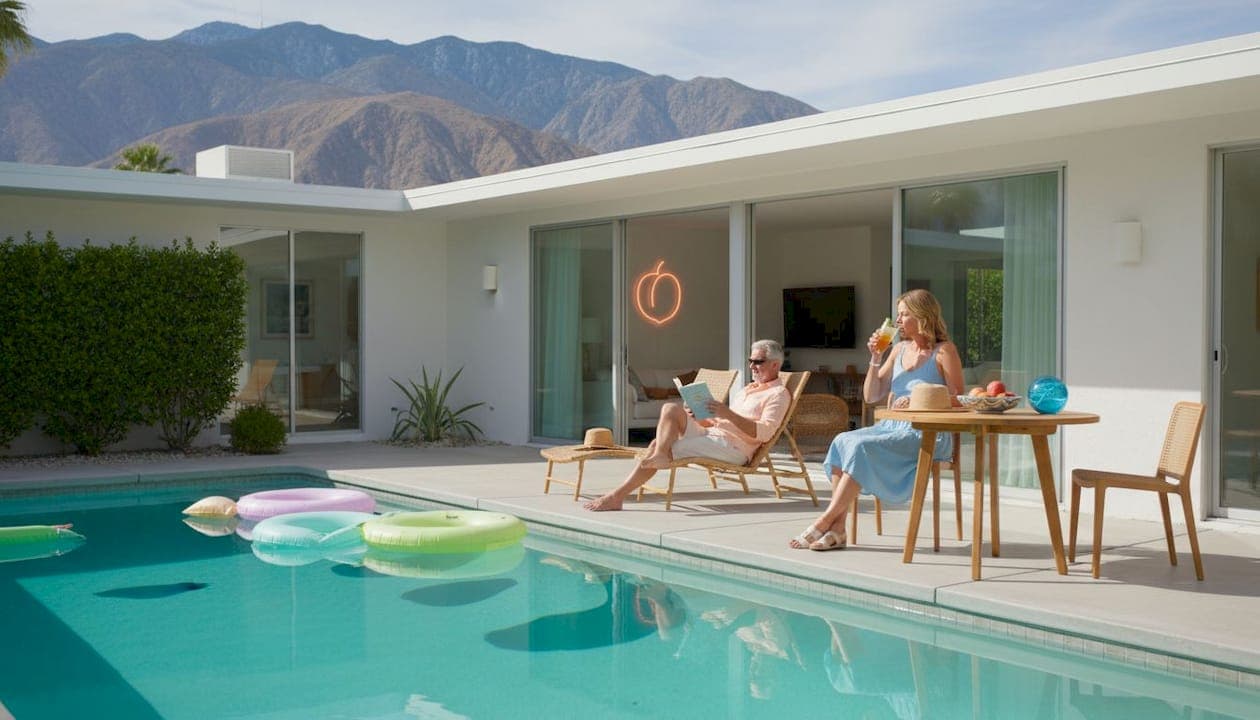
Palm Springs gets misread constantly. People hear the name and picture a retirement community or a long weekend pool party. But what is Palm Springs lifestyle, really? It's something far more layered: a desert culture built around serious architecture, year-round outdoor living, a thriving arts calendar, and a social vibe that's stylish without trying too hard. Whether you're thinking about visiting, relocating, or just genuinely curious, this guide breaks down every dimension of Palm Springs living so you know exactly what you're stepping into.
Table of Contents
- Key takeaways
- What is Palm Springs lifestyle? Climate and outdoor living
- Desert Modernism and design as a way of life
- Palm Springs culture: arts, festivals, and the social vibe
- Living in Palm Springs: costs and daily realities
- How to embrace the Palm Springs lifestyle
- My honest take on what Palm Springs living really means
- Experience Palm Springs at Peach-residence
- FAQ
Key takeaways
| Point | Details |
|---|---|
| Sun-driven outdoor living | Palm Springs gets roughly 350 days of sunshine yearly, making outdoor activity central to daily life. |
| Design is identity | Desert Modernism architecture isn't decoration. It defines how residents experience space, light, and community. |
| Culture runs deep | Film festivals, Modernism Week, and a thriving arts scene give Palm Springs a cultural calendar that rivals much larger cities. |
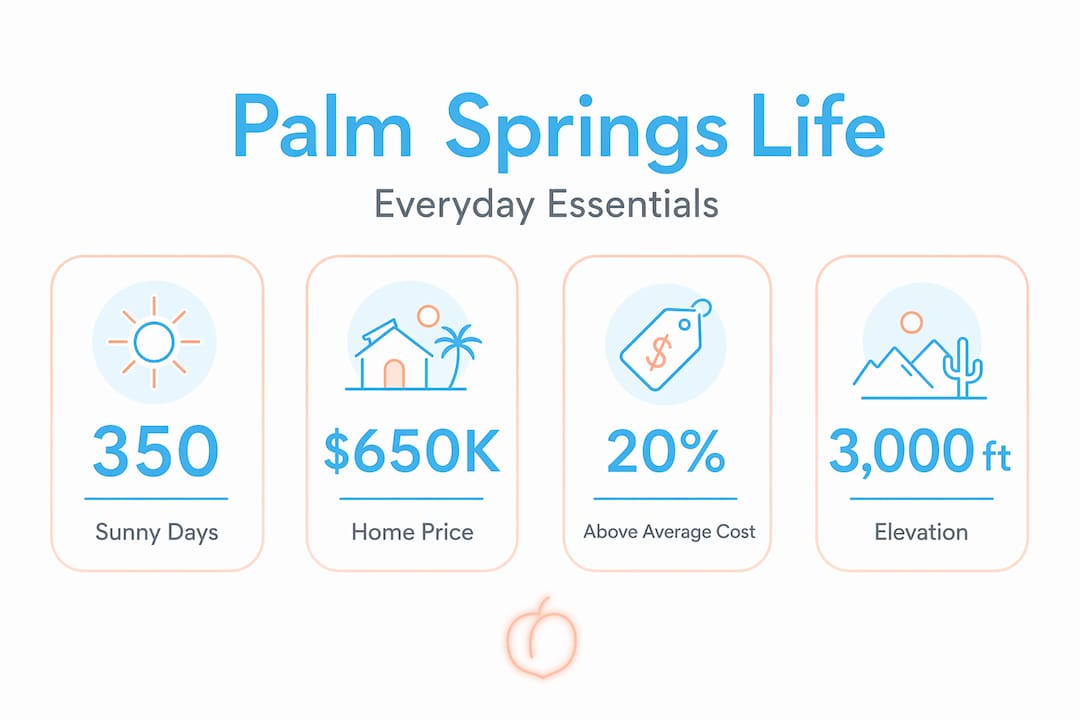
| Living costs are real | The cost of living runs 20 to 25% above the national average, so financial planning matters before relocating. |
| The vibe is inclusive | Palm Springs culture centers on casual acceptance and style as self-expression, not status. |
What is Palm Springs lifestyle? Climate and outdoor living
The most immediate answer to "what is Palm Springs lifestyle" starts with the sun. The Coachella Valley sits in a rain shadow created by the surrounding mountains, which produces 350 days of sunshine annually and very little humidity. That's not just a weather fact. It's the foundation of how people structure their entire day.
Peak outdoor season runs from October through April, when temperatures sit comfortably between 65°F and 85°F. Mornings get used for hiking before the sun climbs. Afternoons shift toward pools, shaded patios, and golf. The San Jacinto Mountains, which rise dramatically just west of downtown, offer trail networks from flat desert walks to serious elevation climbs accessible via the Palm Springs Aerial Tramway.
Popular outdoor activities in Palm Springs include:
- Hiking: Trails like Tahquitz Canyon and the Araby Trail deliver striking desert scenery at all fitness levels
- Golf: Dozens of courses operate throughout the valley, many with mountain backdrops
- Biking: The valley's flat terrain and dedicated paths make cycling genuinely practical, not just recreational
- Swimming: Private pools are almost standard in residential properties, and resort pool culture is a social institution
- Joshua Tree: The national park sits roughly 45 minutes east and operates as a natural extension of the Palm Springs outdoor lifestyle
Summer is the honest part of the story. July and August routinely hit 110°F or above, and casual outdoor activity essentially pauses. Locals adapt: early mornings, indoor activities midday, evenings outdoors after sunset. The desert temperature swings also demand preparation. The valley floor may read 90°F while the tramway station at 8,500 feet sits at 40°F. Layers and hydration are not optional.
Pro Tip: If you're visiting between May and September, book accommodations with a private pool. The pool isn't a luxury upgrade in summer Palm Springs. It's functional.
Desert Modernism and design as a way of life
No discussion of the Palm Springs desert lifestyle is complete without architecture. The city is arguably the world's most concentrated showcase of mid-century modern design, and that's not an accident. When architects like Richard Neutra, Albert Frey, and Donald Wexler began designing here in the 1940s and 1950s, they were solving a real problem: how do you build for extreme heat while keeping the living experience open and connected to the landscape?
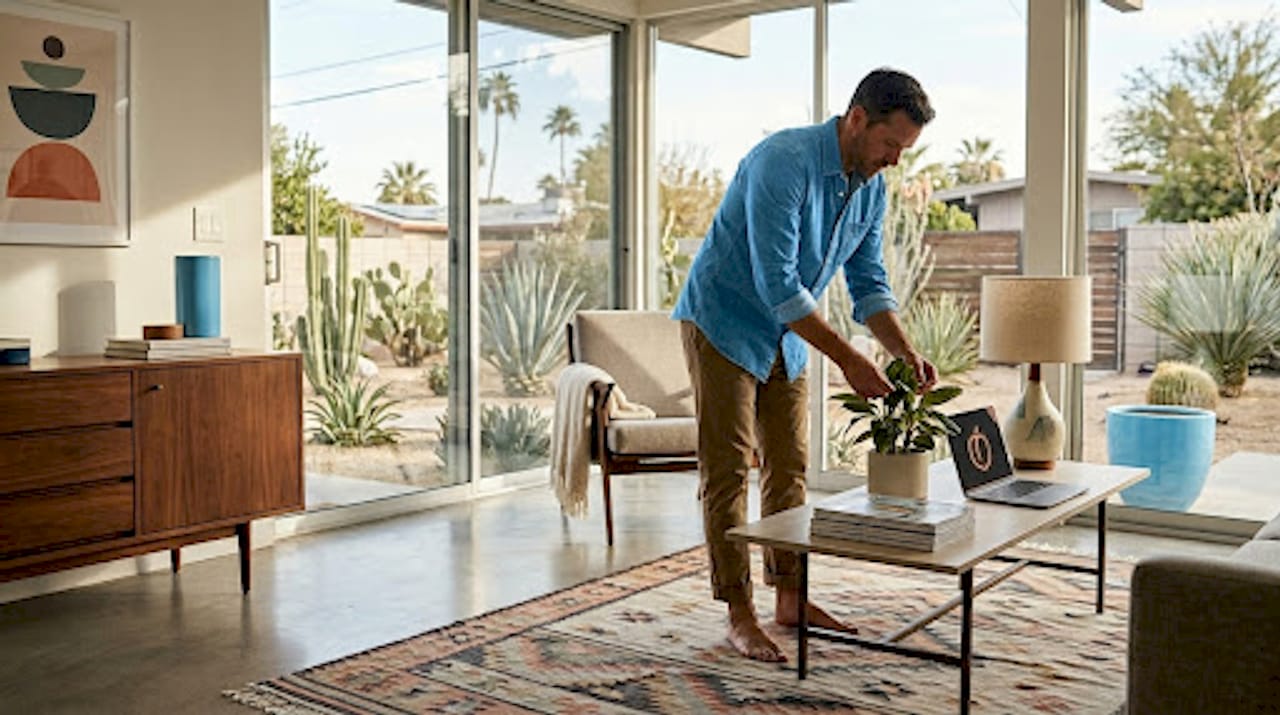
Desert Modernism answered that question with a specific visual language. Deep roof overhangs block high-angle summer sun while letting in lower winter light. Expansive glass walls frame mountain views and create visual continuity between interior rooms and outdoor patios. Flat or gently angled rooflines keep visual weight low against the dramatic skyline. Natural materials like stone, concrete, and wood age well in dry air and feel honest against the desert setting.
Key neighborhoods for architectural exploration include:
- Movie Colony: Where Hollywood stars built getaways in the 1930s and 1940s; dense with original mid-century estates
- Twin Palms: Designed almost entirely by William Krisel, offering a neighborhood-scale study in postwar residential modernism
- Vista Las Palmas: Known for larger custom homes with strong Desert Modernism credentials
- Sunmor: A smaller neighborhood with accessible examples of postwar tract modernism, less visited but architecturally rich
"Desert Modernism is a lasting cultural asset and continues influencing Palm Springs' growth and identity." — Visit Palm Springs
This isn't just history tourism. The design principles shape how homes with persona in Palm Springs feel to live in today. Indoor-outdoor flow means doors stay open from October through April. Covered patios become primary living spaces. Architecture here doesn't separate you from the desert. It puts you in direct conversation with it.
Palm Springs culture: arts, festivals, and the social vibe
The cultural scene is where the Palm Springs vibe crystallizes. The city punches well above its weight for a population of roughly 45,000, partly because of the seasonal influx of engaged visitors and second-home owners, and partly because the local community has built genuinely strong institutions.
The annual cultural calendar anchors community life:
- Palm Springs International Film Festival (January): One of the largest film festivals in North America, drawing major studio films, international cinema, and industry figures
- Modernism Week (February): A ten-day celebration of mid-century architecture, design, and culture with home tours, lectures, and pop-up markets
- Palm Springs Art Museum events: Year-round programming including exhibitions, film screenings, and community talks
- Coachella Valley Music and Arts Festival (April): While technically in Indio, it defines the regional cultural identity every spring
- White Party Palm Springs (April): A landmark event in the LGBTQ+ community that has shaped the city's inclusive identity for decades
Beyond the calendar, Palm Springs culture emphasizes style as play rather than status. You'll see people dressed with genuine flair at a casual taco spot and zero pretension at a fine dining restaurant. The city has been an LGBTQ+ destination since the 1960s, and that legacy wired an ethos of acceptance into the social fabric that still holds today.
Pro Tip: Modernism Week sells out fast. If architectural tourism is your goal, book accommodations at least three months in advance for February.
The nightlife is low-key but real, concentrated along Palm Canyon Drive and the Uptown Design District. Bars, rooftop spots, and restaurant patios stay active through the comfortable months. The social rhythm is relaxed but far from quiet.
Living in Palm Springs: costs and daily realities
Thinking about making the move? The lifestyle in Palm Springs is genuinely appealing, but the practical picture deserves honest attention.
| Consideration | Details |
|---|---|
| Median home price | Around $650,000, with strong seasonal second-home demand affecting availability |
| Annual living costs | Basic single lifestyle runs $48,000 to $55,000; comfortable living lands at $60,000 to $70,000 |
| HOA fees | Common in most residential communities; seasonal ownership dynamics push management costs up |
| Transportation | Car-dependent outside downtown; ride-sharing limited in residential areas |
| Summer adjustment | Locals adapt schedules significantly during June to September heat |
The transportation reality catches people off guard. Downtown Palm Springs is walkable within a compact radius, but the broader Coachella Valley is built around driving. Joshua Tree, the airport, large grocery stores, and most neighborhoods outside the urban core require a car. Ride-share coverage thins out quickly past downtown.
Remote work has reshaped who lives here. The pandemic-era migration brought a younger, professionally active demographic that now blends with the traditional retiree and second-home crowd. The result is a community with more energy and more year-round economic activity than the "snowbird town" reputation suggests.
Seasonal dynamics still matter. Summer populations drop noticeably, which reduces traffic and restaurant wait times but also trims service options. Some local businesses close or reduce hours from July through September. If you're considering a move, visiting during August gives you the most accurate read of what off-season life actually looks like.
How to embrace the Palm Springs lifestyle
Whether you're visiting for a long weekend or scouting the area as a future home base, a few approaches make the difference between surface-level tourism and genuine immersion in the Palm Springs community.
- Time your visit well: October through April delivers the full outdoor and cultural experience. November and March hit a sweet spot between ideal weather and manageable crowds.
- Walk the Uptown Design District: The stretch of North Palm Canyon Drive north of Alejo Road concentrates galleries, vintage shops, and mid-century furniture dealers in a walkable corridor that defines the aesthetic
- Book a home tour during Modernism Week: Nothing explains Desert Modernism better than standing inside a Frey or Cody-designed home while someone who lives there explains the light
- Eat where locals eat: Breakfast and brunch culture runs strong here. Morning cafes with patio seating are a core part of the Palm Springs daily rhythm
- Rent a bike: The valley floor is genuinely flat and the morning light on the mountains from a bike path is one of those experiences that earns its reputation
- Budget for heat: Even in spring, afternoon sun is intense. Plan outdoor activities before 10am or after 5pm for maximum comfort
The lifestyle mindset shift matters too. Palm Springs rewards slowing down. The pace here is intentional, not lazy. Residents are active, culturally engaged, and design-conscious, but they're not rushing anywhere.
My honest take on what Palm Springs living really means
I've spent enough time in Palm Springs to have an opinion that goes beyond the Instagram version. And the thing I keep coming back to is this: the environment doesn't let you fake it. The desert is too present, too immediate, too physically demanding to ignore as a backdrop. People who thrive here are the ones who genuinely engage with that reality rather than just tolerating it as the price of good weather.
What surprised me most was how deeply the architecture shapes mood. I've stayed in mid-century homes where the morning light through an east-facing glass wall turns breakfast into something you look forward to planning around. That's not a design feature. It's a quality-of-life feature that compounds daily.
I also think people underestimate how social the Palm Springs community actually is outside of tourist season. The locals who stay through summer develop a real camaraderie. The city empties enough that regulars know each other, which creates the kind of neighborly texture that larger cities have designed out of existence.
The one thing newcomers consistently miss is the lifestyle rhythm. Palm Springs doesn't reward the same schedule that works in a coastal city. Early mornings are sacred. Midday is for shade and recovery. Evenings are for living. Once you sync to that pattern, the desert stops feeling like a constraint and starts feeling like the whole point.
— Rasmus
Experience Palm Springs at Peach-residence
If you want to feel what Palm Springs living actually feels like, not just observe it from a hotel corridor, Peach-residence was built for exactly that.
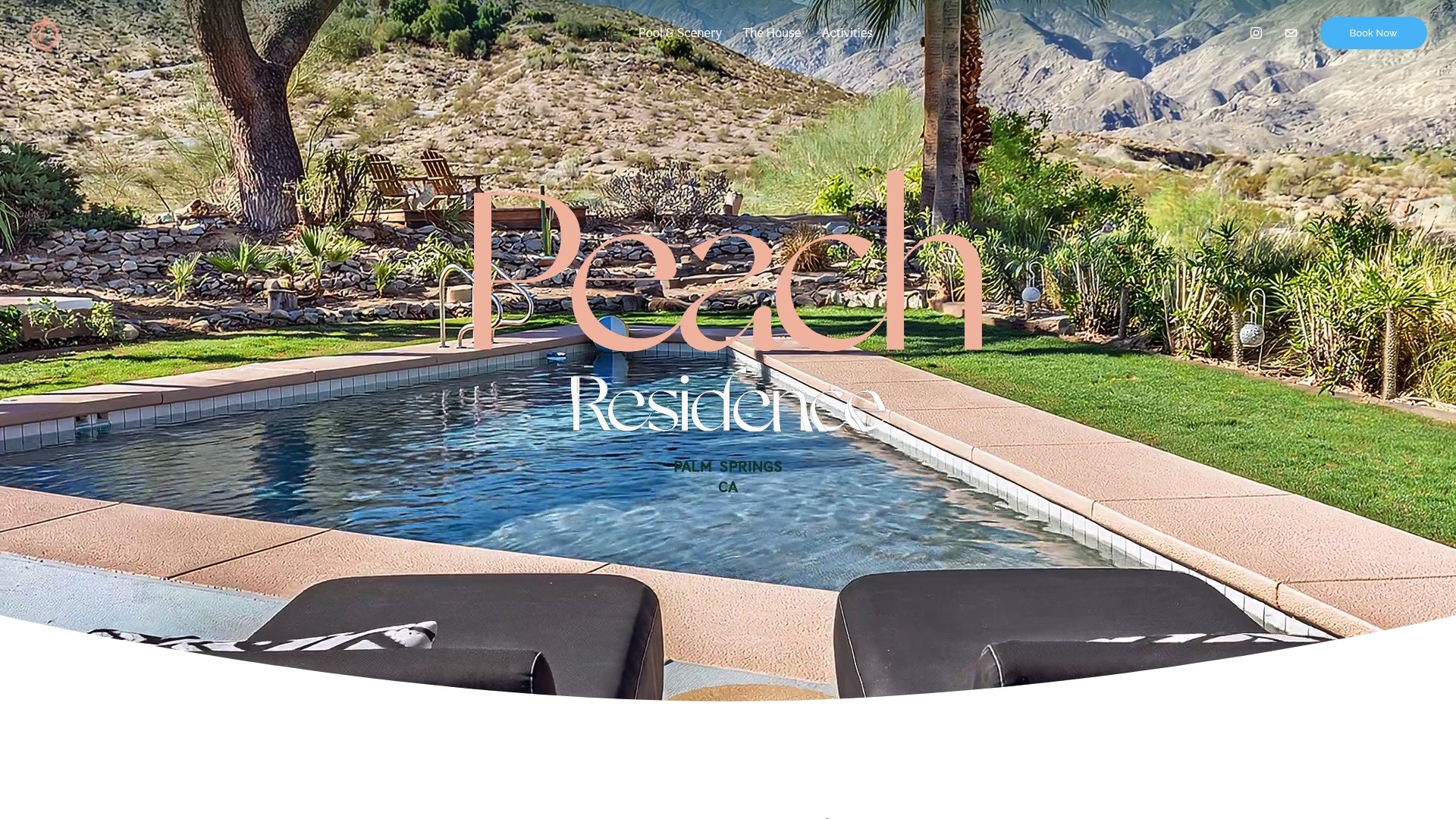
Peach-residence sits at the end of a quiet cul-de-sac with unobstructed mountain views and zero city noise. Four bedrooms, four distinct personalities, and a property that commits fully to the indoor-outdoor flow that defines Desert Modernism. Doors open to the desert breeze, the pool sits under open sky, and the views are the kind that make you understand why people build their entire lifestyle around this place. Freshly updated in 2025, it sleeps up to 8 guests starting at $65 per person per night. Book the house directly and arrive ready to live the Palm Springs experience from the first morning. Browse curated local activities to fill your days with exactly the hiking, culture, and design exploration this guide covers.
FAQ
What makes Palm Springs lifestyle different from other desert cities?
Palm Springs combines Desert Modernism architecture, a strong arts and festival calendar, and a deeply inclusive social culture in a way that no other desert city replicates. The concentration of mid-century design and the outdoor-first daily rhythm are uniquely its own.
What is the best time of year to experience the Palm Springs vibe?
October through April offers the ideal combination of comfortable outdoor temperatures and a full cultural calendar, including Modernism Week in February and the Palm Springs International Film Festival in January.
Is Palm Springs expensive to live in?
Yes. The cost of living runs 20 to 25% above the national average, with median home prices around $650,000 and annual living costs starting at roughly $48,000 for a single individual.
Do you need a car to live or visit in Palm Springs?
Downtown Palm Springs is walkable, but a car is essential for accessing most neighborhoods, outdoor attractions like Joshua Tree, and the broader Coachella Valley.
What cultural events define the Palm Springs community calendar?
The Palm Springs International Film Festival in January, Modernism Week in February, and the Coachella Valley Music and Arts Festival in April are the anchors of the local cultural calendar that residents and visitors plan their year around.